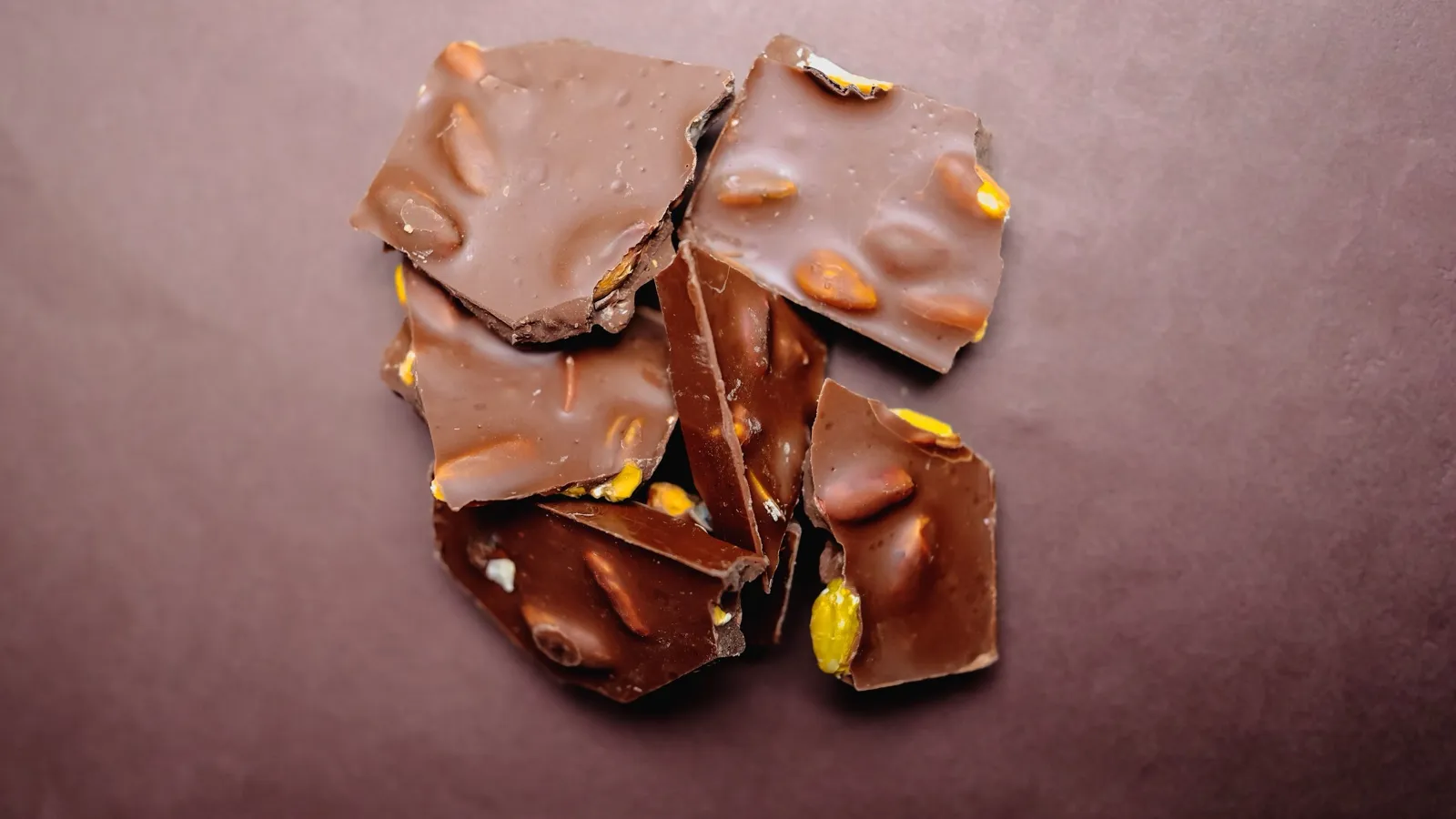
Hero photo: Tuğçe Açıkyürek via Pexels, used under the Pexels License; center-cropped and resized.
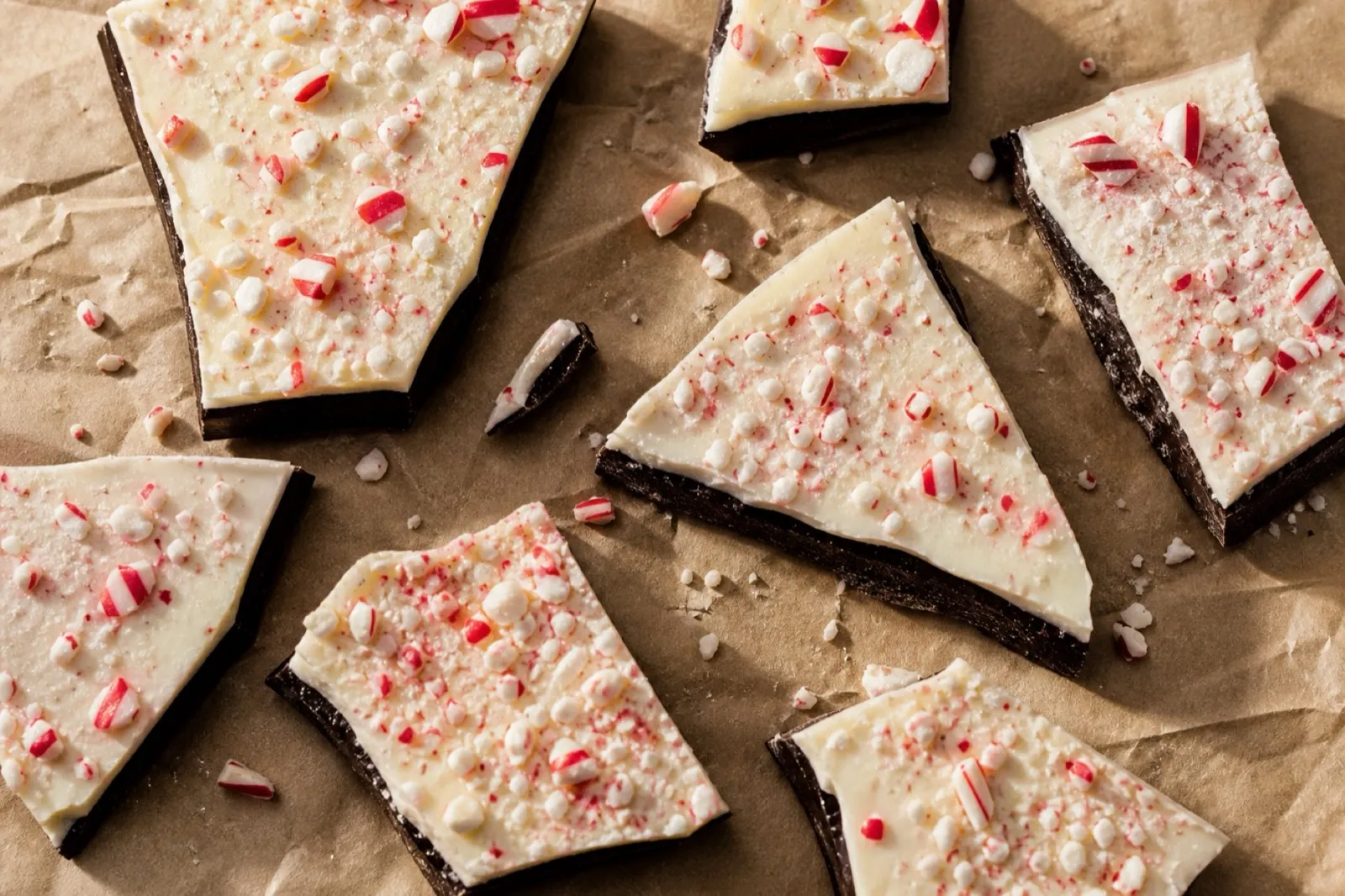
Bark is tempering with the training wheels on: no molds to fill, no centers to enrobe, no shell thickness to judge — just a flat pour that shows off a proper temper’s gloss and snap better than almost any other format. If peppermint bark is the two-layer Christmas special, this is the rest of the year: one layer, one temper, and a topping drawer’s worth of variations.
The technique dependencies are two articles deep at most: how to temper chocolate for the why, seeding vs. tabling if you want to compare methods, and the chocolate thermometer guide if you need an immersed probe for a narrow working curve. For the seed-method sequence, see ThermoWorks’ chocolate-tempering guide. Everything else lives on this page.
The Recipe
Follow the temperature curve printed for your exact chocolate, confirm the temper with a smear test, and use the shortest-lived topping’s package guidance for storage.
Yield: about 380-420g of bark | Active: about 30 minutes | Set: 1-2 hours at cool room temperature
Ingredients:
- 300g real chocolate with cocoa butter, dark, milk, or white; chop it and reserve 75g for seeding
- 80-120g clean, dry, room-temperature toppings, such as toasted nuts, freeze-dried fruit, pretzels, candied ginger, cacao nibs, or toffee
- flaky salt, optional
Method:
- Line a quarter sheet pan with parchment. Chop, toast, and fully cool every topping before beginning.
- Follow the maker’s tempering curve. A common seed-method starting point is to melt 225g to 115-120F for dark chocolate, then remove from heat and stir in the reserved 75g. Milk and white chocolate often melt at a lower temperature, but the package or maker guidance controls. Work toward 88-90F for standard dark couverture, 84-86F for milk, or 82-84F for white only when those ranges match the chocolate. Stir to even out gradients before measuring with an immersed probe. If seed pieces remain at the working range, remove them rather than reheating past the curve. Confirm with a test smear.
- Pour the tempered chocolate onto the parchment and spread it 3-5mm thick with an offset spatula. Tap the pan once to level.
- While the surface is still wet and glossy, scatter the toppings and press larger pieces in gently. The working window depends on room temperature, chocolate temperature, and how thinly you spread the bark, so use the surface cue rather than a fixed clock.
- Finish with flaky salt if using. Leave at cool room temperature until fully hard, 1-2 hours.
- Break by hand into rough shards, or score-and-snap for tidier pieces. Store airtight at cool room temperature, with the shortest-lived topping determining the best-quality window.
The Topping Rule: Dry at the Surface, Low in Available Water
This page is about inclusions scattered on a flat finished bark; for inclusions embedded inside molded bars, fat migration, and broader formulation mechanics, use the chocolate inclusions guide.
Chocolate has very low available water, which is one reason a plain bar keeps far longer than a water-containing ganache. Moisture content and water activity are not the same measurement, and this home recipe does not measure either, so use a practical gate: inclusions should be shelf-stable, at room temperature, and completely dry on the surface.
| Best fit: dry and crisp | Use sooner: chewy or moisture-bearing | Keep off room-temperature gift bark |
|---|---|---|
| Toasted nuts and seeds | Candied ginger or citrus peel | Fresh or thawed fruit |
| Freeze-dried fruit | Soft dried apricots or cherries | Wet caramel, honey, or fruit sauce |
| Pretzels, crackers, potato chips | Sweetened shredded coconut | Anything cold enough to sweat |
| Cacao nibs, crushed candy, toffee | Soft cookies or marshmallow pieces | Any inclusion with a wet surface |
Freeze-dried raspberry and strawberry bring concentrated flavor while staying crisp. Ordinary dried fruit and soft candies retain more moisture and can soften neighboring chocolate or lose their own texture, so use those barks sooner. Follow the shortest-lived topping’s package guidance, and expect moisture-bearing toppings to lose quality sooner than dry, crisp ones.
A visibly wet surface can also disrupt the chocolate where it touches, encouraging stickiness and sugar bloom. Water entering the bowl during melting can cause outright seizing — a different failure, but another reason to keep tools and inclusions dry.
Chocolate Choice and the Percentage Dial
Chocolate containing cocoa butter can work for bark, but the deciding factor is both the chocolate’s own curve and what is on top. Salty and neutral toppings such as pretzels and nuts pair up the percentage scale toward 70% dark; sweet toppings such as toffee and candy want the counterweight of dark; tart freeze-dried fruit is the classic case for white chocolate’s sweetness. The cacao percentage guide covers what the number actually promises. What to avoid for this specific method: “candy melts” and compound coatings set without cocoa-butter tempering and have a different melt and flavor profile, often using palm-kernel or another vegetable fat. The label test is in couverture vs. compound.
Four Seasonal Boards
- Autumn: dark chocolate, toasted pecans, candied ginger, flaky salt.
- Winter/holiday: the peppermint two-layer, or dark with toffee bits and sea salt.
- Spring: white chocolate, freeze-dried raspberry, pistachios.
- Summer (keep it local and cool): milk chocolate, pretzels, peanuts — ballpark bark.
The format also absorbs odds and ends with dignity: the last inch of a nib bag, orphaned pretzels, the sifted candy dust from other projects. Craft-bar leftovers from a tasting flight make the most interesting bark of all — origin-lot bark with actual terroir.
Gifting and Allergen Labels
If you give bark away, list the exact chocolate and every topping, and copy the Contains statements from their packages. Milk and white chocolate contain milk; many chocolates contain soy; tree nuts, peanuts, and wheat-based pretzels add their named allergens. Do not call bark allergen-free when it was made on shared equipment, and ask the recipient about allergies before gifting.
Storage, and the Bloom Clock
Store the bark airtight at a stable, cool room temperature, ideally around 60-68F, with parchment between layers. Dry toppings such as nuts, pretzels, nibs, and freeze-dried fruit generally preserve their texture better than soft or moisture-bearing additions; follow the shortest-lived ingredient’s package guidance and use moisture-bearing bark sooner. Refrigeration is usually counterproductive: opening a cold tin in a warm kitchen can condense moisture on the surface, dissolve sugar, and leave sugar bloom. The full diagnostic for both bloom types is in fat bloom vs. sugar bloom, and the general storage rules live in how to store chocolate.
If the bark was never tempered, its room-temperature gloss, snap, and bloom resistance are less predictable. Use it sooner, and refrigerate only if the room is too warm to keep it firm; let the closed container warm before opening so condensation stays off the chocolate.
Frequently Asked Questions
- How thick should chocolate bark be?
- Aim for 3-5mm. Thinner bark can shatter under the topping's weight; thicker bark fights the bite. Spread the chocolate to the target thickness and check it with a ruler or depth cue rather than assuming a fixed pan-and-quantity combination will land exactly there.
- How much bark does this recipe make?
- The 300g chocolate plus 80-120g toppings yields about 380-420g of finished bark. The exact total depends on how much topping you use and how much remains on the bowl or tools.
- Why did my toppings fall off when the bark set?
- They were scattered too late, after the surface had started crystallizing. The adhesion window is the glossy period right after pouring -- toppings need to seat into liquid chocolate, and a gentle press helps. Prep every topping before you temper; the chocolate will not wait.
- Can I mix toppings into the chocolate instead of on top?
- Up to about 80g per 300g can be folded in just before pouring -- nibs and chopped nuts work best. Fold fast and pour immediately; cold mix-ins drop the chocolate's temperature and can start setting it in the bowl. Surface topping stays the default because it looks like what it is.
- Do I have to temper, or can I just melt and pour?
- You can melt and pour, but the set will be less predictable: usually duller, softer, and more prone to fat bloom at room temperature. It does not automatically require refrigeration unless the room is too warm to keep it firm. Bark is still a low-complexity way to practice tempering because there are no molds or filled centers.
- Can I remelt failed or leftover bark?
- Plain bark can be chopped and re-tempered if it stayed clean and dry. Topped bark is a poor candidate: the inclusions shed particles, interfere with smooth melting and seeding, and may introduce moisture. Save topped shards for eating or dry applications instead of promising a clean re-temper.