The Recipe
Use the exact chocolate, cocoa, and starch package guidance with your equipment. Brand sweetness and fat vary, so taste before adding more sugar; the optional cornstarch belongs only in the thicker Italian-style variation.
Yield: 2 mugs | Prep: 2 minutes | Cook: 8 minutes
Ingredients:
- 90g dark chocolate (60-70%), finely chopped; use 110g for the Italian-style variation
- 480g whole milk
- 10g Dutch-process cocoa powder, optional for the hybrid version
- 12g sugar, to taste
- 1g fine sea salt (a pinch)
- 3g vanilla extract, optional
- 6g cornstarch, Italian-style variation only
Method:
- Chop 90g chocolate pea-sized or smaller, or use 110g for the Italian-style variation, so it melts in residual heat.
- Whisk the sugar and salt with 60g of cold milk in a saucepan. Add the cocoa for the hybrid version. For the Italian-style variation, use the 110g chocolate amount and whisk 6g cornstarch into this cold mixture. Make it smooth before heating.
- Whisk in the remaining milk. Heat over medium, whisking often, until steaming with small bubbles at the edge, about 170-180F. Do not boil the standard or hybrid versions; for the cornstarch variation, this first heating begins the thickening.
- Remove from the heat. Add the chopped chocolate, wait 30 seconds, then whisk from the center outward until smooth and glossy.
- Return to low heat for 1-2 minutes, whisking. For the cornstarch variation, follow the starch package’s cooking directions and whisk until the drink is properly thickened, then remove it; do not hard-boil.
- Taste, adjust sugar, and add vanilla if using. Serve immediately.
“Hot chocolate” and “hot cocoa” get used interchangeably, and the confusion hides the single most useful fact about the drink: they are different drinks. Cocoa is a powder drink — fast, light, clean. Hot chocolate in the European sense means actual chocolate, melted into milk, contributing the chocolate’s label-dependent fat, sugar, and cocoa solids to the cup. Once you taste the difference side by side, you will know which occasions call for which.
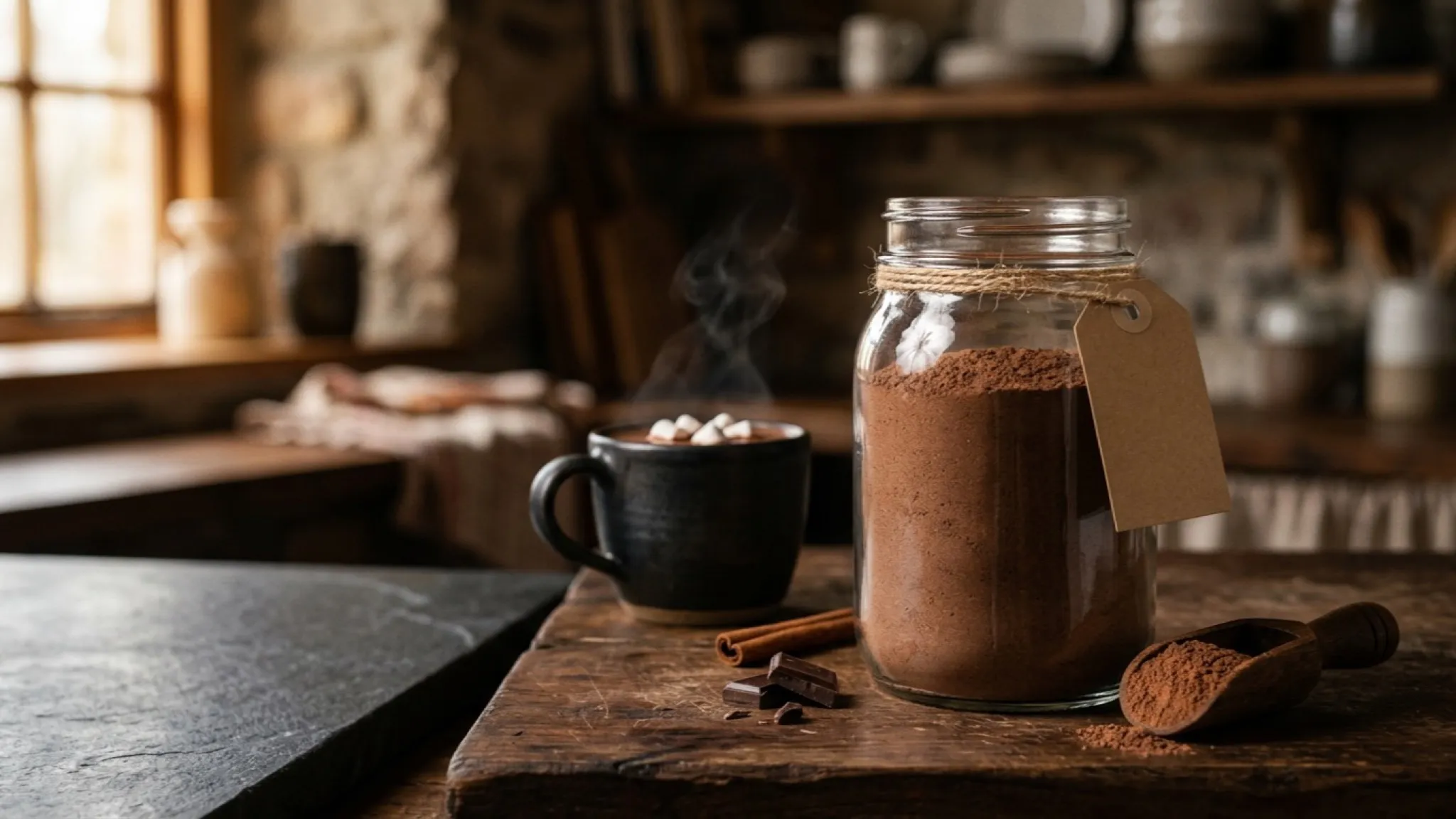
This guide makes the from-the-pantry version with chocolate you bought. It is the ready-to-drink page: the chocolate is melted into the mug now, and the formula is not intended as a make-ahead dry jar. For a giftable pantry blend, use the distinct homemade hot chocolate mix page. If you make your own bars — or want to start from roasted nibs the way it was drunk for most of chocolate’s history — the bean-to-cup version is its own craft, covered in drinking chocolate from scratch.
The Fat Math
Why real chocolate drinks richer, in one table:
| Base | Label-dependent fat note | What 240g of milk gets |
|---|---|---|
| Cocoa powder, 12g | Use the exact package label; cocoa powders vary | Concentrated cocoa flavor and solids; actual fat depends on the product |
| 70% dark bar, 45g | Hypothetical example: if the label says 40% total fat, 45g contributes about 18g total fat | More body and gloss; total fat is not automatically all cocoa butter |
| Milk chocolate bar, 45g | Use the exact package label for total fat and ingredients | Softer flavor and dairy-forward body, with product-specific composition |
| White chocolate, 40g | Use the exact package label; it should identify cocoa butter for real white chocolate | Body from its labeled fat and milk solids, with no nonfat cocoa solids |
Cocoa butter is one reason a real-chocolate cup can feel different as you drink it, but the exact fat contribution depends on the chocolate label. The solid fat in a cocoa-butter chocolate melts near body temperature — the same property that gives a tempered bar its clean snap and melt — so every sip can finish with that dissolve.
The percentages on the bar work as they do for eating: a 70% bar typically brings more cocoa and often less sugar per gram than a 55% bar, but check the package label. Higher-percentage chocolate usually makes a darker, less sweet drink. (Thickness is less predictable — the number does not tell you how the cocoa splits between butter and solids.) Full breakdown of what the number does and does not promise: cacao percentage explained.
Why Use a Hybrid
Chocolate alone can read slightly flat in milk — rounded, sweet, missing the roasted top notes. Cocoa powder is concentrated cocoa material with much of its cocoa butter removed, but it still contains product-specific fat; it contributes roasted, bitter, aromatic compounds alongside the rest of its labeled composition. Ten grams of Dutch-process cocoa dispersed in the cold milk puts those top notes back over the bar’s body. Dutch-process cocoa is alkalized, which changes its pH, color, acidity, and flavor; dispersibility depends on the product, so the paste-first step still matters. For another milk-based reference that allows Dutch-process or natural cocoa, see King Arthur’s homemade hot chocolate recipe. The broader natural-versus-Dutch decision is in Dutch-process vs. natural cocoa.
The Style Dial
All milk quantities are per 240g milk portion, not the finished drink weight. Scale linearly.
| Style | Chocolate | Extras | Character |
|---|---|---|---|
| American diner | 20g bar + 8g cocoa | 15g sugar | Light, nostalgic, marshmallow-ready |
| European sipping (the recipe above) | 45g bar + 5g cocoa | sugar to taste | Rich but drinkable by the mug |
| Italian cioccolata calda | 55g bar | 3g cornstarch whisked into the cold milk | Pudding-adjacent; spoon territory |
| Mexican-style | 40g bar + 5g cocoa | 1g canela, tiny pinch cayenne, whisked to froth | Aromatic, warming, lighter body |
The cornstarch move in cioccolata calda is doing mechanically what extra chocolate does expensively: raising viscosity. Cornstarch begins gelatinizing in a heat-dependent range, but the final thickening point varies by starch and formula. For this variation, follow the starch package’s cooking directions and whisk until properly thickened, then remove it from the heat.
Three Rules That Prevent the Three Failures
- Chop fine, melt off the heat. Big chunks need heat long enough to scorch the milk’s lactose on the pan bottom. Pea-sized pieces melt in residual heat.
- Avoid boiling the standard and hybrid versions. Boiled milk can skin, scorch, and pick up a cooked flavor. For the cornstarch Italian variation, follow the starch package’s cooking directions and whisk until properly thickened, then remove it rather than hard-boiling. Hersheyland’s manufacturer hot-cocoa recipe likewise heats the milk until hot and says not to boil.
- Whisk from the center out. Whisk until the chocolate and milk are smooth, then incorporate the remaining liquid. The same center-out motion is useful when bringing together a ganache.
If you have leftovers, follow the USDA FSIS leftovers and food-safety guidance: cool promptly, refrigerate within 2 hours (within 1 hour above 90F), keep the refrigerator at 40F or below, and reheat to 165F before serving.
Frequently Asked Questions
- What is the difference between hot chocolate and hot cocoa?
- Hot cocoa is made from cocoa powder, which is typically partially defatted, so it is lighter-bodied and faster. Hot chocolate proper is made by melting real chocolate into milk; its body and gloss depend on the exact chocolate label and the milk. The hybrid in this recipe uses both: powder for roasted top notes, bar for body.
- What is the best chocolate percentage for hot chocolate?
- 60-70% is the sweet spot: enough cocoa for depth, enough sugar that you are not re-sweetening heavily. Above 70%, add sugar to taste; below 55%, cut any added sugar entirely. Cheap chocolate does not hide in a hot drink -- this is a short ingredient-list recipe, and the bar is a major flavor source.
- Can I make it with water instead of milk?
- Yes -- water-based is closer to historical drinking chocolate and lets origin flavor through more clearly, at the cost of creaminess. Use 55g of chocolate per 240g water portion to compensate for the missing milk fat; the finished drink will weigh more than 240g once chocolate and other ingredients are added. Oat milk often gives a fuller body than many other plant milks, but brands vary; choose an unsweetened version and adjust after one mug.
- Why did my hot chocolate turn grainy?
- Common causes include scorched milk solids from a too-hot pan, overheated chocolate, or an emulsion that never came together because the chocolate went in over direct heat. Temperature is one factor, but ingredient choice, pan geometry, and mixing also matter: melt off the heat, stay under a boil, and whisk from the center outward. If it breaks, a hard whisk or a short pass with an immersion blender may pull it back together.
- Do marshmallows or whipped cream belong on it?
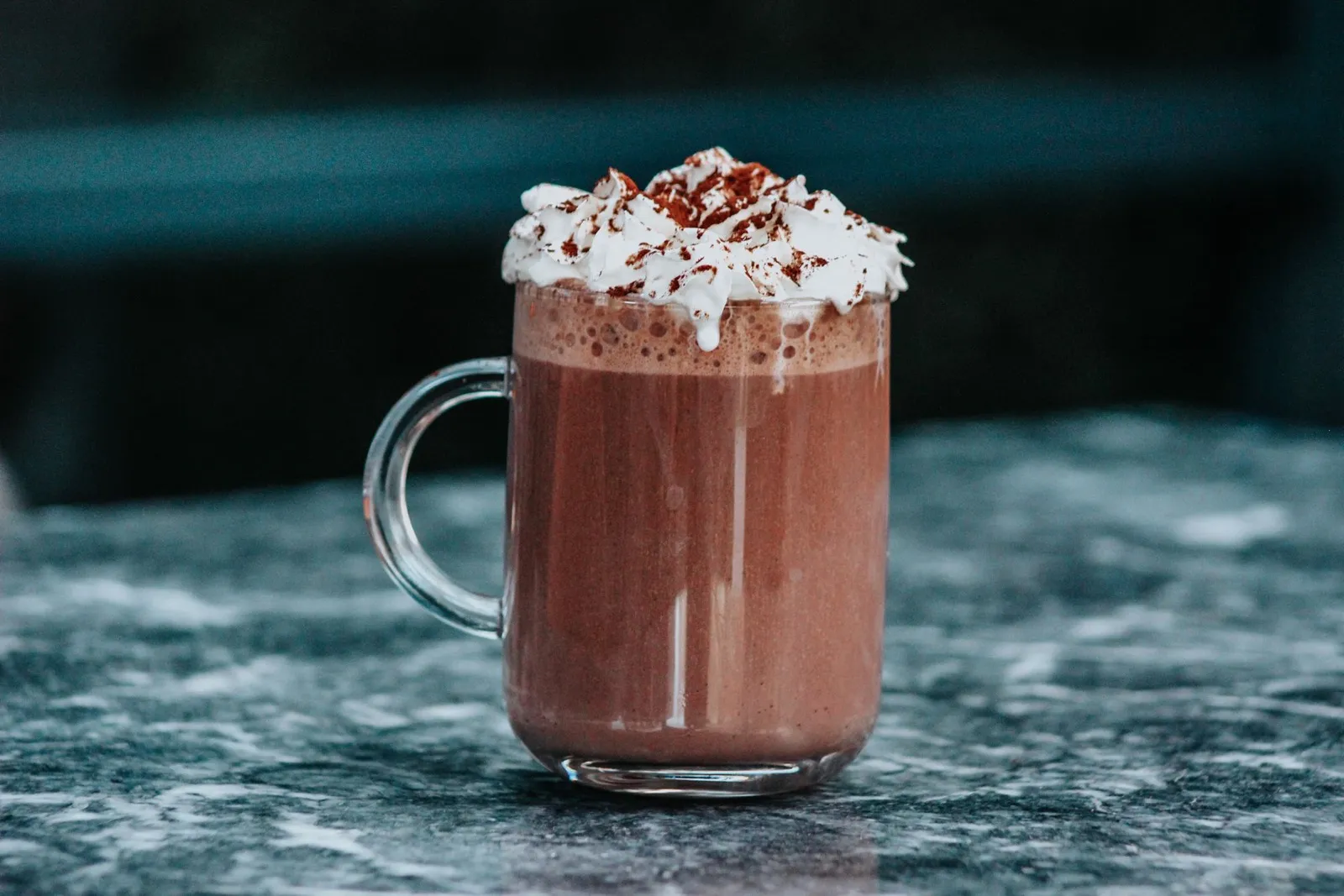
- On the American style, absolutely. On a 45g-per-mug European cup, whipped cream (unsweetened) is the better match -- it cuts richness with lightness rather than adding sugar to sugar. The Italian style needs nothing but the spoon.
For gift-jar territory, use the dry-pantry homemade hot chocolate mix: it combines Dutch cocoa, finely ground dark chocolate, and milk powder, with a 45g-per-mug ratio and a ready-to-copy jar label.
For a lighter, tea-like drink from a different part of the bean, see cacao husk tea, including how to choose food-grade roasted shells.