Ganache is an emulsion of chocolate and cream where fat droplets from cocoa butter and milk fat are suspended in the water phase provided by the cream. The chocolate-to-cream ratio is a major control, but chocolate composition, cream fat, temperature, mixing and crystallization also affect texture. A broken or overly soft ganache can often be adjusted; the ratio is not an irreversible verdict.
The word itself comes from French. A story repeated by Valrhona links it to an insult (“ganache” means “jowl” or “fool”) when an apprentice accidentally poured hot cream into chocolate. Treat that apprentice story as a legend rather than a documented origin.
Understanding Ganache Ratios
The fundamental variable in ganache is the ratio of chocolate to cream, measured by weight. Different chocolate types need different ratios because they contain different amounts of cocoa butter, cocoa solids, sugar, and milk fat — and each of those affects how the emulsion behaves.
Ganache Ratios by Chocolate Type
Ratios by weight — higher chocolate ratio gives a firmer, more scoopable ganache
| Chocolate | 01Truffle ratio (chocolate:cream) | 02Why it differs | 03Example |
|---|---|---|---|
| Dark (70%) | 2 : 1 | Cocoa butter and nonfat cocoa particles both affect the set | 300 g dark + 150 g cream = firm truffle ganache |
| Milk | 2.5 : 1 | Milk fat plus more sugar and less cocoa solids means it needs proportionally less cream | 300 g milk + 120 g cream = truffle consistency |
| White | 3 : 1 | No nonfat cocoa solids and a high sugar-and-milk-solids load require more chocolate for a firm set | 300 g white + 100 g cream = truffle consistency |
These are starting ratios, not guaranteed textures. Brand, cream composition, additions and serving temperature matter. Use an application-specific formula for glaze, sauce or whipped ganache.
jayarrchocolate.comA 70% label counts cacao ingredients, including any added cocoa butter; it does not fix the bar’s fat content. Multiplying 70% by nib fat content estimates a two-ingredient nib-and-sugar formula, not every 70% bar. Check the manufacturer’s composition or nutrition information. White chocolate, by contrast, contains cocoa butter, sugar, and milk solids but no nonfat cocoa solids. Its different balance means you generally need more white chocolate than dark chocolate to produce the same firmness.
White Chocolate Ganache
White chocolate ganache needs a higher chocolate-to-cream ratio than dark ganache because white chocolate has no nonfat cocoa solids to help structure the emulsion. For firm truffle centers, start at 3:1 by weight: 300 g white chocolate to 100 g heavy cream. For a softer cake filling or frosting, start around 2:1 and adjust after the ganache has fully cooled.
Chop the white chocolate finely and place it in a dry bowl. Heat the cream only until it is steaming with small bubbles at the edge, pour it over the chocolate, and wait 60 to 90 seconds. Stir from the center outward until glossy. If a few pieces remain, warm the bowl gently rather than reheating the entire mixture aggressively.
The familiar 28–29°C working range applies when tempering white chocolate for a shell; it is not a ceiling for making ganache. Cream deliberately changes the chocolate into an emulsion, so the original temper is no longer the goal. What matters is avoiding a local hot spot that gives the milk solids a cooked flavor. The white chocolate formulation guide explains why its milk-and-sugar system responds differently from dark chocolate.
White-chocolate brands vary widely in cocoa butter and sugar, so the ratio is a starting point rather than a law. If the cooled ganache is too soft, remelt it gently and add more white chocolate. If it is too firm, add warm cream a spoonful at a time. For a truffle with a glossy shell, let the ganache center set first, then coat it with separately tempered chocolate.
The Method: Building a Stable Emulsion
Making ganache is straightforward, but the details matter. The goal is a stable emulsion with no air whipped in, no scorched chocolate, and no broken fat phase.
Step 1: Chop the chocolate finely. Uniform pieces melt evenly. For a well-formulated chocolate, aim for pieces no larger than a centimeter. Real-chocolate chips can make ganache, but low-fluidity baking chips may produce a thicker texture than couverture or bar chocolate.
Step 2: Heat the cream. Bring heavy whipping cream to a hot, steaming state with small bubbles at the edge, roughly 85 to 90 degrees Celsius. This is a heating guide rather than a precise simmering point; avoid scorching or prolonged evaporation.
Step 3: Pour and wait. Pour the hot cream over the chopped chocolate and let it sit for 60 to 90 seconds without touching it, so the heat can begin melting the chocolate from the outside in.
Step 4: Stir from the center. With a spatula or whisk, stir in small circles from the center of the bowl outward. You are building the emulsion out — the center goes glossy and smooth first, then gradually pulls in the outer ring. Do not whisk hard or you will incorporate air.
Step 5: Check the emulsion. Finished ganache is glossy, smooth, and homogeneous. Visible oil suggests a split emulsion; graininess can also be unmelted chocolate. Gently warm if needed, then stir or blend without incorporating air. Add cream in small increments if the emulsion needs it, remembering that extra cream softens the set.
Step 6: Cool appropriately. For truffles, transfer to a shallow container, cover and refrigerate promptly for at least 2 hours, or until firm enough to scoop. Do not leave a large bowl cooling on the counter for hours. For pourable uses, work at 30 to 35 degrees Celsius.
Flavor Infusions
Ganache is an ideal vehicle for flavor because the fat phase carries aromatic compounds efficiently. Infuse the cream before combining it with the chocolate.
Heat infusions (steep in warm cream for 15–30 minutes, then strain):
- Earl Grey or chai tea — 2 tablespoons loose leaf per 150 g cream
- Fresh mint — a generous handful of bruised leaves
- Lavender — 1 tablespoon dried buds (use sparingly; it turns soapy if overdone)
- Cinnamon, cardamom, star anise — lightly toast whole spices first
- Coffee — 2 tablespoons coarsely ground beans
- Chili — 1–2 dried chilis, split and seeded
Direct additions (stir into finished ganache):
- Vanilla extract or scraped vanilla bean — 1 teaspoon per 300 g chocolate
- Spirits and liqueurs — 1–2 tablespoons per 300 g chocolate (rum, bourbon, Grand Marnier, amaretto). Spirits change both liquid content and setting behavior; they are not a volume-for-volume replacement for cream or a reliable preservative. Add gradually and assess the cooled texture.
- Nut butters — 2–3 tablespoons per 300 g chocolate, stirred in while the ganache is still warm
- Citrus zest — finely grated zest of one lemon, orange, or lime per 300 g chocolate
- Salt — a pinch of flaky sea salt transforms dark chocolate ganache
When working with different cacao origins, match the pairing to the bean’s natural profile. A bright, fruity Madagascar-origin chocolate loves raspberry or citrus; an earthy, nutty Ecuadorian chocolate takes well to coffee or toasted hazelnut.
Rolling and Shaping Truffles
Once the ganache has chilled at least 2 to 4 hours (overnight is even better for dark chocolate), it is ready to portion and shape.
Scooping: For the recipe yield of about 24 truffles, portion the 450 g base at roughly 18–19 g each (before coatings or optional additions). Use a scale or a small scoop to portion the ganache onto a parchment-lined sheet. Work quickly — the warmth of your hands softens it. If it gets too soft, return it to the fridge for 15 minutes.
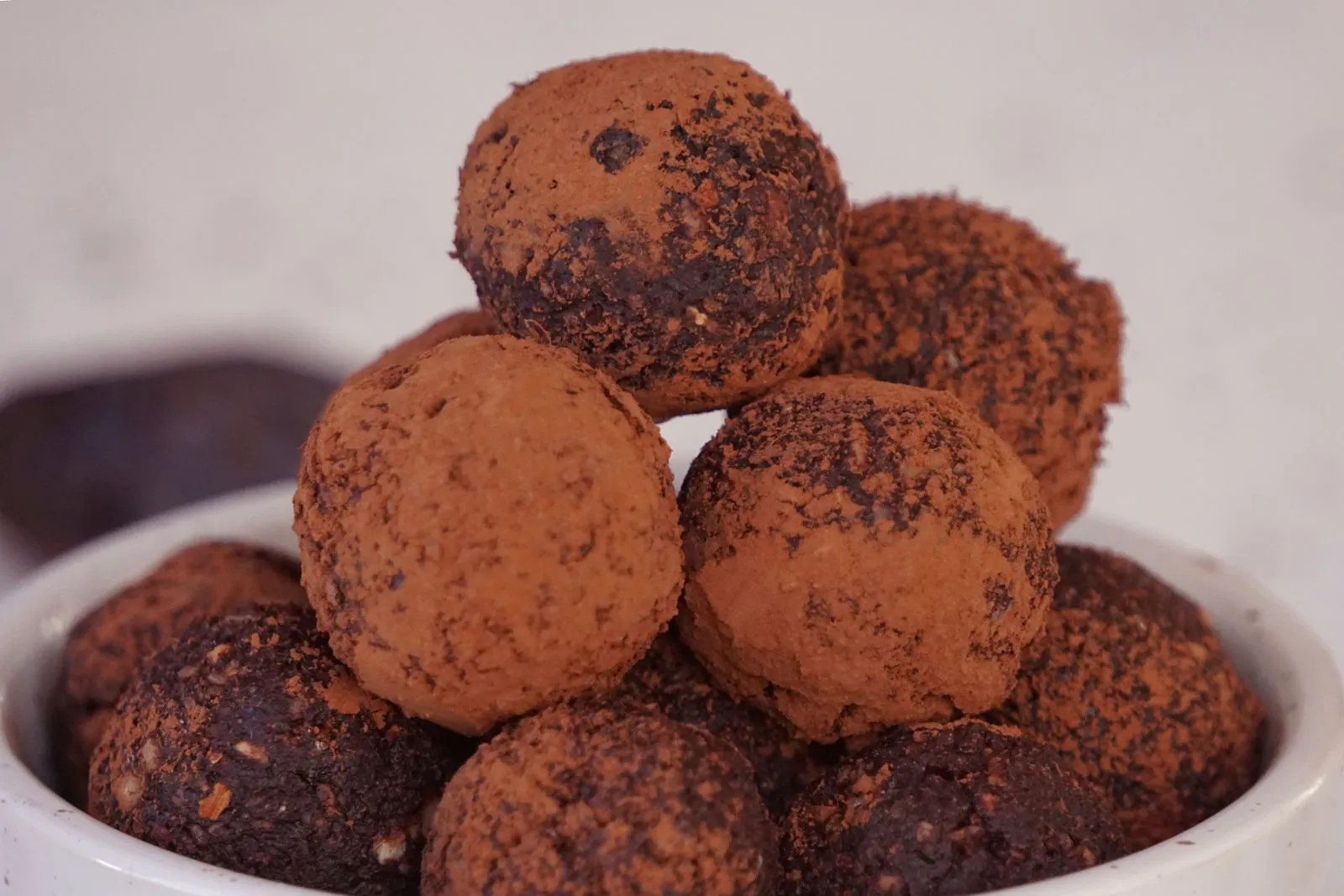
Rolling: Dust your palms lightly with cocoa powder (natural or Dutch process — your preference) and roll each portion into a rough sphere. Perfection is not the goal; slightly irregular shapes are the mark of handmade truffles. Work in batches of 6 to 8, keeping the rest in the fridge.
The hand-temperature problem: Your hands warm the ganache. Use clean, dry hands or food-safe gloves and work in small batches. If you cool your hands with water, dry them thoroughly before touching the ganache. If truffles are melting as you roll, the ganache needed more chilling or the room is too warm. The ideal working environment is below 20 degrees Celsius.
Coating Options
A coating adds texture contrast and can protect quality. It does not establish a safe shelf life or make cream ganache shelf-stable.
Cocoa powder: The classic. Roll finished truffles in high-quality unsweetened cocoa powder and shake off the excess in a fine strainer. Fastest coating, sophisticated slightly-bitter exterior.
Chopped nuts: Toast and finely chop pistachios, hazelnuts, or almonds, and roll truffles in them while the surface is still slightly tacky.
Coconut: Finely shredded, toasted or raw. Works especially well with white chocolate ganache.
Tempered chocolate shell: The professional approach, and the one place in truffle-making where precise temperature control pays off. Temper your chocolate using its manufacturer’s curve — common starting ranges are 31 to 32 degrees Celsius for dark, 29 to 30 for milk, and 28 to 29 for white. Let chilled centers lose their surface chill without developing condensation, then dip a dry, firm center into the tempered chocolate with a fork or dipping tool, lift it out, tap off the excess, and set it on parchment. A thin test smear should set evenly in a cool room; actual shell setting time depends on thickness and conditions.
The thermometer link below is an Amazon affiliate link. As an Amazon Associate, JayArr Chocolate earns from qualifying purchases at no extra cost to you.
Because the shell has to land inside a narrow window, this is the step where an instant-read thermometer earns its keep — the working range balances fluidity with enough stable cocoa-butter crystals. Form V crystals also exist below that range in solid chocolate. Follow the manufacturer’s tempering curve, because the useful temperatures vary by product. A fast, accurate probe like the Thermapen ONE Digital Thermometer has a manufacturer-rated response of about one second; ThermoWorks lists its specifications. Stir before measuring to reduce temperature gradients.
Drizzle: For a decorative finish, drizzle contrasting tempered chocolate over set truffles with a fork or piping bag — white on dark, or dark on white.
Ganache for Other Applications
Ganache also works in many pastry applications. The ratios below are starting points for dark chocolate, not interchangeable formulas for milk and white chocolate.
Cake filling and frosting: Use a 1:1 ratio (equal parts chocolate and cream) for a softer ganache. Chill it until cold, then whip gently just until lightened; overwhipping can make it grainy. For a predictable whipped frosting, use a dedicated whipped-ganache recipe.
Tart filling: Pour warm ganache (a pourable 1.5:1 ratio) into a pre-baked tart shell and refrigerate at least 2 hours until set. The surface should be glossy and smooth; serve at cool room temperature.
Ganache glaze: A 1:1 ratio with an added tablespoon of corn syrup per 100 g chocolate makes a pourable, self-leveling glaze. Start applying near 35 degrees Celsius and adjust to the coating thickness needed; this is a ganache glaze, not a guaranteed mirror-glaze formula.
Chocolate sauce: A 1:1.5 ratio (more cream than chocolate) makes a pourable sauce that stays liquid at room temperature. Finish with a tablespoon of butter for extra sheen.
Troubleshooting Ganache
Grainy or broken: Check whether you have unmelted pieces or visible separated fat. Temperature imbalance, composition and insufficient emulsification can all matter. Valrhona’s troubleshooting guidance recommends adding a small amount of liquid and mixing gently; gentle warming to about 35°C can help when appropriate. An immersion blender can help if its head stays submerged. Do not assume every grainy mixture simply got too hot.
Too thin: Too much cream for the chocolate. Melt additional chopped chocolate and fold it into the warm ganache in small increments, or simply chill longer — some ganache that seems thin at room temperature firms up after 4 to 6 hours in the fridge.
Too thick or stiff: Temperature, too little liquid, and the chocolate’s composition can each contribute. Warm the ganache gently and stir in cream a tablespoon at a time. Remember that two-ingredient craft chocolate (beans and sugar only, no added cocoa butter or lecithin) is naturally more viscous than European-style chocolate, but fluidity of melted chocolate alone does not predict the firmness of every ganache.
White spots after storage: A dry white film on a chocolate shell may be fat or sugar bloom; fat migration from the filling is one possible cause, as Callebaut explains. It is not always a Form V-to-VI change. Bloom itself is a quality problem, but appearance alone cannot prove that a perishable center is safe. Discard moldy, spoiled or improperly stored truffles. See fat bloom and sugar bloom prevention for the shell-quality distinction.
Thick and clumpy during mixing: Ganache already contains substantial water from cream, so this is not automatically the same problem as adding a drop of water to plain melted chocolate. Check melting, temperature and emulsification; gradual liquid addition can help, although it changes the recipe. The plain-chocolate viscosity guide concerns a different system.
Storage and Shelf Life
Simple homemade ganache made from cream and chocolate is perishable. For an unvalidated home formula, use conservative USDA perishable-leftover guidance: refrigerate promptly at 40°F (4°C) or below and use within 3–4 days. This is a cautious household rule, not a measured shelf life for this ganache. Limit time out of refrigeration to two hours, or one hour above 90°F (32°C). A tempered shell protects quality but does not make an untested filling shelf-stable. Professional formulas can last longer only when their water activity, sanitation, packaging, and storage conditions support the claim.
Bring truffles to cool room temperature (about 18 to 20 degrees Celsius) for 15 to 20 minutes before serving — cold ganache is muted, because, as with properly tempered chocolate, the temperature at the moment of tasting shapes how the flavor compounds reach your palate.
For longer storage, uncoated ganache balls can be frozen, with about 2 months as a quality target; thaw overnight in the refrigerator, then inspect their texture before coating. Freezing finished tempered shells often causes condensation or bloom during thawing.
Frequently Asked Questions
- What is the difference between ganache and chocolate mousse?
- Ganache is an emulsion of chocolate and cream — dense, rich, and smooth. Mousse incorporates air, through whipped cream, whipped egg whites, or both, for a lighter, airier texture. Ganache can become the base for a mousse if you cool it and then whip it, but the two have fundamentally different textures and uses: ganache for truffles, tart fillings, and glazes; mousse served on its own or as a light cake filling.
- Can I use chocolate chips instead of bar chocolate for ganache?
- Yes, if they are real chocolate. Chocolate chips are a format rather than one formula: many contain cocoa butter and work well, while low-fluidity bake-stable chips may make a thicker ganache. Bar chocolate or couverture is more predictable. Check the ingredient list and avoid treating compound chips made with replacement fats as interchangeable with real chocolate.
- Why did my ganache break and how do I fix it?
- Ganache breaks when the emulsion fails and the fat separates from the water phase, producing a greasy, grainy mixture. Temperature imbalance, composition or incomplete emulsification can contribute. Distinguish separated oil from unmelted chocolate, warm gently when needed, and mix slowly with small additions of cream if necessary. Extra cream changes the firmness; rescue is not guaranteed.
- How long do homemade chocolate truffles last?
- Treat simple cream-and-chocolate ganache as perishable: refrigerate promptly at 40°F (4°C) or below and use within 3–4 days as a conservative household rule, not a tested product shelf life. A chocolate shell protects quality but does not prove shelf stability. Professional confections can last longer only when formulation, water activity, hygiene, packaging, and storage have been evaluated. Uncoated centers can be frozen for about 2 months for quality and thawed in the refrigerator. Limit room-temperature handling to two hours, or one hour above 90°F (32°C).
- Do I need to temper chocolate for a truffle coating?
- For a professional shell with gloss, snap, and clean release, yes — tempering is essential, and untempered chocolate may set dull, streaky or soft. But for casual homemade truffles, rolling in cocoa powder, chopped nuts, or coconut is simpler and produces excellent results with no tempering at all. Many home truffle recipes skip the tempered shell entirely.