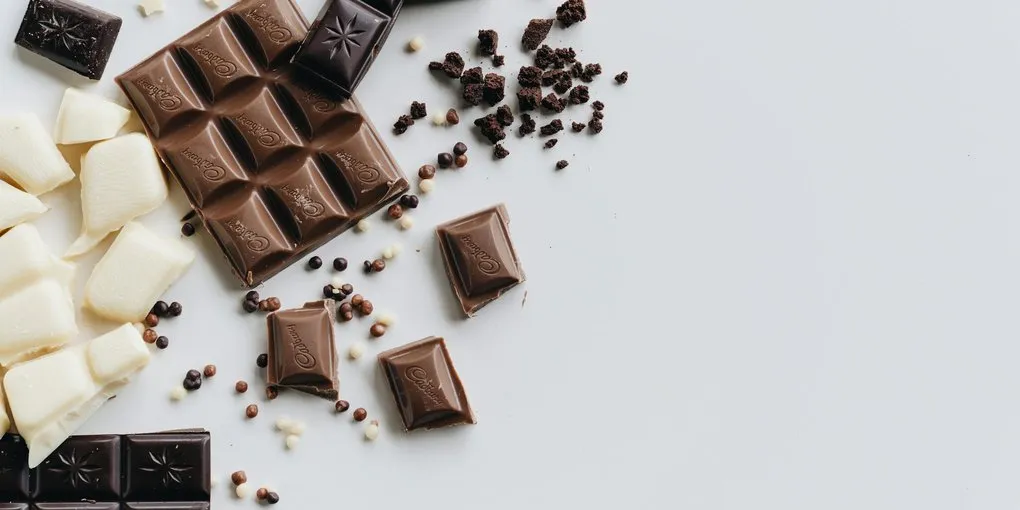
Tasting chocolate is a way to pay closer attention to food you enjoy. You do not need a trained palate or an elaborate vocabulary to begin. A familiar supermarket bar can be a useful reference alongside craft bars: the point is to notice differences, not to assume the label predicts quality.
This guide is a home tasting routine. Professional systems, including the IICCT’s Flavor Profile Map and Cacao of Excellence’s evaluation protocols, offer more structured language and calibration. They are distinct systems, with different purposes and scoring conventions.
Before You Taste
Choose a manageable comparison. Three or four bars make a practical first session. This is a starting suggestion, not a biological limit. Strong flavors, portion size, repetition and the task itself affect fatigue. Stop or take a break when samples become hard to distinguish.
Match conditions. Bring samples to a similar, comfortable room temperature. Very cold or very warm bars behave differently in the mouth. Keep them away from strong food odors and direct sunlight. Use neutral light if you want to compare surface appearance.
Keep portions small. A small bite is enough. Cacao of Excellence’s guide specifies about 2–3g per tasting of dark chocolate. Match portion sizes when comparing bars; a coin-sized shape does not reliably tell you the weight.
Prepare your palate. Give strong food, coffee or toothpaste flavors time to clear. Have water and plain, unsalted crackers available between samples. Warm drinking water is an option used in professional cacao evaluation; it need not be hot. Pause until lingering flavors have faded.
Hide the answers. For a blind comparison, have someone label the samples with codes and keep the wrappers aside until you have written your impressions. Check ingredient and allergen information before sharing samples, even if flavor notes remain hidden.
Step 1: Look
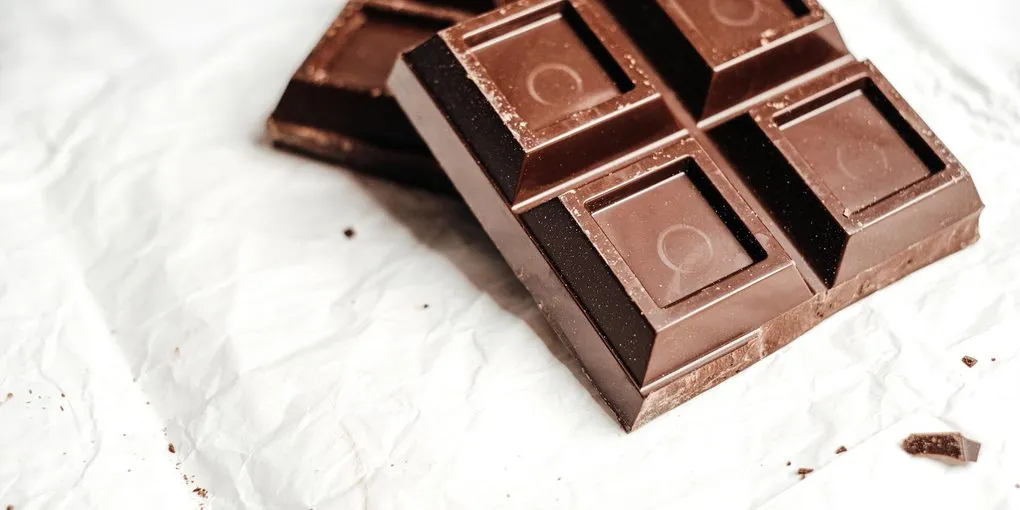
Observe the surface, color and any streaks or patches. Gloss and an even surface can be useful observations, but appearance is not a complete temper test. Mold finish, ingredients, handling and storage also affect what you see. A deliberately textured or matte surface is not automatically a defect.
Darkness is not a quality ranking. Note it as a characteristic without assuming a darker bar contains better beans or was roasted correctly.
If you see fat bloom or sugar bloom, record it. Bloom can affect texture and appearance and is not, by itself, proof that the chocolate is unsafe. If a sample instead shows signs of spoilage or contamination, do not taste it merely to complete a scoring sheet.
Step 2: Break and Listen
Break a piece and notice whether it snaps sharply, crumbles or bends. Compare similar bar thicknesses at the same temperature if you want this observation to be useful.
Tempering influences the cocoa butter crystal structure and the chocolate’s physical properties. But snap also depends on composition, temperature and geometry. A thin dark bar and a thick milk chocolate bar need not sound alike even when both are well made.
A snap does not identify Form V, and a dull break does not diagnose Form VI. Laboratory techniques are needed to characterize crystal forms. Work on cocoa butter crystallization shows why physical structure matters, but it does not turn a listening test into an instrument measurement.
Step 3: Smell
Smell the freshly broken piece before tasting. Start with broad impressions such as cocoa, fruit, nuts, flowers or roast. If the aroma is faint, briefly warm the piece between clean, unscented fingers and smell again; avoid transferring soap, lotion or food odors.
The IICCT Flavor Profile Map can help you find words. Its displayed positive regions include Herbal/Spicy, Fruity, Vegetal and Dark Sweet, with more specific flavor points around the map. Its defect map uses Chemical, Mineral, Bacterial and Animal regions. The downloadable poster also has central Chocolatey and Indistinct labels. Use the actual map rather than treating a simplified list as its complete taxonomy.
These are sensory descriptors. A fruity aroma does not mean fruit was added, and a “bacterial” descriptor is not a laboratory finding of bacteria. Equally, acidity is not automatically a defect: its character, intensity and balance matter. Record a vinegar-like or otherwise distracting note without assuming you can identify the exact production failure from taste alone.
For another reference, Cacao of Excellence supplies its own flavor wheel and glossary. Do not combine the two systems’ labels or scores as though they were interchangeable.
Step 4: Taste and Notice the Changes
Let a small piece soften, move it gently around the tongue and palate, and notice what develops. You can begin by allowing it to melt slowly. If you take a bite or chew a little, that is not a tasting failure: Equal Exchange’s tasting instructions explicitly include a few slow chews. Use a consistent approach within a comparison.
Separate several kinds of observation:
- Taste: sweetness, acidity and bitterness, and any other clear taste impression.
- Aroma: impressions such as fruit, flowers, roasted nuts or cocoa that become apparent while eating.
- Mouthfeel: smoothness, grittiness, creaminess, waxiness or a drying, astringent sensation.
- Finish: what remains after the chocolate leaves your mouth, whether pleasant or distracting.
You may notice an opening, a middle and a finish. Their order and timing vary with the sample and tasting method. A long finish can be appealing, but length alone is not proof of quality; a shorter, balanced finish can also be enjoyable.
You are naming perceptions, not measuring individual molecules. A “chocolatey” impression does not establish that one particular aldehyde is dominant, and a caramel note does not identify a specific furan. Research that reconstructs chocolate aroma, such as this sensomics study of a commercial milk chocolate, uses mixtures of odorants rather than a universal single-compound explanation.
Temper and Tasting Conditions
Tempering changes the physical state of cocoa butter, which can affect texture and how the chocolate melts. Cocoa butter is a mixture with composition-dependent melting behavior, not a substance that switches completely from solid to liquid at exactly 34°C.
For comparisons of your own batches, aim for similar temper, storage, temperature and portion size. Record any differences you cannot control. Do not assume an untempered sample necessarily delivers every flavor at once, or that two differently crystallized samples should be directly comparable on melt alone.
Step 5: Record Preference Separately from Description
Write notes before discussing the samples. Someone else’s “raspberry” can easily become the word you expect to find, even if your own first impression was different.
A simple personal liking scale is enough:
| Score | Meaning for your journal |
|---|---|
| +2 | I like this very much |
| +1 | I like this |
| 0 | Neutral or mixed feelings |
| -1 | I dislike this |
| -2 | I strongly dislike this |
This is a preference scale, not an absolute quality certificate. Separately record what you perceived, how intense it was, and any suspected defect. You can dislike a clearly fruity bar without proving it was poorly made.
Dandelion has documented a −2 to +2 preference scale in a 2015 processing experiment. It also described a 1–10 daily production scale in 2016. Those accounts illustrate different uses of scoring; there is no reason to present one as its sole, timeless system. Professional descriptive panels also use reference samples and calibration, which remembering every chocolate you have eaten cannot replace.
Build a Vocabulary Without Forcing It
Compare similar styles. Several plain dark bars with similar cacao percentages can be a useful exercise. Equal percentages do not make recipes or processing identical, though; see what cacao percentage means.
Let the samples surprise you. Madagascar, Ecuador and Tanzania each produce varied cacao. Do not require a bar to taste of berries, flowers or melon because its country is printed on the wrapper. The lot, fermentation, roast, recipe and other processing choices all contribute.
Use real food memories. When you eat a raspberry or toasted almond, notice the aroma, taste and texture. Later, use that comparison only when it fits. “Fruity,” “roasted” or simply “chocolatey” are useful notes; specificity is optional.
Keep a journal. Record maker, bar name, origin or lot when supplied, cacao percentage, ingredients, date and storage conditions. Add your observations and preference score. Revisit a sample in another session to see which impressions repeat.
Observe aging rather than predicting it. Storage can change chocolate’s aroma and texture. Some changes may be appealing and others may reflect deterioration. Do not assume that three months of aging must mellow bright notes or improve complexity.
Our flavor-wheel guide offers more ways to organize descriptors.
Use Tasting to Improve Your Own Batches
For a bean-to-bar maker, a comparison is most informative when the relevant conditions are recorded. Change one chosen variable where practical, keep the other processing steps comparable, code the samples, and include a repeat or reference sample. Taste again before making a major process decision.
Compare roast trials as controlled experiments with your own equipment and beans. A universal first-pop timing, fixed two-minute adjustment or prescribed number of test batches cannot determine every suitable roast. Flavor evaluation also does not validate a food-safety process.
If two samples differ in temper or age, note that limitation before attributing their entire difference to roasting or conching. The journal should help you decide what to test next, not turn one tasting into a certain diagnosis.
A Repeatable Chocolate Tasting
- 01
1. Look
ObserveRecord surface and color; appearance has several possible causes.
- 02
2. Break
ListenCompare similar thicknesses and temperatures; snap is a physical observation.
- 03
3. Smell
Find broad notesStart with your own impressions, then consult a flavor reference.
- 04
4. Taste
Notice changeObserve taste, aroma, texture and finish. No fixed flavor timetable.
- 05
5. Record
Separate likingWrite notes independently; distinguish personal preference from intensity.
Frequently Asked Questions
- What is a useful way to taste craft chocolate?
- Use small portions at similar temperatures. Look, break, smell, then let a piece soften and melt while noticing taste, aroma, texture and finish. Slow chewing is also used in some tasting methods. Consistency within a comparison matters more than obeying a universal no-chewing rule.
- How many chocolate bars should I taste in one session?
- Three or four is a manageable starting choice. Fatigue varies with sample intensity, portion size and the task; there is no universal five-bar cutoff. Cleanse your palate, take breaks and stop when the samples become difficult to distinguish.
- What temperature should chocolate be for tasting?
- Use a similar room temperature for all samples and note unusually warm or cold conditions. Temperature changes aroma and texture, so a cold sample is not a fair direct comparison with a warmer one. A narrow temperature range is not a universal rule for every tasting.
- What is the IICCT Flavor Profile Map?
- It is the Institute's vocabulary and profiling aid for chocolate and cacao, with positive flavor regions and a separate defect map. Use the current map directly; its descriptors are sensory terms, not proof of an ingredient, microorganism or specific processing failure.
- How does Dandelion Chocolate score tastings?
- Published Dandelion accounts describe different systems: a minus-two to plus-two preference scale for a 2015 processing experiment, and a one-to-ten daily production scale in 2016. Neither should be presented as an absolute universal quality scale.
- Does tempering affect chocolate flavor perception?
- It can affect melt and mouthfeel, which influence the tasting experience. Compare samples at similar temperatures and physical states where possible. Untempered chocolate does not necessarily release all flavors at once, and one fixed melting temperature does not describe every formulation.
- How do I build a chocolate flavor vocabulary?
- Compare similar styles, keep a journal and use familiar foods as references. Write what you perceive before reading tasting notes. Broad descriptions are valid, and a country of origin is not a guarantee that one particular flavor will appear.