Chocolate seizes when a smooth, glossy melt suddenly turns into a grainy, stiff, dull paste — often in seconds, and often right when you thought the hard part was over. It is one of the most alarming things that can happen at the stove, because it looks like the chocolate has been ruined. Usually it has not been ruined so much as transformed: the same chemistry that seizes chocolate also tells you how to bring it back. Here, “moisture seizing” means thickening caused by a little water entering the melt. Heat damage can produce a similar-looking problem, but a thick bowl is not necessarily burnt. Identifying the cause helps you choose a useful response.
What “Seized” Chocolate Actually Is
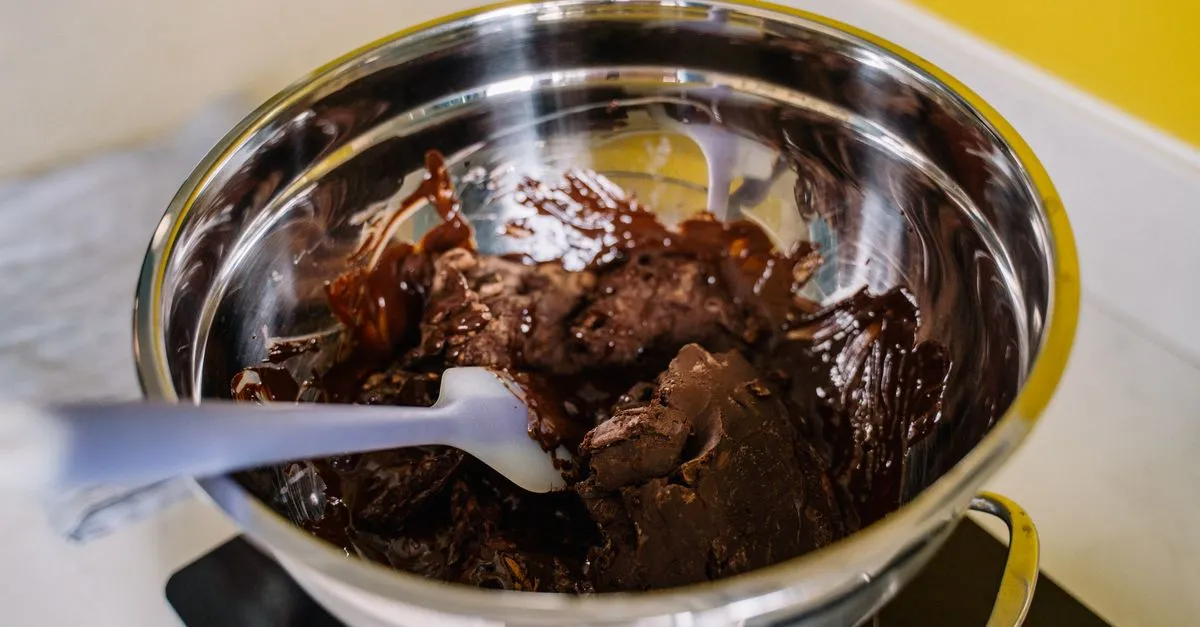
Seized chocolate is melted chocolate that has abruptly thickened and turned grainy, losing its fluid, glossy texture. Instead of a smooth liquid it becomes a dull, clumpy mass with the consistency of stiff mud or wet sand. This is different from chocolate that is merely thick, and different again from chocolate that won’t set — moisture seizing often follows a splash or damp utensil. Its appearance alone cannot prove the cause.
The reason it feels so catastrophic is that it happens fast and looks irreversible. But understanding why the melt broke turns a kitchen disaster into a solvable problem. Moisture is what actually seizes chocolate; overheating produces a similar-looking grainy mass by a completely different mechanism. They can look alike in the bowl and could not be more different in the fix.
Why Chocolate Seizes: Water Is the Culprit
Moisture seizing occurs when a small amount of water or steam contacts the melted chocolate. This is counterintuitive, because chocolate is happy to be mixed with a lot of liquid (that is how ganache is made) — but a small amount is a disaster.
The mechanism is about sugar. Melted chocolate is a suspension of dry particles — sugar and cocoa solids — dispersed in a fat phase consisting mainly of cocoa butter, with milk fat or other fats depending on the formula. When a few drops of water land in it, the water dissolves the sugar on the surface of those particles, turning it sticky. The now-syrupy particles glue to one another and seize into stiff clumps. How much water causes a noticeable change depends on the formulation and its existing moisture. There is no universal percentage at which every bowl seizes. Cocoa particles can also take up water; the behavior is more than a sugar-only switch. Chocolate Alchemy’s water FAQ explains why water changes the whole chocolate system. (For the fluid-dynamics version of this, see our explainer on the Casson model of chocolate viscosity.)
The usual sources of that stray water are avoidable once you know to watch for them:
- Steam from a double boiler condensing into the bowl.
- A lid or cover over melting chocolate, which traps steam that drips back down.
- A wet spoon, spatula, or bowl that was not fully dried.
- Condensation from moving cold chocolate into a warm, humid kitchen.
The Look-Alike: Overheated and Scorched Chocolate
Chocolate exposed to excessive or uneven heat can develop a cooked or burnt flavor and an unpleasant texture. Milk and white chocolate need particular care because of their milk solids. However, exceeding a tempering working temperature does not automatically scorch the chocolate: it may simply melt the useful seed crystals.
Use the melting instructions for the particular chocolate. For example, Valrhona’s seeding method specifies 50–55°C (122–131°F) for dark chocolate and 45–50°C (113–122°F) for milk chocolate. Those are process targets, not universal burn thresholds. Prolonged heating, an unevenly heated microwave batch, or a double boiler that boils dry can damage chocolate. Stir frequently and monitor the whole batch rather than relying on one thermometer reading.
The critical difference: truly scorched chocolate cannot be rescued. There is no liquid you can add to reverse a burn — cocoa butter can loosen a thick mass but cannot undo scorch. If the chocolate smells acrid or scorched, it is finished — discard it and start over. If chocolate lost its temper without developing heat damage or moisture contamination, it can generally be tempered again. If it is merely thick, diagnose the temperature, crystallization, and formulation before adding anything.
Seized, Too Thick, or Won’t Temper? Tell Them Apart
Seizing is often confused with other problems that need different responses, so diagnose before you act:
- Seized — a sudden change to a grainy, clumpy, stiff mass, usually right after water or steam got in. The texture is broken, not just resistant.
- Too thick / high viscosity — the chocolate is still smooth and glossy, just sluggish to pour. Possible causes include low temperature, too many crystals, or a formulation with low fluidity. Additional cocoa butter can help some formulations, but is not the first answer to every thick bowl.
- Won’t temper — the chocolate melts and flows fine but sets soft, dull, or streaky. That is a crystallization problem, not a melt problem.
- Bloom — a white or grey film on already-set chocolate. This may be fat bloom or moisture-related sugar bloom. Its appearance on a solid piece is different from a seized melt.
Use texture together with what happened immediately beforehand: a splash, prolonged heating, cooling, or continued stirring at working temperature. These clues narrow the possibilities; none is a definitive test by itself.
How to Rescue Water-Seized Chocolate
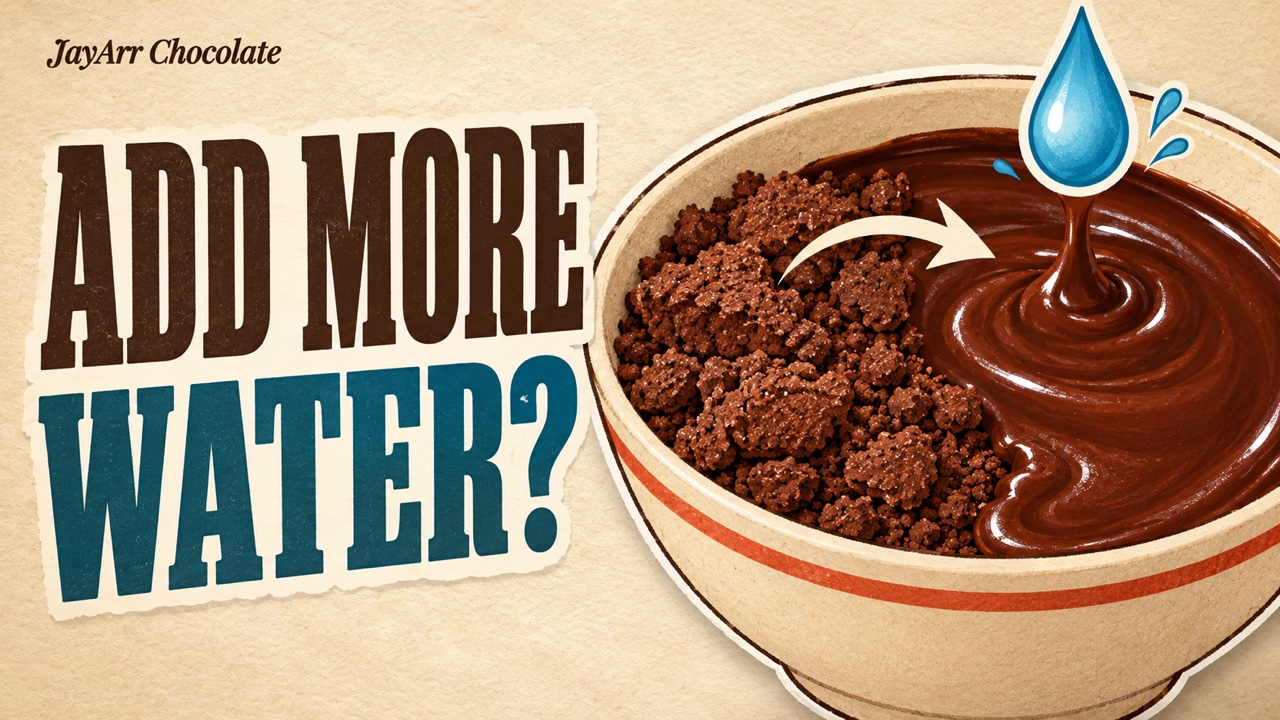
The fix for water-seized chocolate is to add more liquid, not less. This sounds backwards, but it follows directly from the cause: a little water makes sugar particles sticky and clumpy; enough liquid allows the particles to disperse and sugar to dissolve sufficiently for the mixture to flow as a sauce or emulsion. You cannot go back to a dry bar, but you can move forward to a smooth sauce.
The method:
- Add warm liquid — cream, whole milk, or water — gradually. The necessary amount depends on the chocolate and the liquid. As a rough reference, King Arthur quotes Shirley Corriher’s guidance of about 1 tablespoon of water-type liquid per 57g (2 oz) of 55–60% chocolate, with more for higher percentages. Treat this as a starting guide, not a guaranteed minimum for all products: cream, milk, and water do not contain the same proportion of water.
- Stir thoroughly after each addition, using gentle heat only as needed to keep the mixture warm. It may remain thick initially before becoming smoother as you add sufficient liquid.
- Stop when it is smooth and pourable.
What you now have is essentially a ganache or chocolate sauce, and that is the honest catch: rescued chocolate will no longer temper into a snappy, glossy bar, because you have permanently changed its composition by adding water or dairy. Choose a use suited to its new consistency, such as hot chocolate, sauce, or frosting. For truffles or baking, use an appropriate recipe and account for the added liquid; a rescued bowl is not automatically a correctly balanced ganache or a weight-for-weight replacement for plain chocolate. Follow the finished recipe’s storage instructions, including refrigeration for perishable dairy sauces. Note that added cocoa butter is not a fix for a moisture seize: extra fat can improve the flow of chocolate that is merely too thick, but it does not dissolve the sticky sugar bridges a water seize creates. Once sugar has clumped from moisture, liquid — not more fat — is what brings it back.
If Chocolate Thickens in a Melanger
Keep the refining batch and equipment dry when making conventional bar chocolate. Do not pour water into a running melanger to loosen it. Premier’s manual says a moisture-seized mass can no longer be refined in that machine. Stop a blocked or struggling machine and follow its shutdown and troubleshooting instructions; disconnect it before cleaning or handling obstructed parts.
That is an equipment and process limitation, not proof that the food can never have another use. A clean, unburnt batch may be suitable for repurposing outside the machine, although unrefined particles can remain gritty. Discard a batch contaminated by damaged equipment or debris.
A cold start is only one possible cause of a stall. Ingredient loading, stone pressure, and mechanical problems also matter. Use the warming method approved for your model. In particular, CocoaTown warns that preheating some drums can damage their glued assemblies. See our melanger guide and your machine’s manual before restarting.
How to Prevent Seizing
Seizing is far easier to prevent than to fix, and prevention comes down to keeping water out and heat under control:
- Dry everything. Bowls, spatulas, and molds must be bone-dry before they touch chocolate.
- Never cover melting chocolate. A lid traps condensation that drips back in.
- Watch the steam. If you melt over a double boiler, use a bowl wide enough to sit over the pot without steam escaping around the sides, and keep the water at a bare simmer — not a rolling boil.
- Melt gently. Follow the manufacturer’s melting target and use extra care with milk and white chocolate. Stir often; in the microwave, use short bursts at reduced power.
- Keep dry and wet ingredients separate until you deliberately want an emulsion (as in ganache), where the fat and liquid are balanced from the start.
- Flavor with oil-based flavorings, not extracts. Regular extracts (vanilla, peppermint) carry water and alcohol into the melt and can seize it on contact — peppermint bark is the classic casualty. Choose food-grade flavorings specifically suitable for chocolate and follow their dosage instructions.
A scorched or burnt note indicates overheating/heat damage — not a moisture seize; our off-flavor diagnosis guide covers those symptoms in detail. For the method-by-method version of all of this — double boiler, microwave, residual heat — see how to melt chocolate without ruining it, and if you are working from a bag rather than a bar, melting chocolate chips covers why they behave differently.
Moisture-Seized vs Overheated/Scorched Chocolate
| Property | 01Moisture-Seized | 02Overheated / Scorched |
|---|---|---|
| Cause | A trace of water or steam in the melt | Excessive heat exposure (scorching) |
| Look & feel | Grainy, stiff, dull clumps | Thick, grainy, may smell burnt |
| Rescue | Add more warm liquid → smooth ganache/sauce | None if scorched; if only too warm, cool and retemper |
| Can it temper after? | No — composition changed | Yes if only warmed; no if scorched |
| Prevention | Keep all tools dry; no lids; control steam | Follow product-specific temperatures; stir and avoid hot spots |
These are two possible causes of a grainy melt. Cooling, crystallization, and formulation can also affect flow; use the recent handling history to guide diagnosis.
jayarrchocolate.comFrequently Asked Questions
- Why did my chocolate seize?
- A small amount of water from steam, a splash, or a damp utensil can make particles in melted chocolate stick together, creating a stiff, grainy paste. The amount needed varies by formulation. Heat damage can look similar, while cooling and excess crystallization can also make chocolate thick, so texture alone does not identify the cause.
- How do you fix seized chocolate?
- If moisture caused the problem and the chocolate is otherwise suitable to use, gradually stir in enough liquid to make a smooth sauce or emulsion, warming gently as needed. The amount depends on both chocolate and liquid. The result cannot be treated as plain chocolate for tempering; choose a recipe that suits its new composition.
- Can you save seized chocolate?
- Moisture-seized chocolate can often become sauce, hot chocolate, or frosting. Account for any added liquid if using it in another recipe. Burnt flavor cannot be removed by adding liquid or fat. Chocolate that merely lost temper through warming can generally be tempered again if it has no heat damage or contamination.
- Why does adding more liquid fix seized chocolate when a little water ruined it?
- A little water makes sugar and cocoa particles stick together. Sufficient additional liquid lets sugar dissolve and the mixture disperse into a sauce or emulsion. This changes the composition rather than restoring the original dry chocolate.
- What is the difference between seized and too-thick chocolate?
- Moisture seizing often creates a grainy paste soon after water enters the melt. Smooth but sluggish chocolate may be too cool, overcrystallized, or formulated with low fluidity. Consider its temperature and handling history before adding cocoa butter or changing the recipe; appearance is a clue, not a definitive diagnosis.
- Can chocolate seize in a melanger?
- Yes. Keep conventional bar-chocolate batches dry and do not add water to a running machine to loosen them. Stop a blocked machine and follow its manual. A cold start is only one possible cause of a stall; use only the warming method permitted for that model. Clean, unburnt contents may sometimes be repurposed outside the machine, but cannot simply continue refining as ordinary chocolate.