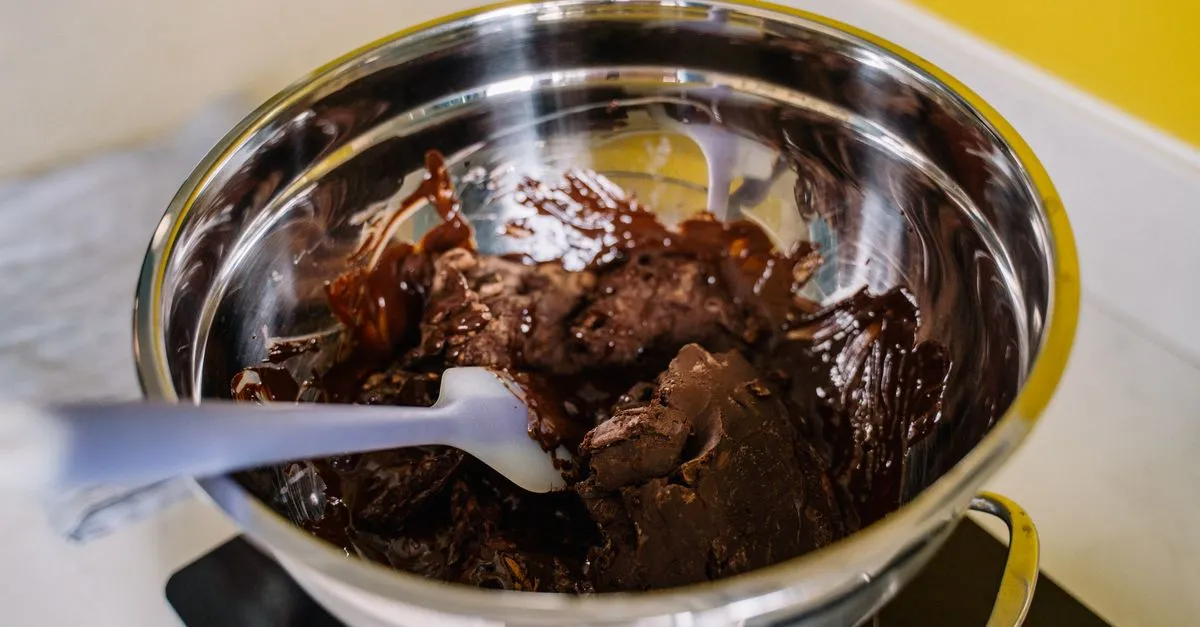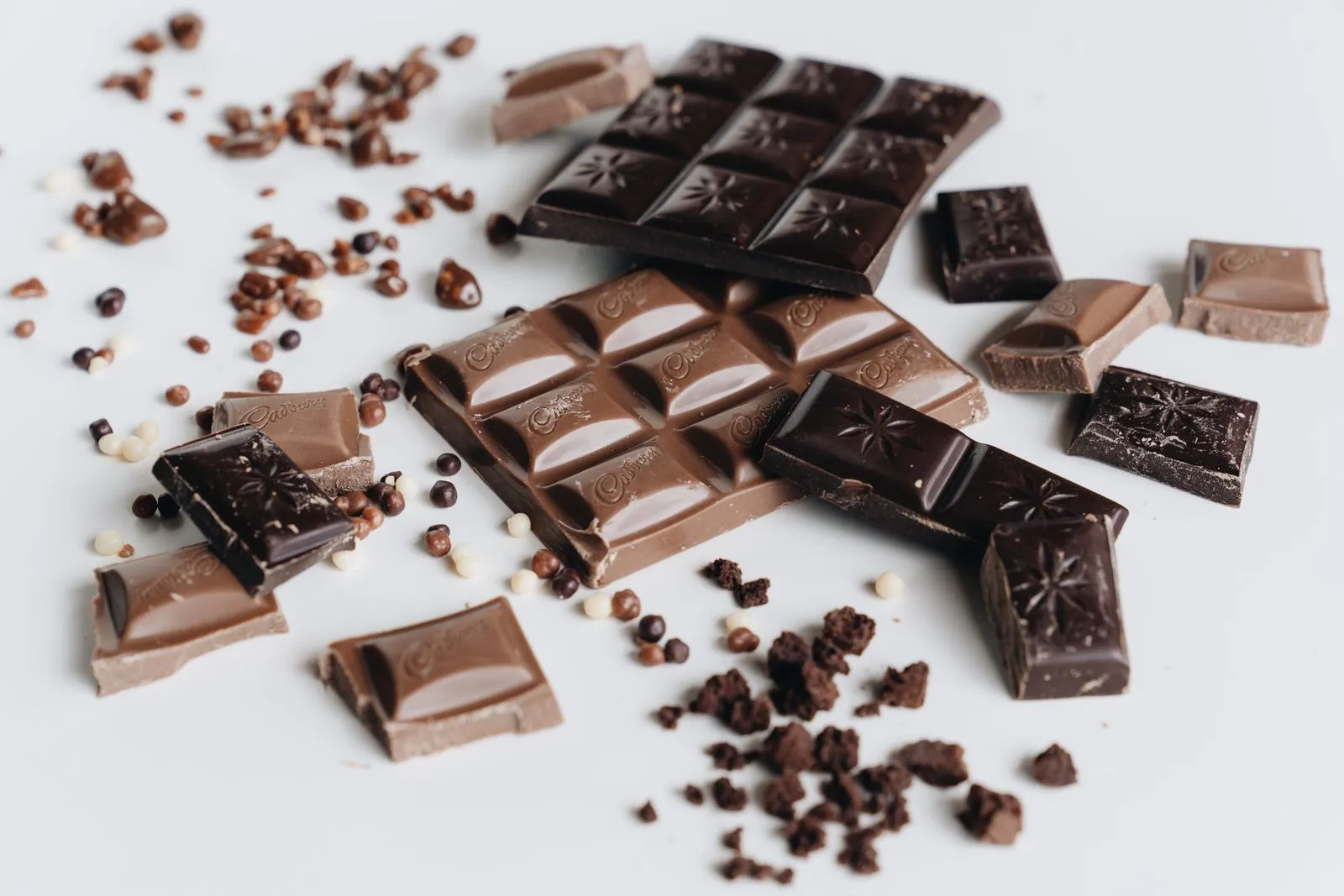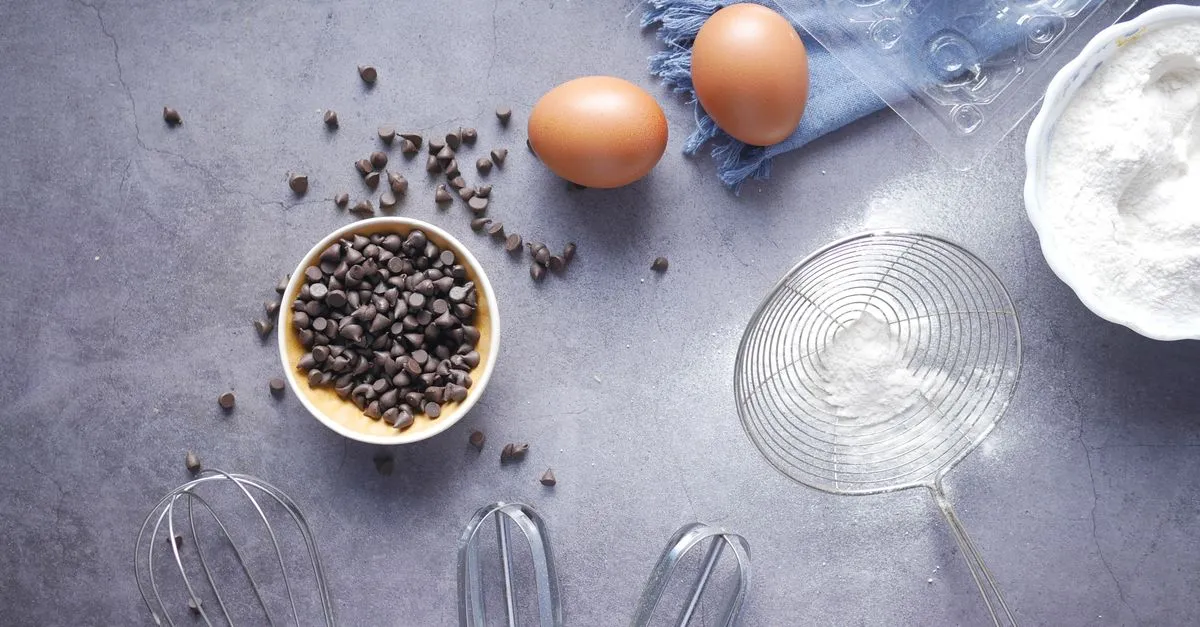
Chocolate chips do melt. What many of them do not do is flow as freely as couverture or collapse visibly before you stir. A bowl can still look full of intact chips even though the cocoa butter inside them has softened enough to make the mass smooth.
The reason is not one secret stabilizer. “Chocolate chip” describes a shape and intended use, not a single regulated formula. Some bags contain genuine semisweet chocolate made from sugar, cocoa mass, cocoa butter, lecithin, and flavor. Dedicated bake-stable drops may use less cocoa butter and a very low-fluidity recipe. White “creme” chips and other confectionery morsels may use palm-kernel or another vegetable fat instead of cocoa butter.
Why Chocolate Chips Hold Their Shape
A chip can go soft — even fully molten inside — and still hold its familiar silhouette. Three things keep it there: the small molded geometry, the cookie dough packed around it, and the viscosity of that particular formula.
The oven may be set near 190°C (375°F), but the chip never sits bare in 190°C air. Moist dough surrounds and insulates it, and evaporating water holds the interior down. Frazier and Hartel measured this directly and found that chips in a baking cookie do get hot enough to break temper, even though they come out looking like chips. The reason they rarely bloom afterward turns out to be the dough itself: fat migrating out of it into the molten chip disrupts cocoa butter recrystallizing as the cookie cools.
Formulation matters just as much as physics. A professional bake-stable drop may carry less cocoa butter than a fluid couverture and be sold explicitly as “very low fluidity.” A supermarket semisweet chip, meanwhile, may be real chocolate with no wax and no special stabilizer in it at all. This is why the ingredient panel tells you more than the word “chips” ever will.
Three Products Sold in Chip-Like Shapes
| Property | 01Standard chocolate chips | 02Bake-stable drops | 03Couverture callets |
|---|---|---|---|
| Typical fat system | Often cocoa butter; check the label | Cocoa butter or compound fat, depending on product | Cocoa butter |
| Fluidity | Low to moderate | Deliberately very low | Moderate to high |
| In the oven | Softens but often keeps an outline | Designed to remain distinct | More likely to spread or pool |
| Best use | Cookies, brownies, ganache, casual drizzles | Visible inclusions in baked goods | Dipping, molding, shells, thin coatings |
| Needs temper for glossy set? | Yes, if it is real chocolate | Depends on its fat system | Yes |
Read the ingredients: cocoa butter indicates real chocolate; palm-kernel, coconut, or other replacement fats indicate a compound confectionery chip.
jayarrchocolate.comThe Microwave Method
The pause between bursts is not lost time — it is the method. Stirring redistributes heat before the chocolate pressed against the bowl can overheat, which is the only thing standing between you and a scorched batch.
- Use a completely dry microwave-safe bowl and utensil. A small amount of water can seize real chocolate.
- Set the microwave to 50% power. If yours cannot reduce power, shorten every interval.
- Heat for 20 seconds, then stir thoroughly. Scrape the bottom and sides, where hot spots form first.
- Repeat in 10–20 second bursts. Use shorter intervals as the chips become glossy and soft.
- Stop while a few chips remain visible. Keep stirring off the heat until those last pieces dissolve.
One cup of chips often takes roughly 60–90 seconds total, but bowl material, microwave output, chip formula, and starting temperature all change the timing. Trust the texture you feel while stirring, not a fixed clock.
If the chips are being mixed into hot cream, custard, or another recipe, you may not need to melt them separately. The recipe’s hot liquid can supply the heat while its full water phase creates an emulsion rather than a seized paste.
The Double-Boiler Method
A bain-marie trades speed for steadiness, and it is an excellent trade — provided steam and condensation stay out of the bowl. Water is this method’s one real hazard, and it is built into the design.
Bring one or two inches of water to a bare simmer. Set a dry heatproof bowl above it without letting the bowl touch the water. Add the chips, stir continuously, and lift the bowl away from the pan while a few pieces remain. Wipe moisture from the outside of the bowl before pouring from it.
Do not cover the chocolate. A lid traps steam, which condenses and can drip back into the bowl. Also avoid a rolling boil: it creates more steam and heats the bowl more aggressively without making the chocolate melt better.
How to Make Melted Chips More Fluid
Before you add anything, find out what fat you are working with. Real chocolate and compound coating take opposite corrections, and mixing incompatible fat systems produces a coating that never firms up properly — cocoa butter and lauric fats are mutually incompatible and soften each other, an effect confectioners call eutectic softening.
For chips whose ingredient list includes chocolate or cocoa mass plus cocoa butter:
- Melt them completely before deciding they are too thick.
- Add cocoa butter about one teaspoon per cup at a time, stirring until uniform before adding more.
- Use neutral oil only for a soft drizzle or refrigerated dessert, not when you want a firm snap.
- If the job requires a very thin shell, switch to couverture rather than adding large amounts of fat.
For chips made with palm-kernel oil, coconut oil, or another replacement fat, follow the package directions and keep cocoa butter out of the bowl entirely — this is precisely the pairing that softens. If the manufacturer names a shortening for thinning, use that one and only that one; the instruction belongs to that product, not to every bag sold as chips.
Never test the texture by adding a splash of milk or a few drops of water. A small quantity of liquid can create the sticky particle network behind seized chocolate. A full measured amount of cream is different because it creates ganache.
Chocolate-Covered Strawberries With Chips
Chips coat strawberries perfectly well. What varies is the finish, and that comes down to two things: whether the bag is real chocolate or compound coating, and whether you tempered it. Preparation matters as much as the melt does.
- Bring the berries toward cool room temperature, then wash and dry them completely. Water on the surface can seize the bowl, and very cold fruit can collect condensation.
- Line a tray with parchment or wax paper. Have the tray ready before the chocolate is fluid.
- Melt one cup of chips with the microwave method above. If real-chocolate chips are too thick, add one teaspoon of cocoa butter and reassess. If they are compound chips, follow the package instead.
- Hold each berry by its leaves and dip it about two-thirds of the way. Let excess chocolate fall back into the bowl, then place the berry on the lined tray.
- Let the coating set in a cool room or refrigerate briefly for 15–30 minutes. Store the finished berries covered in the refrigerator and eat them within 24 hours for the best texture.
Untempered real-chocolate chips usually produce a thicker, more matte shell that softens readily. That is acceptable for a casual, refrigerator-set dessert. For the thin, glossy, snappy shell associated with a chocolatier, use a fluid bar or couverture and temper the chocolate before dipping.
Can Chocolate Chips Be Tempered?
Real-chocolate chips can be tempered. Compound chips should not be. As usual, the ingredient list decides which procedure applies.
If the bag contains cocoa butter and meets a chocolate standard, it carries exactly the same polymorphic problem as a bar, and tempering will give it gloss and snap. Do not expect miracles on flow, though — a deliberately low-fluidity chip still makes a thicker shell than couverture after a perfect temper. If the bag swaps cocoa butter for palm-kernel or another compound fat, there is nothing to temper: melt it per the package and let it set.
This is why chips are not automatically a substitute for couverture. Shape does not define composition or flow. The guide to chocolate types separates category from format, while couverture versus compound chocolate explains the two fat systems.
Key Takeaways
- Chocolate chips melt even when they still look intact. Stirring reveals their actual state.
- The word “chips” does not identify one formula. Some are real chocolate, some are bake-stable chocolate, and some are compound confectionery pieces.
- Microwave at 50% power in 10–20 second bursts. Stir thoroughly after every burst and stop early.
- Read the fat ingredients before thinning or tempering. Cocoa-butter chocolate and lauric compound coatings behave differently.
- Add cocoa butter gradually to real-chocolate chips when more flow is needed. Oil creates a softer set.
- Dry strawberries completely before dipping. For a firm glossy shell, temper real chocolate or use a more fluid couverture.
Frequently Asked Questions
- How do you melt chocolate chips in the microwave?
- Place the chips in a completely dry microwave-safe bowl. Heat at 50% power for 20 seconds, stir thoroughly, and repeat in 10–20 second intervals. Stop while a few pieces remain and stir until carryover heat melts them. Chips often keep their shape after softening, so stirring is a better test than appearance.
- Why won't my chocolate chips melt smoothly?
- They may already be melted but still holding their molded outlines, or the formula may simply have low fluidity. Stir first. Then read the ingredients: bake-stable chocolate often contains less cocoa butter than couverture, while compound chips use a different fat entirely. If real-chocolate chips remain too thick, add cocoa butter one teaspoon per cup at a time.
- Are chocolate chips made with wax or stabilizers?
- Not necessarily. Many familiar semisweet chips are real chocolate made from sugar, cocoa mass, cocoa butter, lecithin, and flavor, with no wax. Other bake-stable or confectionery chips use lower-fat recipes, vegetable fats, or additional structuring ingredients. There is no universal chocolate-chip formula, so the ingredient list is the only reliable answer.
- Can I use chocolate chips for dipping strawberries?
- Yes. Dry the berries completely, melt the chips gently, and dip. Real-chocolate chips may make a thicker, matte coating unless you temper them, while compound chips set according to their package directions without tempering. For the thinnest glossy shell, fluid couverture is easier to use than a low-fluidity baking chip.
- How much oil should I add to melted chocolate chips?
- There is no universal amount because chip formulas differ. For real-chocolate chips, cocoa butter is the better thinner: start with one teaspoon per cup and add more only if necessary. Neutral oil is suitable only when a softer drizzle or refrigerated set is acceptable. For compound chips, use only the fat and quantity recommended by the manufacturer.
- Why did my chocolate chips turn into a grainy paste?
- A small amount of water probably entered the real chocolate from a damp utensil, steam, or condensation. Add warm liquid gradually if you can repurpose the batch as sauce or ganache. If the chips instead thickened during heating and smell burnt, they were scorched and should be discarded.
- Do chocolate chips need to be tempered?
- Only real-chocolate chips need tempering, and only when they must reset hard, glossy, and snappy. They do not need it for cookies, ganache, batter, sauces, or casual drizzles. Compound chips made with replacement fats do not use a cocoa-butter tempering cycle; follow their package directions instead.