Cocoa butter is already present in the cacao nib. Extracting it separates part of that fat from the other bean material; it does not create a new fat. Pressing produces two useful ingredients: butter for chocolate and other applications, and cake for cocoa powder.
A chocolate bar does not have to pass through this separation step. A maker can keep the natural fat and non-fat solids together as cocoa liquor and add the other recipe ingredients. Pressing is the route to separate butter and powder, rather than an obligatory stage of every chocolate-making process.
What Cocoa Butter Actually Is
Nib fat content varies, but roughly half the nib’s weight is fat. Cocoa butter is firm in an ordinary cool room and melts over a range as it warms. Its composition and crystal structure help explain chocolate’s characteristic texture and the need for tempering.
Three major triglycerides are POS, SOS and POP. They have oleic acid in the middle position and saturated fatty acid chains at the outside positions. POS has different outer chains, so describing all three as symmetrical is imprecise. Their proportions vary; a published analysis of one Malaysian cocoa butter found that they accounted for about 82% of the sample. The cocoa butter chemistry guide explains the crystal forms and melting behavior in more detail.
Pure cocoa butter is a plant fat, despite its name. A packaged cocoa butter product or food made with it can contain other ingredients, so the ingredient list remains relevant.
Getting from Beans to Cocoa Liquor
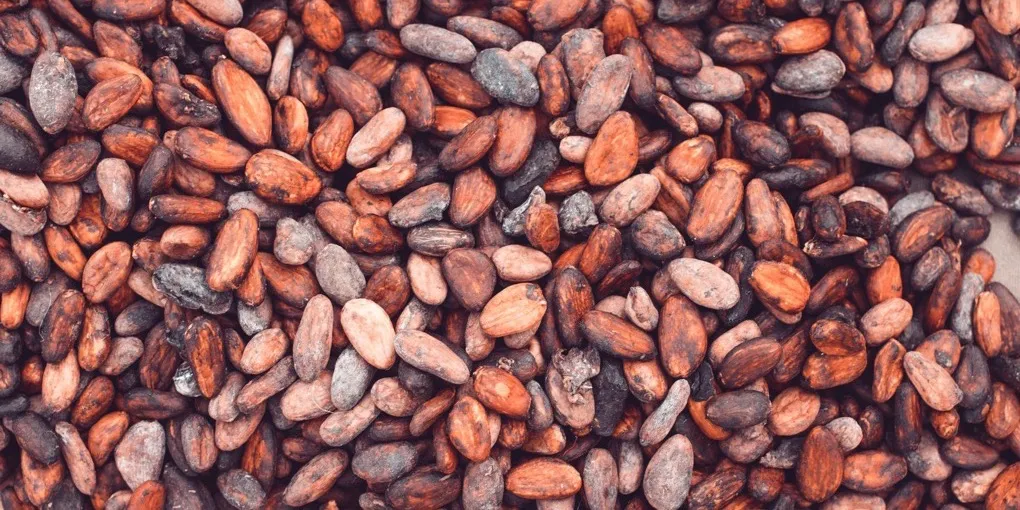
A common chocolate-processing route includes roasting, cracking and winnowing to separate the shell, and grinding the nibs. Some factories roast whole beans; others separate the nibs first and roast those. The process order and equipment are not identical everywhere. International Cocoa Organization processing overview.
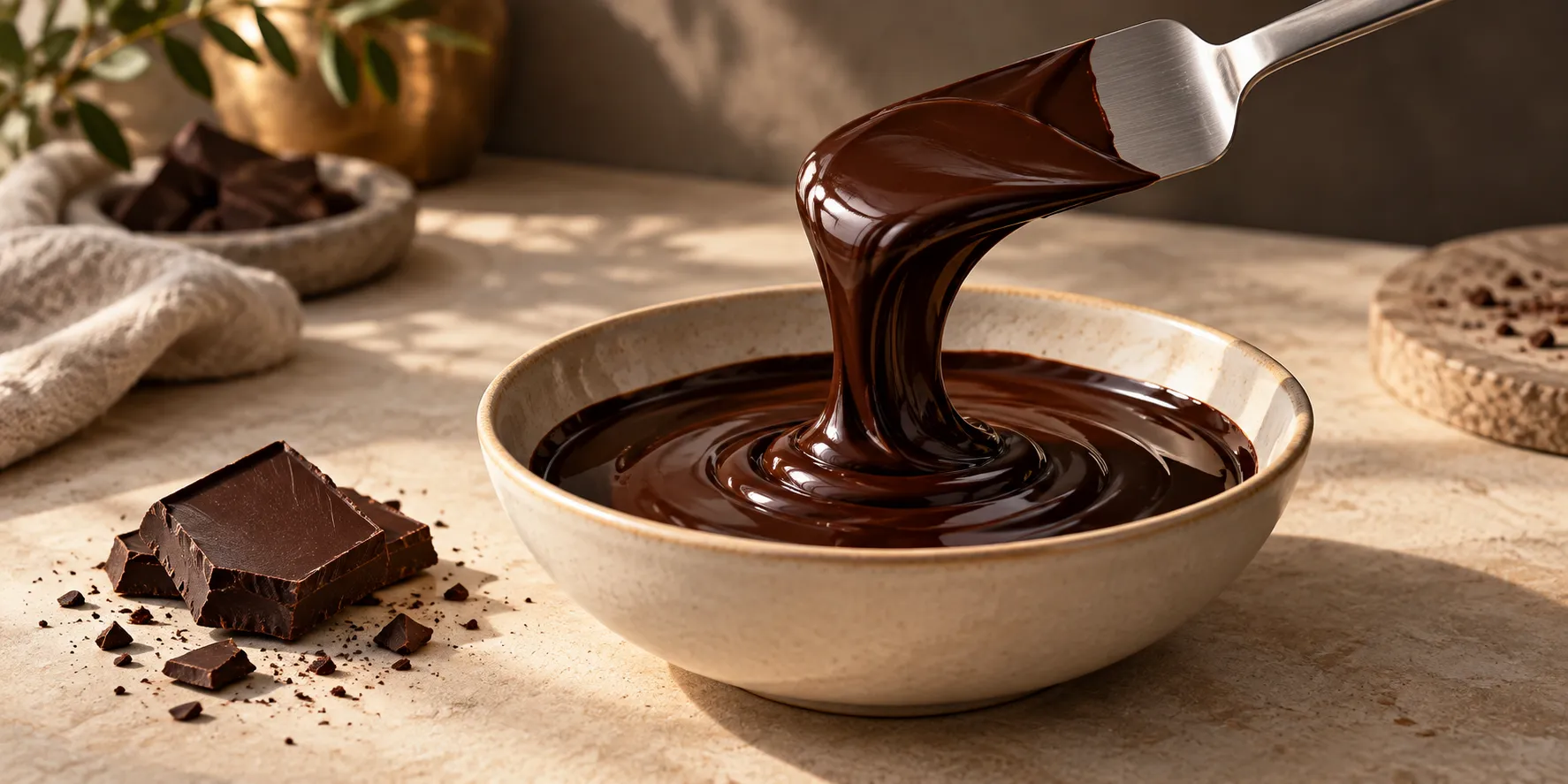
Grinding breaks down the nib tissue and releases fat. When warm enough for that fat to flow, the finely ground mixture becomes cocoa liquor, also called cocoa mass or chocolate liquor. It contains fat and suspended cocoa particles; the word “liquor” does not mean that alcohol is added.
Cocoa liquor can go into chocolate, where other ingredients are refined and conched, or it can be prepared for pressing. A hydraulic liquor press needs a suitable feed material. That does not mean every extraction method requires a separately refined liquor: an expeller can feed on nibs and compress them mechanically, as documented in Chocolate Alchemy’s small-press trials.
Pressing: How the Butter Is Separated
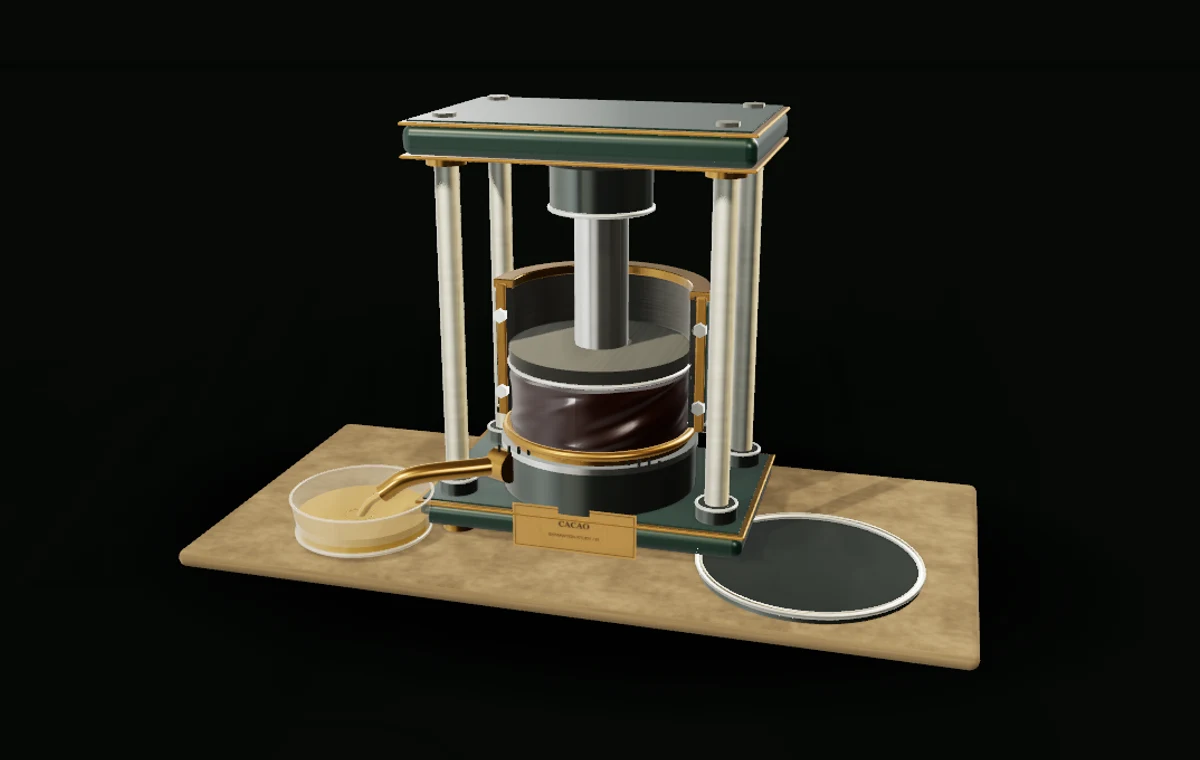
Cocoa, under pressure.
Weigh the cocoa you have: see the cocoa liquor it began as and the butter the press took out, then put it back for a bar or a recipe.
Step inside the press →In a hydraulic pot press, prepared cocoa liquor fills chambers. Pressure drives liquid fat through filter screens while a compressed cake remains behind. The butter drains to a collection vessel; after pressing, the machine opens and discharges the cakes for breaking and further processing. Royal Duyvis Wiener describes this sequence in its cocoa butter press specifications.
The separation is substantial, but not absolute:
- Cocoa butter is the extracted fat stream. Further filtration or other processing may follow; fresh press output should not automatically be pictured as perfectly clear.
- Press cake contains non-fat cocoa material and residual cocoa butter. It is broken, cooled and processed into cocoa powder.
Pressure is only one control on the result. Feed preparation, temperature, particle properties and pressing cycle also matter. Industrial equipment operates at very high pressures: ICCO cites up to 550 bar, equivalent to 55 MPa or about 8,000 psi. That is a description of industrial machinery, not a pressure target for improvised equipment. ICCO.
Residual fat determines the powder grade
Commercial powders commonly include 10–12% and 20–22% fat grades; Cargill lists both in its cocoa powder range. More extraction leaves less fat in the cake, but the machine and processing conditions determine the achievable endpoint.
Do not treat commercial grade names as universal legal definitions. In the EU directive, cocoa powder contains at least 20% cocoa butter on a dry-matter basis, while fat-reduced cocoa powder contains less than 20%. Directive 2000/36/EC, Annex I(A)(2).
The Van Houten milestone
The Van Houten brand associates 1828 with its cocoa press and 1846 with Coenraad’s Dutching innovation. Historical accounts differ on individual credit, and an 1846 patent has not been independently established here. Pressing and alkalization are separate operations: removing fat does not itself turn cocoa into Dutch-process cocoa. The press helped make less fatty cocoa powder commercially important and supplied cocoa butter for other uses. Van Houten’s company history and our history of the Dutch-process cocoa press.
Deodorized vs Undeodorized Cocoa Butter
Deodorization reduces aroma compounds in a fat. The general edible-oil process uses steam under vacuum and controlled heat to remove volatile material. CocoaSupply describes its own cocoa butter process as counter-current steam deodorization. Alfa Laval’s process description and CocoaSupply’s product specification.
Undeodorized butter can contribute more of the aroma associated with its source and processing. It may suit a recipe in which those cocoa notes are welcome. It is not automatically superior, and “undeodorized” does not mean that nothing besides pressing has happened to it.
Deodorized butter is useful when you want a milder fat contribution. The extent of deodorization varies. Cargill offers full-flavor, partly deodorized, fully deodorized and white cocoa butter options, illustrating that flavor and color are product specifications rather than a simple craft-versus-industrial divide. Cargill cocoa butter range.
A pale or yellowish appearance by itself does not establish aroma, treatment or quality. Compare the supplier’s specifications and taste suitable food-grade samples in the actual recipe. That applies when adding cocoa butter to adjust chocolate viscosity as well as when making white chocolate.
How Much Butter Can a Batch Yield?
Starting fat content is not the same as extracted-butter yield. Fat remains in the cake, and real processing also has losses. Shell removal matters when the starting weight is whole beans rather than clean nibs or liquor.
Here is an illustrative mass balance, not a measured press yield. Assume 1,000 g of liquor contains 55% fat and 45% non-fat material, ignore moisture and other losses, and retain all 450 g of non-fat material in the cake:
| Final cake fat content | Calculated cake weight | Calculated separated butter |
|---|---|---|
| 20% | 450 ÷ 0.80 = 562.5 g | 437.5 g |
| 12% | 450 ÷ 0.88 = about 511.4 g | About 488.6 g |
Even the lower-fat cake leaves some of the original 550 g of fat behind. Actual yields need the batch’s composition and the press’s performance data.
Origin can influence composition, but country names or distance from the equator do not provide a reliable yield calculation. A six-origin lipid study found compositional differences; that is not a formula for predicting how many grams your press will recover.
Cocoa Butter in White Chocolate
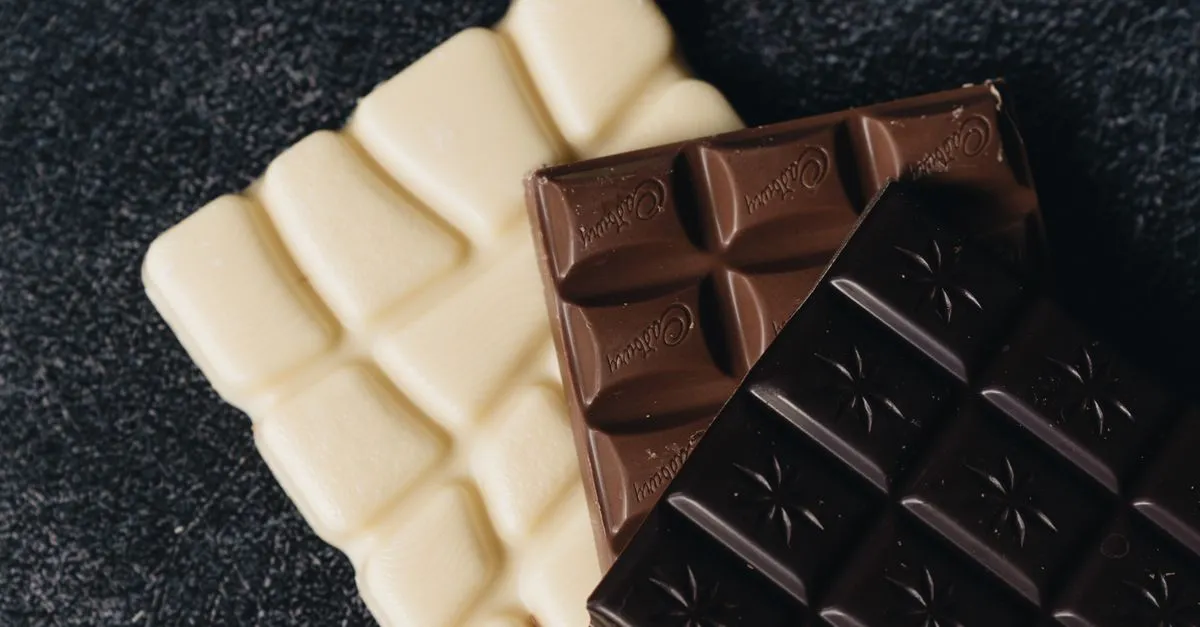
In a basic white chocolate recipe, cocoa butter supplies the cacao ingredient alongside milk ingredients and sugar. It lacks the non-fat cocoa solids supplied by cocoa liquor or cocoa powder. Saying it contains “no cocoa solids” is ambiguous because total cocoa content includes cocoa butter.
Under the EU definition, white chocolate contains at least 20% cocoa butter, 14% dry milk solids and 3.5% milk fat. The milk fat is part of the milk solids, not an additional 3.5% on top of them. Directive 2000/36/EC, Annex I(A)(6).
The butter can contribute aroma, but milk, sugar, vanilla and other permitted ingredients also influence flavor. Deodorized butter can be useful when those flavors are the focus; undeodorized butter can add a more pronounced cocoa aroma. Neither treatment alone predicts whether the finished chocolate will be complex or enjoyable.
Use the tempering curve for the actual product. Callebaut lists 28–29°C as the working range for its W2 white chocolate; that is an example, not a universal boundary for every white chocolate. Callebaut product curves.
Our white chocolate from scratch guide covers formulation, and the chocolate regulations guide explains the composition rules. Cocoa butter itself is plant-based; conventional white chocolate contains dairy.
Cocoa Butter vs Its Alternatives
Vegetable-fat alternatives differ in composition and compatibility. Cocoa butter equivalents, replacers and substitutes—CBE, CBR and CBS—are not interchangeable ingredients. Lauric CBS fats generally tolerate little cocoa butter; mixing fats outside the supplier’s formulation limits can soften a coating or otherwise change its performance. Some compound-fat systems set without traditional chocolate tempering, but their fats still crystallize. AAK’s technical brochure.
See the cocoa butter alternatives guide for the category distinctions. Choose a fat for the intended product and processing method, and check the applicable labeling rules.
Can You Make Cocoa Butter at Home?
It is technically possible, but buying food-grade cocoa butter is usually the more practical starting point. A melanger grinds and refines; it does not separate butter from cocoa solids.
Chocolate Alchemy previously demonstrated small-scale extraction with a NutriChef auger press. Its current guide says that machine was discontinued after Covid and that it has no reliable replacement recommendation. Thus, an old successful trial is evidence of possibility, not proof that a currently advertised household oil press will work. Current Chocolate Alchemy guidance.
A maker considering extraction needs equipment suited to cacao, operating instructions, safe handling of heated material and a realistic yield estimate. The collected fat may need settling or filtration; the leftover cake is not necessarily equivalent to a particular commercial cocoa powder grade.
For most home recipes, buy cocoa butter sold for food use and choose the aroma profile you want. Undeodorized, partly deodorized and deodorized products can all have a place. Single-origin provenance is a separate purchasing choice, not a requirement for good chocolate.
Deodorized vs Undeodorized Cocoa Butter
| Property | 01Undeodorized | 02Deodorized |
|---|---|---|
| Aroma | Often a more pronounced cocoa aroma | Reduced aroma; degree varies by product |
| Color | Depends on the product | Depends on treatment and specification |
| Processing | Not deodorized; may undergo other processing | Volatiles reduced through deodorization |
| Useful when | Its cocoa aroma suits the recipe | A milder fat contribution suits the recipe |
| In white chocolate | Can add noticeable cocoa-derived aroma | Can let milk, vanilla or other flavors lead |
Neither category guarantees quality. Check the food-grade product specification; color alone does not identify deodorization or flavor.
jayarrchocolate.comFrequently Asked Questions
- How is cocoa butter made?
- A common industrial method presses warm cocoa liquor, allowing fat to pass through filter screens while retaining a cake. The butter may undergo further filtration or deodorization, and the cake is processed into cocoa powder. Expeller presses can use a different feed and process.
- What is cocoa butter made from?
- It is the fat extracted from cacao beans or bean material. It is processed to separate it from the non-fat material; it is not dairy butter. Pure cocoa butter is plant-based, while foods made with it can contain milk or other ingredients.
- What is the difference between deodorized and undeodorized cocoa butter?
- Deodorization removes much of the volatile aroma, commonly using steam under vacuum. Undeodorized butter retains more aroma, but exact flavor and color vary. Choose according to the product specification and intended recipe; neither category is automatically better.
- Why is cocoa butter important in white chocolate?
- It provides the cacao fat without the non-fat cocoa solids used in dark or milk chocolate. EU white chocolate requires at least 20% cocoa butter, 14% dry milk solids and 3.5% milk fat, with milk fat included in the milk-solids amount. Butter, milk, sugar and other ingredients all influence flavor.
- Can you make cocoa butter at home?
- Small-scale extraction is possible, but it needs suitable equipment. Chocolate Alchemy documented a NutriChef auger press and now reports that it is discontinued, with no reliable replacement recommendation. A melanger does not separate fat. Buying food-grade cocoa butter is generally simpler.
- Is cocoa butter vegan and dairy-free?
- Pure cocoa butter is a plant fat and contains no dairy ingredient. Conventional white chocolate includes milk, and a packaged cocoa butter product may have other ingredients. Check the product label for the food you are actually buying.