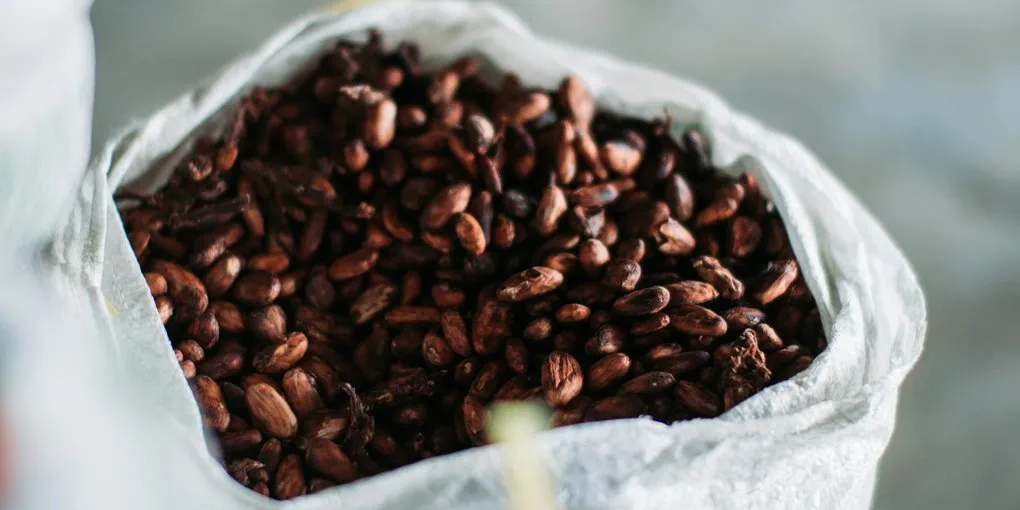
Cracking and winnowing turn whole roasted cacao beans into the nibs used to make chocolate. Good separation means removing shell while keeping valuable nibs. More powerful airflow is useful only until it starts carrying away too much chocolate-making material.
These are separation steps, not a microbial kill process. Begin with appropriately processed beans and keep the cleaned nibs away from raw beans, dirty equipment, and collected waste. FDA identifies Salmonella as a hazard associated with cocoa products in its food-risk assessment.
Why Remove the Husk?
The husk is the thin outer shell surrounding the nib. It is a different material from the cocoa-butter-rich interior, and excessive shell can contribute an unwanted papery texture. The goal is clean nibs, rather than a universal percentage at which every person supposedly stops tasting husk.
For U.S. standardized cacao nibs, 21 CFR 163.110 sets a maximum shell content of 1.75% by weight, calculated on an alkali-free basis, determined by the method specified in the regulation. That is a standard for cacao nibs; it should not be presented as a simple 1.75% allowance measured against the weight of any finished chocolate bar.
A quick visual check helps improve your process, but it is not the prescribed regulatory analysis. Commercial makers need an appropriate sampling and verification program, alongside the requirements that apply to their finished product.
Cool and Rest the Beans
Let the beans cool after roasting in a clean area protected from contamination. Do not trap hot beans in a sealed container where escaping moisture can condense.
John Nanci of Chocolate Alchemy recommends at least six hours of open rest before winnowing, to allow cooling and moisture loss. This is a practical maker’s protocol you can use consistently, with overnight fitting many home schedules. It does not establish a universal six-hour threshold at which every bean suddenly cracks into a particular number of pieces.
Try a handful before committing the whole batch. You want separated shell and manageable nib fragments, with little powder. Record the rest time and cracking setting so a good result is repeatable.
Step 1: Crack Without Grinding
For a small trial, put cooled beans into a sturdy food-storage bag, close it, and roll over it with a rolling pin. Use enough pressure to break the beans, then stop rather than grinding the contents into dust. Inspect the bag for damage before transferring the mixture. This basic approach is also demonstrated in Dandelion’s guide to whole roasted beans.
For repeated batches, use a cracker intended for cacao and follow its instructions. Where a machine has an adjustable gap, begin with a small sample and tune it to the bean size. A setting that produces excessive powder makes the next separation harder, because fine nib particles are readily lost with the husk.
A Champion juicer is a particular chocolate-maker adaptation, not an adjustable-gap roller cracker. Nanci’s documented cracking arrangement removes the lower screen; it is not the blank-screen arrangement used for homogenizing other foods. That account is not blanket manufacturer approval for every Champion model. Check the exact model and compatible setup before attempting an adaptation, and use the Champion guide for the distinction between cracking and making liquor.
Keep hands and utensils out of powered feed openings, use the specified food pusher, and unplug the machine before clearing a blockage or changing parts. Do not force beans through to compensate for unsuitable equipment. The Champion owner’s manual provides the appliance’s operating safeguards.
Step 2: Winnow a Small Trial
Shell is readily carried by moving air because of its low mass relative to its area. Nibs generally fall more readily, but small nib fragments can also be blown away. Particle size, feed rate, and airflow all matter.
For a simple fan setup, arrange a clean receiving bowl and a separate tray to catch material blown aside. Use a clean fan in a clean, dry work area. Keep exposed food away from the motor, dirty surfaces, and the floor, and avoid creating a cloud of airborne dust.
Start with a small amount and low airflow. Pour the cracked material slowly through the air stream into the receiving bowl. Adjust the fan position and pour height until shell separates while most nibs stay in the collection bowl. Keep the arrangement stable before scaling up. There is no universal medium-speed setting or two-foot pour height that works for every fan and batch.
Dandelion demonstrates a bowl and blow-dryer method too. If using that approach, use cool air, keep the appliance clean and dry, and prevent shell from reaching pets or contaminating nearby food. Hot air is unnecessary for this separation.
For regular production, a purpose-designed winnower can contain the separation more effectively. Our DIY winnower guide explains planning and calibration considerations. Pipe dimensions and a blower model alone do not establish a safe construction plan: food-contact suitability, dust handling, electrical protection, and cleanability all need assessment.
Step 3: Check Both Output Streams
Spread some retained nibs on a clean, light-colored tray under good lighting. Pick out the thin shell pieces and look for larger fragments that still hold shell. Then examine the rejected material: a cleaner-looking nib bowl is not an improvement if good nibs are being discarded in large amounts.
A useful comparison between settings is to take representative samples of the same size and hand-sort the visible shell. For example, 0.5 g of picked-out shell from a 100 g sample is 0.5% of that sample’s starting mass. This is a practical estimate for comparing your own runs. It can miss shell and depends on sampling and scale resolution; it is not the regulatory assay.
Re-pass material when inspection calls for it. First try a slower feed if the stream is crowded. Increase airflow cautiously only if it improves shell removal without unacceptable nib loss. There is no reliable rule that one pass leaves 3–7% shell or that two passes produce compliant nibs.
Dandelion’s ten-minute rule concerns the final optional hand-picking of remaining husk. It is advice against endless picking, not a deadline for all winnowing, a shell-content test, or permission to accept a visibly poor batch.
After Winnowing: Direct Loading or Pre-Refining
Some melangers accept nibs directly; others require a finer feed. Follow the loading procedure and batch limits for your machine, adding nibs gradually as directed. Do not overload a stalled grinder or assume every model should be preheated in the same way.
Pre-refining into coarse cocoa liquor can help a compatible process, but it is optional for machines designed to take nibs. A Champion liquor-making setup differs from the cracking setup, and there is no general promise of a specific number of hours saved. See our melanger refining guide for the next stage.
What About the Collected Husk?
Cacao shell is sold as an ingredient for infusions, but material collected from a home winnowing tray is not automatically ready to drink. If you want cacao-shell tea, use a product supplied for that food use and follow its preparation and storage instructions. Drying waste shell briefly in a low oven is not a validated way to make it safe or establish its shelf life. Discard moldy or otherwise suspect material.
Keep nibs, shell, and waste out of reach of pets. FDA lists cocoa mulch among potentially dangerous items for pets; cocoa contains theobromine and caffeine, which can poison dogs. Do not spread shell as mulch where pets could eat it. If composting it, use a system inaccessible to them.
For equipment options, see our best winnower guide. For the entire sequence, see our bean-to-bar guide.
Cracking and Winnowing: Step-by-Step
- 01
1. Cool and Rest
Use a consistent rest and inspect a trial handful.
- 02
2. Crack
Break the beans without producing excessive powder.
- 03
3. Calibrate Airflow
Start small, pour slowly, and catch both streams.
- 04
4. Inspect and Re-pass
Check shell carryover and lost nibs; do not rely on pass count.
- 05
5. Optional Pre-Refining
Use only a compatible machine and procedure.
- 06
6. Load the Melanger
Follow model-specific feed and batch limits.
Frequently Asked Questions
- How do I winnow cacao beans at home?
- Use a small trial with clean, controlled airflow and separate collection containers. Pour slowly, inspect retained nibs for shell, and inspect the rejects for nib loss. Adjust the setup and repeat as needed.
- Why wait before cracking roasted beans?
- Beans need to cool, and a consistent rest can help standardize the process. Chocolate Alchemy recommends at least six hours before winnowing for cooling and moisture loss. That is a practical protocol rather than a universal cracking threshold.
- What is the FDA husk limit for chocolate?
- The cited U.S. standard is for cacao nibs: no more than 1.75% shell by weight on an alkali-free basis, measured by the specified method. Do not reinterpret it as an allowance based on the total weight of any finished chocolate bar. Visual sorting does not establish regulatory compliance.
- What is Dandelion Chocolate’s Ten-Minute Rule?
- It limits the optional final hand-picking of shell. It does not limit the entire winnowing process or establish that a batch is clean or compliant.
- Do I need to pre-refine before using the melanger?
- Only if your machine or process requires it. Some melangers accept nibs directly. Follow the equipment instructions; cracking and liquor-making arrangements are different, and no universal refining-time saving applies.
- Can I use cacao husk for anything?
- Use a food-grade product intended for infusions if making tea. Collected waste husk is not automatically safe to drink, and brief low-temperature drying does not validate it. Keep shell and any compost containing it inaccessible to pets.