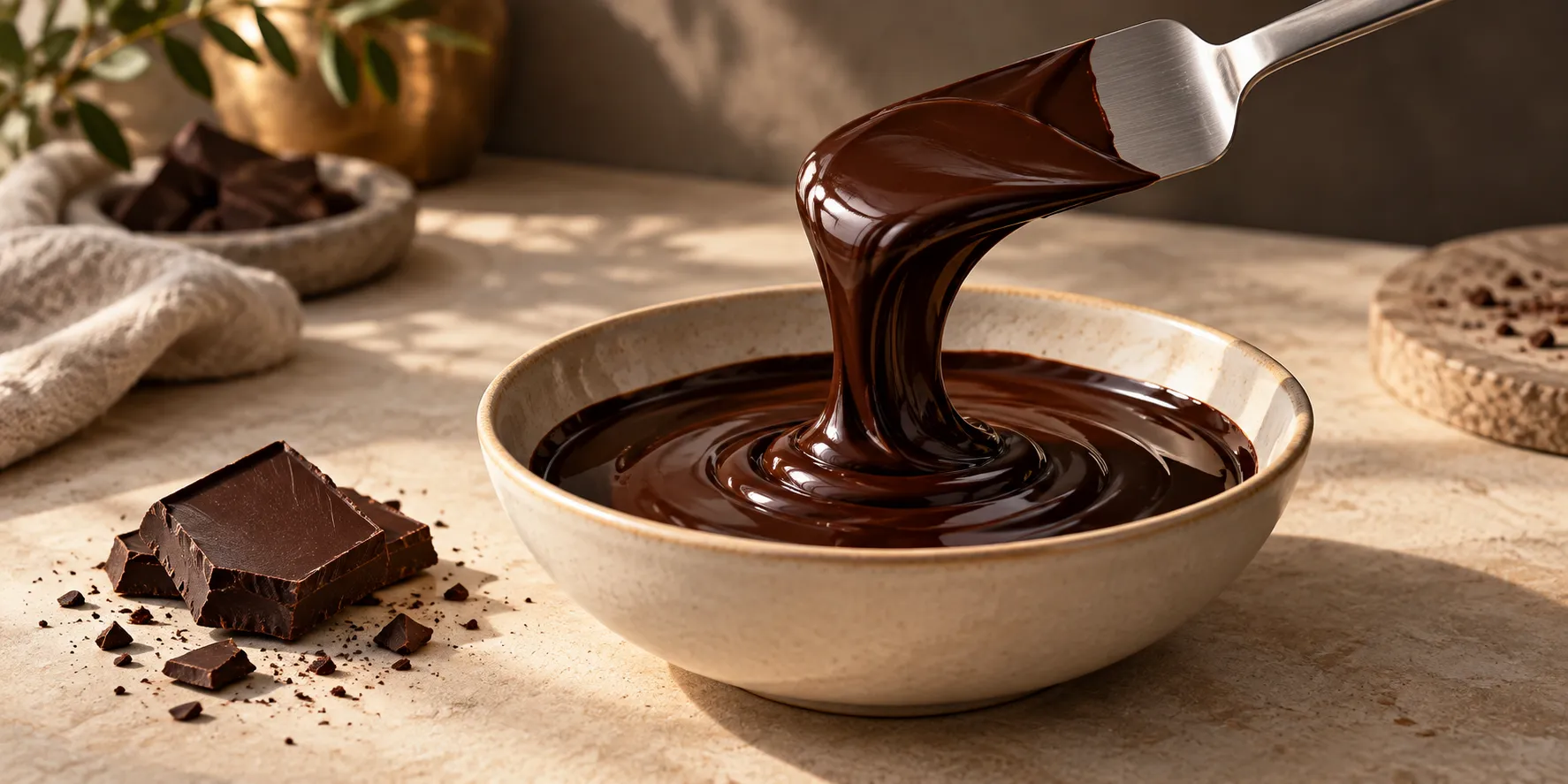
The smell of cocoa, a honey-like note, and a roasted-nut impression can arise from different molecules working together. What we call chocolate flavor also includes sensations that a list of volatile compounds cannot describe: sugar’s sweetness, bitterness, sourness, astringency, and the way the chocolate melts.
This guide follows aroma development from fermentation through roasting, conching, and tasting. The useful question is how processing changes a particular batch, rather than which single compound makes every chocolate taste right.
Fermentation Creates Both Aroma and Precursors
Fermentation helps develop the materials used in later roasting reactions. Enzymes break down seed proteins into smaller peptides and amino acids. In a classic cocoa-protein experiment, an aspartic endoprotease and a carboxypeptidase worked together to produce aroma-related peptides and free amino acids. Roasting those products with reducing sugars generated cocoa aroma. That is more accurate than assigning the entire process to one enzyme that releases leucine directly. Voigt and colleagues, 1994.
Fermentation also produces aroma compounds themselves. A study of Costa Rican cocoa fermentations found that yeast treatments changed higher alcohols and esters. Some differences appeared in cocoa liquor, but the study did not find a significant yeast-treatment effect on the final chocolates. Processing can modify or obscure an earlier difference; choosing a fermentation culture does not guarantee a particular finished-bar note. Original fermentation study, 2023.
Keep unfermented and unroasted separate. An unroasted bean may already have been fermented and dried. In a comparison of fermented Criollo cocoa before and after roasting, researchers detected the same 42 odor-active compounds at both stages, with substantial changes in their importance. Several aroma compounds were already present before roasting; others rose strongly during the roast. Frauendorfer and Schieberle, 2008.
Genetics, growing conditions, fermentation, drying, and subsequent processing all matter. Their contributions cannot usefully be assigned equal percentages for every chocolate. For the practical steps, see our cacao fermentation guide.
What Roasting Changes
Maillard chemistry involves reactions between reducing sugars and amino groups, followed by a network of transformations. It contributes both aroma and browning. Roasting also involves other changes, including loss of volatile compounds, so a hotter roast is not simply a machine for making more of every desirable aroma.
There is no single temperature at which all Maillard chemistry switches on. Time, temperature, moisture, ingredients, and the heating method affect the result. A controlled cocoa study comparing fluidized-bed and conventional roasting at 120°C and 140°C found different changes in sugars, amino acids, and melanoidins. Those temperatures describe its experiments, not universal thresholds or instructions for every roaster. Original roasting study, 2023.
Strecker degradation is one important route from amino acids to aroma-active aldehydes. Leucine can yield 3-methylbutanal, isoleucine can yield 2-methylbutanal, and phenylalanine can yield phenylacetaldehyde. Experiments comparing heated cocoa with simplified reaction systems also show why the laboratory mixture is not a complete model of the food: the balance of reaction products differed between them. Granvogl and colleagues, 2006.
Some Important Aroma Families
Aldehydes: Cocoa, Malt, and Floral Impressions
In a gas chromatography–olfactometry study of dark chocolate, 2-methylpropanal, 2-methylbutanal, and 3-methylbutanal were among the potent compounds associated with chocolate character. That makes them useful examples, not a ranking that applies to every bar. Other compounds and their relative amounts affect the complete aroma. Counet and colleagues, 2002.
Phenylacetaldehyde is associated with honey-like and floral impressions. Its concentration increased substantially during roasting in the Criollo study cited above. Floral character therefore cannot be explained by saying that roasting only destroys floral molecules. Nor does one compound explain all the aromas described in an origin guide such as Ecuador’s Nacional cacao.
Pyrazines: Many Roasted and Nutty Notes
Several substituted pyrazines contribute roasted, nutty, or cocoa-like impressions. They belong to the larger reaction network associated with heated foods. Their odor qualities and odor thresholds differ, so “total pyrazines” is an incomplete description of sensory impact.
The dark-chocolate olfactometry study identified multiple potent pyrazines. It did not establish that the most abundant pyrazine must dominate the aroma, or that maximizing pyrazines is a universal route to better chocolate. A very roasted profile can be desirable for one product and obscure qualities valued in another.
For a home roaster such as the Behmor 2000AB, work with the controls and safety limits the machine actually provides. Compare repeatable profiles on the same lot; do not translate a compound list into a supposedly ideal set point. For a related look at another roasted food, see our coffee roasting guide.
Caramel and Floral Compounds
Furaneol is one example of a compound associated with a caramel-like impression. It increased during roasting in the Criollo experiment. That finding does not mean every member of the broad furan family smells sweet, or that all such compounds follow the same temperature response.
Linalool can contribute floral character. A dark-chocolate conching experiment followed it alongside five other aroma-active compounds and found that it partitioned strongly into the fat phase. Its behavior depends on the chocolate matrix and processing conditions, not simply its boiling point. Guckenbiehl and colleagues, 2024.
A floral or fruity note is not a reliable genetic or geographic test. Descriptions such as Madagascar’s fruit notes describe sensory experiences with particular chocolates; they cannot establish that a particular terpene caused every example. Use the chocolate flavor wheel as a vocabulary for perception, rather than a chart that assigns each sensation to one molecule.
How Many Compounds Does Chocolate Need?
There is no fixed inventory. The number detected depends on the chocolate, sampling method, instrument, and detection threshold. A study of dark chocolates with different particle sizes and fat contents detected 68 headspace volatiles. That is the result for those samples under that method, not the total number of possible chocolate aroma compounds. The study also showed that changing the matrix changed the release of different volatiles in different ways. Afoakwa and colleagues, 2009.
Aroma reconstitution asks whether a mixture of measured odorants can reproduce a particular product’s smell. In a 2020 study of a commercial milk chocolate, researchers detected 48 odor-active compounds and produced a good aroma match with a mixture of 39 reference odorants. That does not make 39 a universal minimum, any more than a simpler recognizable cocoa-like mixture would prove that all chocolate needs only a dozen compounds. Fricke and Schieberle, 2020.
Odor activity depends on concentration relative to the threshold at which a compound can be smelled, as well as interactions in a mixture. A regression coefficient for one measured variable is not a percentage of “chocolate flavor,” and measuring one aldehyde cannot replace sensory evaluation of a finished bar.
Conching Changes More Than What Evaporates
Conching can remove acetic acid and desirable aroma compounds, but it is not only subtraction. In the 2002 dark-chocolate study, many Strecker aldehydes decreased, while some other odorants increased. No new key odorants were identified in that experiment, which is different from proving that conching can never generate or increase an aroma compound.
More recent work shows the importance of movement between particles and fat, alongside losses to the surrounding air. In the 2024 plastic-mass conching experiment, temperature had a strong effect on the measured compounds and viscosity. Redistribution and possible release or formation make a single “most volatile leaves first” rule inadequate for predicting the finished aroma.
Time in a small melanger also cannot be treated as an automatic countdown to flavor loss. A study using Ghanaian cocoa measured changing volatile profiles over 0, 8, 16, and 24 hours at three environmental temperatures. Compounds followed different patterns. The researchers did not test sensory preference, so the experiment does not identify the best-tasting processing time. Original melanging study, 2020.
John Nanci likewise rejects a universal ideal conching duration or temperature. His own equipment and stopping preferences are practical experience, not a rule that every origin peaks at eight hours or should finish at thirty. Ask the Alchemist #105.
For a useful trial, keep the formula and batch size constant, record processing conditions, and compare samples after bringing them to comparable tasting conditions. If sourness softens but a valued fruity note also fades, that is a decision about the product you want. Do not assume that extending processing can reliably repair smoke damage or every other off-flavor problem.
Temper and Texture Shape the Tasting Experience
Tempering primarily manages cocoa butter crystallization. The desired crystal structure helps produce gloss, snap, and suitable melting behavior. Cocoa butter has multiple crystal forms; describing every tempered or untempered sample with one melting temperature is too simple. Original crystallization study, 2021.
The matrix matters to aroma release, as the particle-size and fat-content study demonstrates. But that does not prove that untempered chocolate releases all its flavor at once, or that well-tempered chocolate always delivers a prescribed sequence of notes. Formula, serving temperature, thickness, and how a person eats the sample also affect the comparison.
For tasting craft chocolate, compare similar-sized pieces at a similar temperature and note their texture and condition. Good presentation makes a comparison easier to interpret; it does not turn a tasting into a direct measurement of terroir.
Practical Decisions for Makers
- Assess the lot before designing the roast. Fermentation, drying, storage, and defects matter. A cut test is useful screening, but it cannot fully predict flavor. Evaluate appropriately prepared cocoa liquor or chocolate too. CAOBISCO/ECA/FCC cocoa quality guidance.
- Change one processing variable at a time. Compare the same lot with recorded roast conditions, then use the results to choose the next trial. “Lighter preserves origin” is a hypothesis to test, not a guarantee.
- Choose a conching endpoint by the whole result. Flavor, texture, equipment, formula, and practical production constraints all matter. More hours do not necessarily mean improvement or deterioration.
- Separate observation from chemical identification. “I smell honey” is a useful tasting note. It does not establish which compound caused it without analytical work.
How Processing Shapes Chocolate Aroma
- 01
1. Beans and Growing Conditions
Genetics and growing conditions influence the starting material. They do not prescribe a fixed finished flavor.
- 02
2. Fermentation and Drying
Develop aroma compounds as well as peptides, amino acids, and other materials involved in later roasting reactions.
- 03
3. Roasting
Forms, changes, and removes compounds. The outcome depends on the lot, time, temperature, moisture, and heating method.
- 04
4. Conching and Refining
Change texture and aroma through several processes, including volatile loss and redistribution between particles and fat. There is no universal finishing time.
- 05
5. Crystallization and Tasting
Crystal structure and the chocolate matrix shape texture and melting. Standardize sample conditions when comparing flavor.
Compound counts describe particular experiments. Aroma, taste, texture, and sensory context all contribute to the experience.
jayarrchocolate.comFrequently Asked Questions
- What compound is most responsible for chocolate flavor?
- Several aldehydes and pyrazines are important contributors to cocoa-like aroma, but no single molecule explains every chocolate. Concentration, odor threshold, the mixture, taste, and texture all matter.
- How many flavor compounds are in chocolate?
- There is no fixed number. One dark-chocolate study detected 68 headspace volatiles; other methods and samples yield different inventories. A milk-chocolate reconstitution experiment used 39 reference odorants to match that particular sample, not to establish a universal recipe for chocolate aroma.
- Does lighter roasting always preserve more origin character?
- No. Roasting can increase some floral and other desirable compounds while reducing others. Compare profiles on the same lot and judge the finished chocolate; roast intensity alone does not predict every note.
- What are pyrazines and why do they matter for chocolate?
- Pyrazines are a family of compounds that includes contributors to roasted, nutty, and cocoa-like aromas. Different pyrazines have different sensory effects, and their total abundance is not a universal quality score.
- Why does fermentation matter for chocolate aroma?
- It helps develop peptides and amino acids used in roasting reactions, and microorganisms also produce aroma compounds during fermentation. Unroasted fermented cocoa already has aroma; it should not be confused with unfermented beans.
- Does tempering change chocolate flavor?
- Tempering primarily controls cocoa butter crystallization and therefore the bar's texture and melting behavior. Those physical properties matter during tasting, but they do not establish a universal slow-release versus all-at-once aroma pattern.
- What creates floral notes in chocolate?
- Compounds such as phenylacetaldehyde and linalool can contribute floral impressions. Multiple compounds and processing conditions are involved, so a floral note alone does not identify a cacao genotype or country.
- How does conching affect flavor compounds?
- It can remove aroma compounds, alter their distribution within the chocolate, and increase some measured odorants. The useful endpoint depends on the batch and process; neither continual improvement nor continual flavor loss is guaranteed.