Madagascar can be an excellent place to explore fruity chocolate. Its reputation offers a useful starting point for tasting, but the interest lies in the differences between bars as well as their similarities. Raspberry is one possible association; plum, citrus, dried fruit and cocoa are others.
There is no demonstrated rule that ten makers’ bars will taste the same, or that Madagascar is the world’s most consistent origin. A collection of enthusiasts’ reviews can reveal commonly used descriptors, but it cannot by itself separate the effects of harvest, maker, recipe and the tasters’ expectations.
What Fruity Chocolate Means
Fruit notes describe a sensory resemblance. They do not necessarily mean fruit was added. Check the ingredient list: a cacao-and-sugar bar may taste fruity, while another product may contain fruit or flavoring.
Dandelion’s Ambanja 70% page describes beans from Bertil Åkesson’s Bejofo Estate and says their exact fruit character varies with season, harvest and roast. The page’s 2024-harvest listing gives chocolate mousse, yogurt and fresh plum as tasting notes. These are the maker’s observations about its chocolate, not a chemical fingerprint or our own tasting result.
The same maker’s discussion of flavor profiling emphasizes that label notes are suggestions. Someone who perceives a different fruit has not necessarily tasted incorrectly. Try writing down your impressions before reading the wrapper, then compare sweetness, acidity, bitterness, aroma and finish separately.
Sambirano: Concentrated Production, Varied Farms
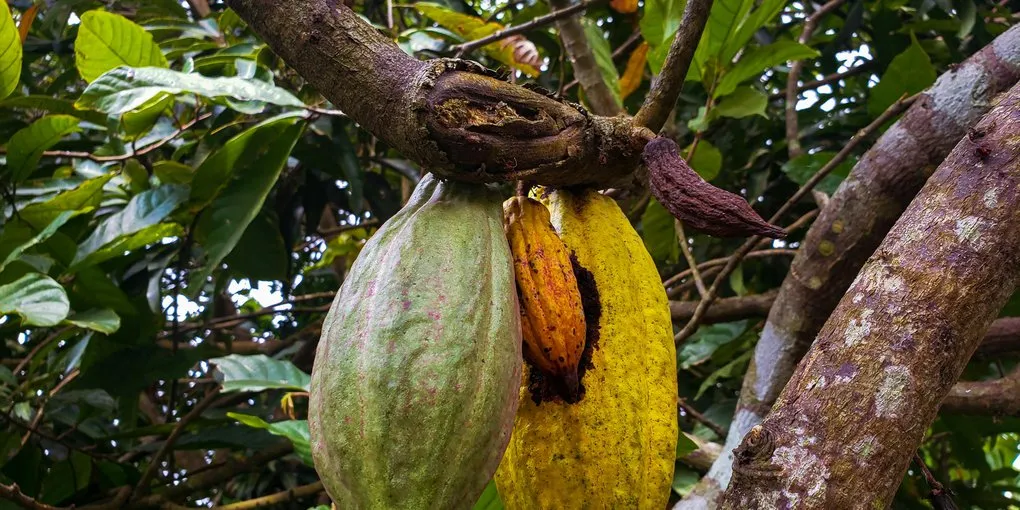
Madagascar’s cacao is concentrated in the Sambirano region around Ambanja in the northwest. Helvetas’s current landscape-project account attributes about 95% of the country’s cacao to this region and describes predominantly smallholder production. That supports calling Sambirano the main growing area; it does not support saying that every cacao tree is inside one 25-mile circle.
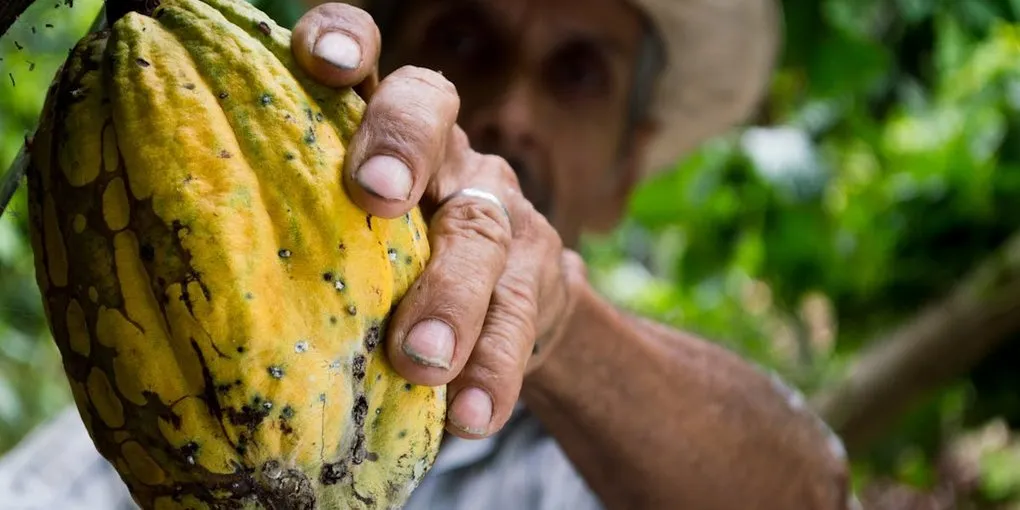
The region contains different farms, collection arrangements and post-harvest facilities. Geographic concentration does not eliminate lot variation. Ask who grew and processed the beans, rather than relying solely on a country name.
The ICCO’s April 2024 classification lists Madagascar at 100% fine-flavour cocoa bean exports. This is a trade classification with a particular denominator. It is not Madagascar’s share of world production, a claim that every bean is defect-free, or a promise of a particular price premium. Undated global production percentages are not needed to explain the origin’s importance to craft chocolate.
What the Genetics Research Shows
A 2021 SNP-marker study examined 40 farmer accessions from Madagascar alongside 150 reference accessions. It identified Criollo, Amelonado and Trinitario groups among the sampled material. The authors explicitly limited their survey to Sambirano and called for broader sampling.
That is evidence of retained genetic diversity, not a national census. It does not demonstrate that Criollo ancestry causes a raspberry flavor, or that anthocyanin concentration alone explains the taste of finished chocolate. Nor can a buyer infer the composition of a shipment from those sample counts. Ask for evidence behind any lot-specific genetic claim.
A Living Industry, Not a Frozen Colonial Recipe
Cacao’s introduction and plantation development are part of Madagascar’s colonial history. But a historical planting date cannot tell us that cultivation, fermentation or flavor has remained unchanged for a century.
Modern work directly contradicts that picture. In research on adapting fermentation to small producers, CIRAD, FOFIFA and partners compared different small fermentation containers and volumes using Sambirano cacao. The researchers assessed physical, biochemical and sensory outcomes rather than assuming one traditional method was sufficient.
Helvetas’s account of its collaboration with FOFIFA also describes training materials, fermentation equipment, improved dryers and selected planting material. These sources do not prove uniform improvement across every farm. They do show why Malagasy farmers and researchers should be part of the story, rather than treating today’s chocolate as an unchanged French colonial inheritance.
Roasting: Test the Lot, Not the Stereotype
The shortest or coolest roast does not always produce the best Madagascar chocolate. Dandelion’s Ambanja page describes a long, hot roast used to retain a particular fruity profile. Chocolate Alchemy’s archived 2018 Sambirano notes discuss different results across light, medium and heavier roasts. These are counterexamples to a universal light-roast rule, not instructions to apply either maker’s settings to every machine.
Use a documented roasting approach suitable for your equipment. For a new lot, compare manageable test batches while keeping the chocolate recipe constant. Record loading, time, measured temperature and the cooled chocolate’s flavor. A time change that is useful in one roaster may not transfer to another.
Avoid treating the boiling point of pure acetic acid as a threshold that cacao must cross before it can lose acidity. Beans are a complex material; the quantity and movement of acids depend on the process. There is also no established countrywide acid composition that justifies promising one temperature will remove vinegar notes while preserving all fruit character.
Roast development includes chemical changes, not simply preservation of a complete flavor already inside the raw bean. Flavor assessment and validated microbial control are separate questions; a pleasant trial batch alone does not establish the latter.
Formulation and the Fat Calculation
A familiar two-ingredient 70% formula can provide a useful comparison point. It is not a scientifically established optimum for Madagascar. There is no universal raspberry peak at 75%, and a higher percentage does not necessarily mean an unpleasantly sour bar.
Change sugar or added cocoa butter deliberately and compare results. Added butter changes the ratio of fat to nonfat cocoa material and can change flow and mouthfeel. How you perceive the resulting flavor must be assessed in the actual recipe; dry or rough texture is not required to make fruit notes convincing. Milk chocolate is another formulation to explore, rather than an inferior use that this origin automatically rescues.
For a two-ingredient batch containing 700 g nibs and 300 g sugar, suppose the nibs are measured at 54% fat. They contribute 700 × 0.54 = 378 g fat, giving an estimated 37.8% fat in the 1,000 g starting formulation. This illustrates the calculation; it is not a measured fat content for Madagascar cacao. Actual final composition can differ with processing losses, and flow also depends on more than fat percentage.
Evaluating Beans Before a Larger Batch
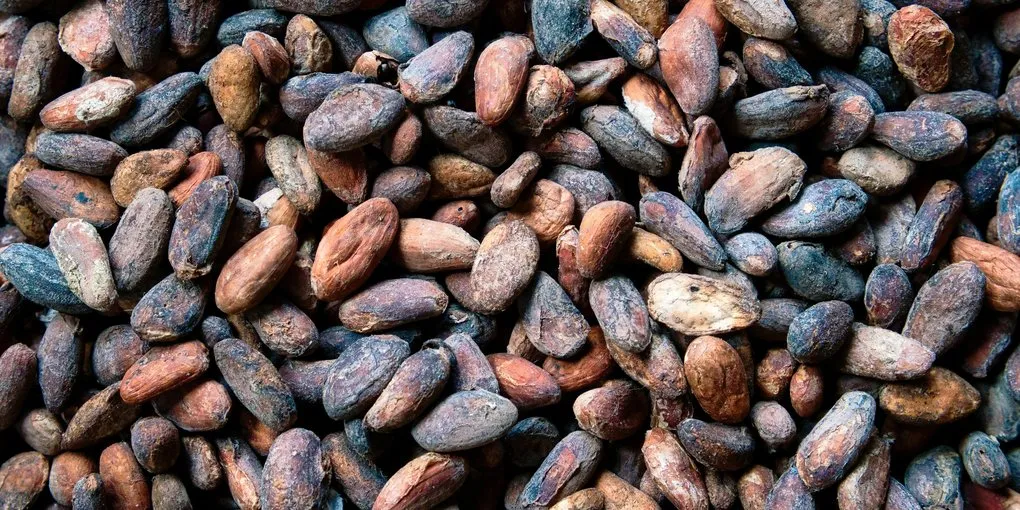
Request the producer or cooperative, crop or lot identity, fermentation and drying information, storage history and relevant quality documentation. Buy a sample suitable for a meaningful trial before committing to a larger quantity. A famous origin cannot guarantee the condition of a particular delivery.
A cut test can reveal internal color and visible defects, but cutting 10–20 beans and looking for 75% brown is not a universal Madagascar acceptance standard. Genetics influences bean pigmentation, and color alone does not certify flavor or safety. The Cacao of Excellence assessment guide treats physical evaluation as a structured process alongside further assessment. A small informal check should not be mistaken for that complete evaluation.
For comparison, choose named bars from Peru or another origin with similar percentages and ingredient lists. You may find overlapping fruit notes or differences you did not expect. There is no need to rank whole countries as brighter, warmer or more consistent to make the tasting informative.
Conching and the First Batch
There is no supported Madagascar-wide 18–20-hour conching sweet spot. Conching depends on formulation, equipment, temperature, aeration and starting material. Follow the machine’s operating limits and compare samples during processing instead of assuming a particular lid position and duration will preserve exactly the desired aromas.
Sugar addition does not freeze flavor chemistry. Its timing can change the process, but flavor can continue changing afterward. A universal early-sugar schedule cannot lock in raspberry, and later addition cannot guarantee caramel notes.
For a first bean-to-bar batch, choose traceable beans with useful supplier guidance and keep careful records. A recognizable fruity result is possible, but no recipe can promise every beginner the same berry note. The worthwhile result is learning how that particular lot responds in your equipment.
Madagascar Cacao: Origin Profile
Common Associations
Fruit and acidity; specific notes vary with lot, maker and taster
Main Growing Region
Sambirano, around Ambanja in northwestern Madagascar
Fine-Flavour Classification
ICCO April 2024: 100% of cocoa bean exports; not a global production share
Genetic Evidence
Criollo, Amelonado and Trinitario in a 2021 Sambirano sample; not a national census
Roast Development
Compare lot-specific trials on your own equipment
Cacao Percentage
A formulation choice; no universal best percentage
Conching
Equipment- and recipe-dependent; sample during processing
Sourcing
Request lot identity, post-harvest information and relevant quality evidence
Frequently Asked Questions
- Does all Madagascar chocolate taste like berries?
- No. Fruity notes are common descriptions, but harvest, processing, recipe and the taster affect the result. Check the ingredients rather than assuming a fruit note means fruit was added.
- What percentage is best for Madagascar chocolate?
- There is no universal optimum. A familiar recipe gives you a comparison point; then adjust sugar or added cocoa butter according to the actual result.
- How should I roast Madagascar cacao?
- Use an equipment-appropriate method and compare controlled trials for the lot. Neither a fixed national endpoint nor the shortest roast reliably identifies the best result.
- Is Madagascar useful for beginners?
- It can be an interesting origin to try. Traceable beans, clear supplier information and a manageable trial matter more than a promise of guaranteed berry flavor.
- Where does Madagascar cacao grow?
- Production is concentrated in Sambirano in the northwest. It is not accurate to place all of the country's cacao inside one fixed 25-mile radius.
- How long should I conch it?
- There is no countrywide conching time. Sample during processing within the equipment's operating limits; sugar addition does not stop subsequent flavor changes.
- What genetics are found in Madagascar?
- A 2021 study identified Criollo, Amelonado and Trinitario among sampled Sambirano farmer accessions. Those findings do not establish a single flavor gene or every shipment's genetic makeup.