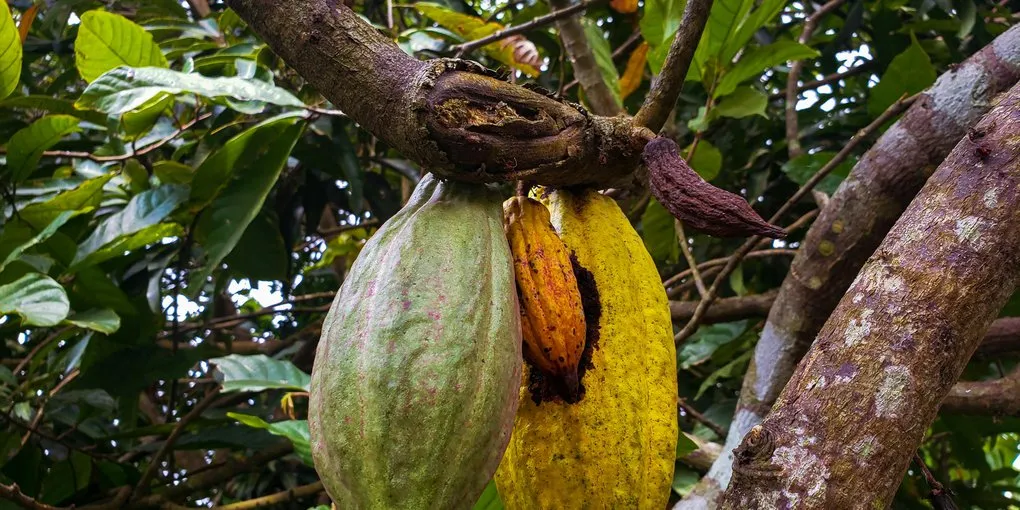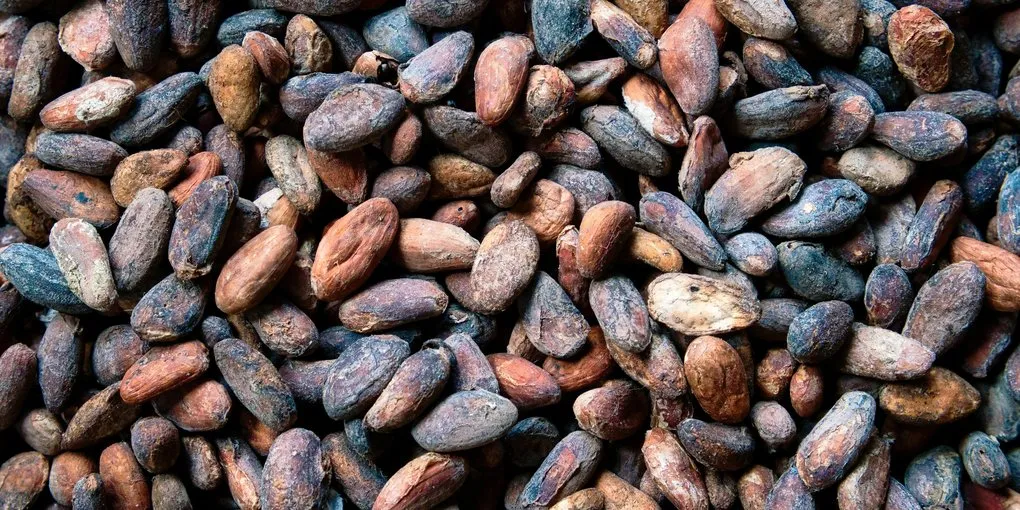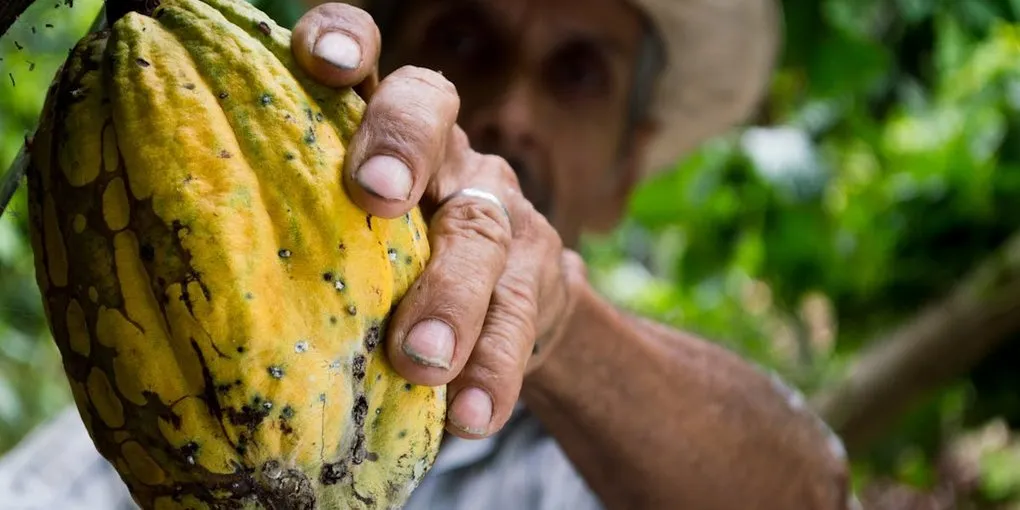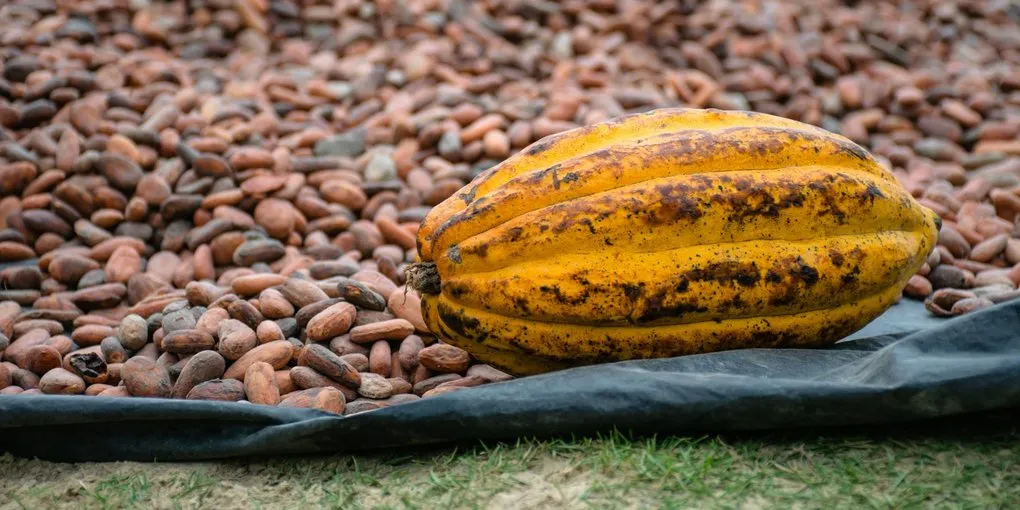
Peruvian chocolate offers plenty to explore: bright fruit, flowers, nuts, malt, and deeper chocolate notes can appear in different bars. The rewarding approach is to compare identified producers and batches. A broad national label tells you much less than the growing area, harvest, fermentary, and maker’s choices.
Peru’s genetic richness is well documented. A claim that it produces more chocolate flavors than every other country would require a comparable sensory survey, however. Genetic diversity and the range of flavors found in finished bars are related questions, not interchangeable measurements.
The Regions and the Lots Behind Them
Piura
Piura lies in Peru’s dry northwest. Cacao cultivation there depends on irrigation, as described in the 2023 research catalog of Peruvian cacao. Its pale-seeded populations are often sold under names such as Blanco de Piura or Piura White.
For a concrete flavor example, Cacaosuyo’s Piura Select 70% is described by its maker as fruity and citrusy, with nut, honey, panela, and malt notes. Importer Meridian describes its Norandino-sourced Piura White through malt, sugar cane, and nuts. These descriptions leave room for a broader experience than a compulsory grape-and-tangerine profile.
You may find those particular fruits in a bar, but use them as tasting observations rather than a test of whether the cacao is authentically Piuran. The same applies when comparing it with Madagascar or Ecuador: compare the bars in front of you rather than assigning each country a fixed flavor.
The Marañón Valley and Fortunato No. 4
The northern Peruvian cacao associated with Marañón Chocolate and Fortunato No. 4 attracted attention through its relationship to Nacional. In a 2011 account of the 2008–2009 collecting expeditions, USDA-ARS described the material identified with Marañón Chocolate’s collaborators as rare Pure Nacional. The account documents cooperation between Peruvian researchers, farmers, and US scientists.
That is a stronger historical foundation than saying Nacional was globally extinct and then brought back. Nor should the story be reduced to CCN-51 having replaced every Nacional tree in Ecuador.
The names need care. Marañón is both a geographic name and the name of a genetic group, while Nacional is a separate group in the influential 2008 classification. A cacao tree growing in the Marañón valley is not automatically a member of the Marañón genetic group.
Later research adds detail. The 2023 Peruvian catalog places Fortunato-4 in a Cajamarca-Amazonas group related to Blanco de Piura and Nacional; it distinguishes these groups as the analysis examines finer divisions. This does not erase the historical commercial name Pure Nacional. It means a precise ancestry claim should identify the research and classification being used.
Amazonian Growing Areas
The Peruvian Amazon contains many growing environments and cacao populations. “Amazonian” is too broad a label to promise a single fig-and-anise flavor or identify a lot as wild-harvested.
One named example is Cacaosuyo’s Lakuna 70% from Amazonas, which the maker describes with floral, honeyed-fruit, and acidic notes. That is a description of a particular chocolate, not a flavor map for all eastern Peru. Amazonas is also a specific Peruvian region; its name should not be used as a synonym for the whole Amazon basin.
When a seller uses words such as native, wild, or rare, ask what those terms mean for that lot. A cacao collected from forest is not necessarily a population untouched by people: the 2023 catalog describes the long movement and cultivation of cacao by communities across the region.
What White Beans Tell You
White or pale cotyledons are a feature of several cacao populations. They do not by themselves establish Criollo ancestry, the same genetic identity as Venezuelan Porcelana, low acidity, or a particular finished flavor.
Nor is there one fermentation schedule for all pale beans. Cacao Life’s Piura White specification describes a mixed lot with about 30% white beans and a six-to-seven-day box fermentation. This is that supplier’s reported practice, not a universal recommendation, but it demonstrates why a fixed two-to-three-day rule is inadequate.
Industry fermentation guidance identifies variety, pulp-to-bean ratio, aeration, turning, and the size and conditions of the ferment as relevant variables. Producers need an endpoint appropriate to their material and process. Buyers need evidence of the result: sound beans and a good sensory evaluation.
Pale cacao also calls for care when interpreting a cut test. Internal color, fissuring, aroma, and defects should be assessed together; a brown cross-section alone is not a complete measure of fermentation or flavor.
Post-Harvest Work Has a Longer History
Peru’s cacao sector did not start with an absence of knowledge or infrastructure until overseas craft makers arrived. Farmer organizations and local institutions are part of its history.
For example, in its 2015 account of working with Naranjillo, trading partner La Siembra describes a farmer cooperative founded in 1964 and a processing plant opened in 1985. A factory is not proof that every member’s fermentation was excellent; it is clear evidence that organized cacao processing predates the recent craft boom.
USDA’s 2011 account also describes work with the Instituto de Cultivos Tropicales, the Oro Verde cooperative, and Marañón Chocolate. Quality development involves growers, cooperatives, researchers, processors, and buyers. Their contributions should be evaluated specifically rather than presented as a national rescue story.
Consistency remains something to check by supplier and lot. There is no reliable basis here for declaring all Peruvian cacao more variable than all cacao from Madagascar.
Roasting: Develop a Profile for the Beans You Bought
Start with the supplier’s information about the actual harvest, bean size, moisture, and post-harvest process. Record the roaster, batch weight, airflow setting if adjustable, time, and the location of any temperature measurement. An oven setting and a probe reading in a moving bean mass are different measurements.
The industry’s guidance for sample roasting explicitly calls for mapping time, temperature, and loading to the cacao and equipment. A narrow end temperature attached to “Piura” or “Marañón” cannot replace that work.
Use our roasting guide to plan controlled comparisons. Choose a baseline appropriate to your equipment, then alter one variable at a time. Keep the subsequent chocolate formula and processing consistent so you can interpret the tasting. Label samples with codes when comparing them.
Dandelion’s account of developing flavor profiles describes repeated roast and conching trials followed by team tasting. The useful lesson is the comparison process, not a mandatory number of trials or a universal setting. Flavor development also does not establish that a roast has been validated for food safety.
Formulation and Conching
A 70% two-ingredient formula can be a convenient comparison baseline if it runs well in your equipment. For example, 700 g of nibs plus 300 g of sugar makes a 1,000 g starting batch at 70% cacao. This is formulation arithmetic, not a tested Peruvian recipe or a guarantee of the best flavor.
Once you understand the lot, compare the balance at different cacao percentages. More or less sugar changes the whole experience; the choice cannot be derived from the regional name. Keep records rather than assuming Piura must be strongest, Marañón sweetest, or Amazonian cacao most bitter.
Added cocoa butter is another formulation choice. Base it on the chocolate’s behavior and purpose, using lot-specific fat information when available. Altitude and country are not substitutes for a measured nib-fat value. If you add butter, count it in both the total batch weight and the cacao percentage.
During refining and conching, track texture and flavor separately. Sample at intervals and record chocolate temperature, batch size, and elapsed time. A smooth texture does not prove that flavor development is finished, and a desirable flavor does not prove the particles are sufficiently refined.
In John Nanci’s melanger discussion, he emphasizes that temperature and processing time depend on the beans and desired result. His explanation of melanger covers also distinguishes a loose cover from a sealed vessel: volatiles can escape, while retained heat and condensation can affect the process. Follow your machine’s instructions and keep condensed water from dripping into the batch. Regional schedules such as “Piura, lid on for 24 hours” do not account for these variables.
Genetics Is a Starting Point for Understanding Diversity
The 2008 Motamayor study initially genotyped 1,241 accessions with 106 microsatellite markers. After exclusions, the analysis retained 952 accessions and 96 markers and proposed ten genetic groups. Several include material from the Peruvian Amazon, including Contamana, Iquitos, and Marañón.
The study’s overall population-differentiation statistic, Fst = 0.46, describes genetic structure across the analyzed groups. It does not quantify Peru’s flavor diversity, assign particular fruits to groups, or rank countries by chocolate quality. The authors also identified admixture, so a neat one-region–one-genetic-group model is inadequate.
The broader Amazonian origin and diversity of cacao span modern national borders. Peru is a valuable place to study and conserve that diversity, but a map of genetic ancestry is not a recipe for the finished chocolate.
Sourcing and Evaluating a New Lot
When buying Peruvian cacao, ask for the growing area, producer or cooperative, harvest, fermentary, drying method, and lot identification. Ask whether the supplier’s tasting notes come from nibs, cacao mass, or chocolate, and what processing was used. Those details make comparisons more useful.
A cut test can reveal internal mold, insect damage, and other defects, but a handful of attractive beans cannot clear an entire shipment. The Cacao of Excellence guide, chapter 9, describes a 300-bean test sample and assessment of color, fissuring, aroma, and defects. Smaller preliminary checks are useful, but have limited coverage. Apply the relevant specification with your supplier, especially for naturally pale material, instead of assuming a single brown-bean percentage proves quality.
The industry quality guide is explicit that cut tests cannot fully predict flavor. Evaluate a properly prepared sample of mass or chocolate as well. Roast adjustments may change a sound lot’s expression; they should not be treated as a way to repair moldy beans or other unacceptable defects.
For beginning makers, clear supplier documentation and a manageable, sound lot matter more than choosing a supposedly easy country. Comparing two traceable Peruvian lots can teach you a great deal—as long as you record what was actually different.
Peruvian Cacao: Names and Evidence
| 01What the name identifies | 02A useful reference | 03What to verify | |
|---|---|---|---|
| Piura | A growing region in northwest Peru | Cacaosuyo Piura Select: fruit, citrus, nut, honey, panela, malt | Producer, harvest, pale-bean proportion, post-harvest method |
| Marañón / Fortunato | A growing-area and commercial sourcing story | USDA's 2011 account identifies rare Pure Nacional | Lot provenance; which genetic classification is being claimed |
| Amazonian areas | A broad geography containing many populations | Cacaosuyo Lakuna from Amazonas: floral, honeyed fruit, acidity | Specific region and producer; cultivated or wild-harvested provenance |
Named tasting notes are supplier or maker descriptions, not compulsory regional flavors. Neither roast settings nor an ideal cacao percentage follow from these names alone.
jayarrchocolate.comFrequently Asked Questions
- What does Peruvian chocolate taste like?
- It varies by lot and maker. Cacaosuyo describes Piura Select with fruit, citrus, nut, honey, panela, and malt, while its Lakuna from Amazonas has floral, honeyed-fruit, and acidic notes. Those are named chocolate examples, not a national flavor rule.
- What is Pure Nacional cacao from Peru?
- It is the name associated with rare northern Peruvian cacao documented by USDA-ARS in 2011 and sold through the Fortunato story. Geographic origin and genetic classification need to be distinguished: the Marañón growing area is not equivalent to the Marañón genetic group, and subsequent studies further distinguish related populations.
- Do white cacao beans always ferment faster?
- No fixed schedule applies to all white beans. Cacao Life reports six to seven days for its Piura White supply, which includes both pale and pigmented beans. Fermentation depends on the material and process; color alone does not establish acidity, ancestry, or readiness.
- How should I roast Peruvian cacao beans?
- Use supplier information and settings appropriate to your equipment and lot. Compare controlled trials, recording time, batch size, and how temperature is measured, then taste chocolate made under consistent conditions. A regional name does not establish an end temperature or a food-safety validation.
- Is Peruvian cacao good for beginners?
- A sound, well-documented lot can be suitable. Choose a supplier who can explain its origin and processing, and make repeatable batches before drawing conclusions about regional differences. There is no requirement to learn another national origin first.
- Is organized cacao processing new to Peru?
- No. Farmer cooperatives and local institutions have a longer history than the recent craft boom. La Siembra's account documents Naranjillo's founding in 1964 and processing plant opening in 1985. Quality still needs to be assessed for each supplier and lot.
- What cacao percentage works best for Peruvian chocolate?
- There is no best national or regional percentage. A 70% formula can serve as a comparison baseline, then sugar and fat choices can be adjusted through tasting and processing trials. Added cocoa butter counts toward both batch weight and cacao percentage.