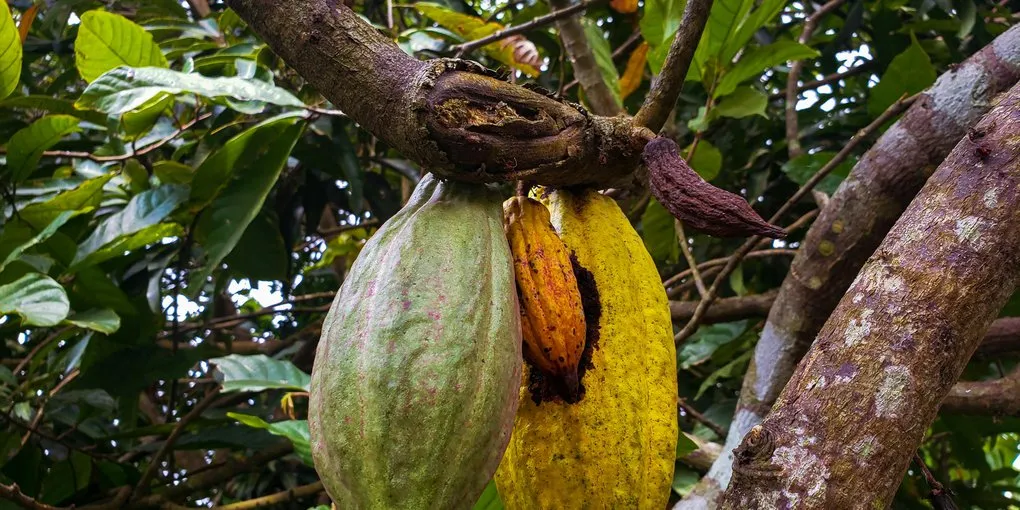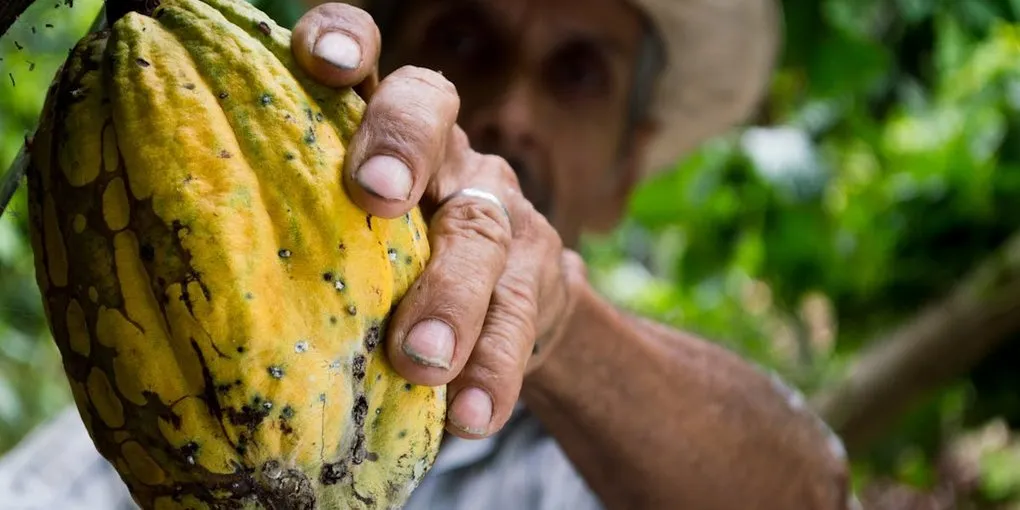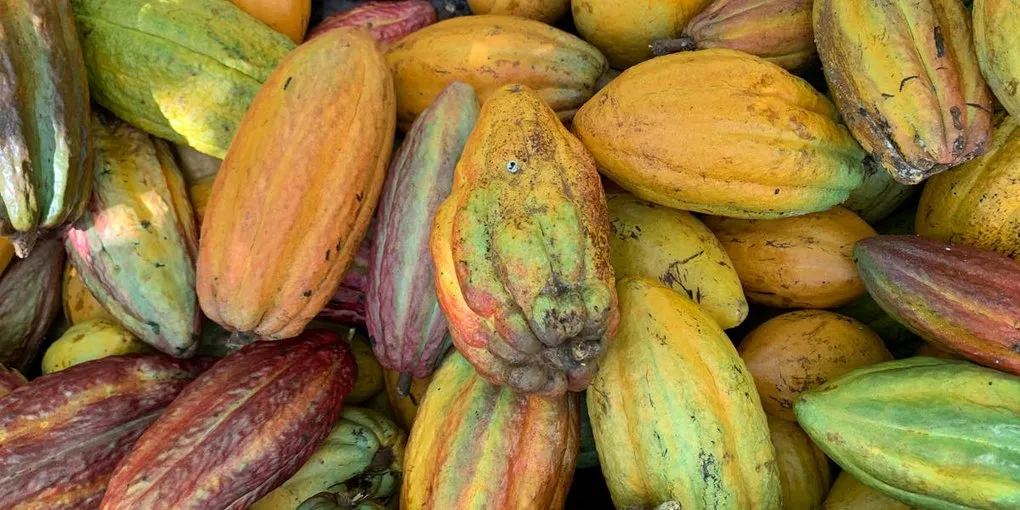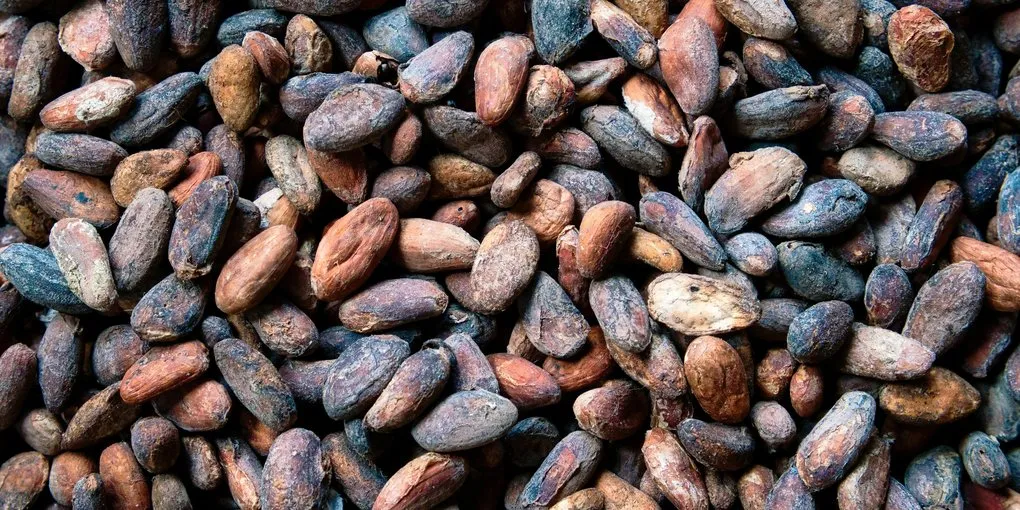
In 1545, in a market somewhere in central Mexico, a Spanish official wrote down what things cost. A turkey hen: 100 cacao beans. A small rabbit: 30 beans. A large tomato: one bean. An avocado, freshly picked: one bean. A fish wrapped in maize husks: three beans. These were not figurative prices — they were transactions, recorded by colonial administrators trying to map the economy they had just conquered.
The Aztec empire (1428–1521 CE) and the Maya civilization that preceded it used cacao beans as money. Not as ceremonial barter, not as a luxury good occasionally exchanged, but as the principal small-denomination currency for an entire civilization. Beans were carried in pouches and stored in 8,000-bean bags. They were counterfeited the way medieval Europeans clipped coins. They were hauled across hundreds of miles of mountain trail by professional porters. And — uniquely among historical commodity moneys — when you ended up with too many of them, you could grind them up and drink the surplus.
This article walks the monetary mechanics: when cacao monetization began, how the Aztec system inherited and extended a Maya tradition, what specific things you could buy with a fistful of beans, who handled the long-distance bean trade, how counterfeiters faked beans, why a tropical seed turned out to be remarkably good money, and how the system finally died centuries after the empire that ran it. The drinking and ceremonial side of cacao — how the Maya and Aztec actually prepared and consumed the beverage — is covered separately in Maya & Aztec chocolate: metate, foam, and ritual.
Cacao monetization began in the Classic Maya period (250–900 CE).
Cacao had been used in Mesoamerica for at least 1,500 years before it became money. The earliest archaeological evidence — starch grains, theobromine residue, and ancient Theobroma cacao DNA — comes from the Mayo-Chinchipe culture at the Santa Ana-La Florida site in southeastern Ecuador, dated to roughly 3300 BCE (Zarrillo et al., Nature Ecology & Evolution, 2018). By 1900–1500 BCE, the Mokaya culture in Soconusco (the Pacific coast of modern Chiapas) was leaving theobromine residues in pottery. By 1400–1100 BCE, sites at Puerto Escondido in Honduras show 11 of 13 pottery sherds positive for theobromine (Henderson, Joyce, Hall, Hurst, and McGovern, PNAS 2007). Across that long span, cacao was a beverage — bitter, frothed, ceremonial, often mixed with maize. Detail on the archaeology is in the history of chocolate from Maya to bean-to-bar.
Monetization came later. During the Classic Maya period (roughly 250–900 CE), cacao beans crossed the threshold from valued commodity to generalized medium of exchange. Maya rulers depicted on stelae and painted cylinder vessels received cacao as tribute alongside textiles, jade, and quetzal feathers. By the late Classic period, cacao was being used to settle debts, pay tribute, and price goods — the three classical functions of money. Sophie and Michael Coe, in The True History of Chocolate, document Maya market scenes and tribute lists that establish cacao’s monetary role well before the Aztecs ever inherited it.
When the Aztec Triple Alliance (Tenochtitlan, Texcoco, and Tlacopan) consolidated power in central Mexico after 1428 CE, it inherited and extended the system. The empire conventionally dates 1428–1521, from the founding of the Triple Alliance to the fall of Tenochtitlan; do not confuse this with the broader Mexica migration into the Valley of Mexico in the 13th and 14th centuries. The Aztecs called the elite cacao beverage xocolatl and reserved its consumption for warriors, nobles, priests, and merchants. But while drinking chocolate was restricted, spending cacao beans was not. The beans were universal currency. (For the etymology debate around xocolatl vs. the documented Nahuatl form cacahuatl, see the rituals piece linked above.)
Aztec records ranked cacao beans above gold dust as principal currency.
When the Spanish arrived in 1519, they recorded what they saw with the precision of accountants. Hernán Cortés (1485–1547), in his Fourth Letter to Emperor Charles V dated October 15, 1524, described cacao as money “current in all the country” and recorded a copper hatchet as worth 8,000 cacao beans. Bernal Díaz del Castillo, in Historia verdadera de la conquista de la Nueva España, described the great market at Tlatelolco (across the causeway from Tenochtitlan) trading slaves, cloth, food, and small goods all priced in beans.
The Aztec tribute records — preserved in the Codex Mendoza (compiled c. 1541 in Mexico City for Viceroy Antonio de Mendoza, intended as a gift to Charles V) — list cacao beans among the goods Aztec subject states sent to Tenochtitlan. The most important cacao tribute province was Xoconochco (Soconusco), conquered in 1486 by the emperor Ahuitzotl. After conquest, the province was required to send semi-annual tribute that included cotton clothing, jaguar skins, quetzal feathers, and cacao. The Codex Mendoza glyphic notation for one major Soconusco delivery shows 200 cargas (loads) of cacao — written as a load symbol surmounted by ten flag-like symbols of 20 each — alongside the textile and feather tribute.
Multiple Spanish chronicles rank cacao above gold dust as the principal currency for everyday transactions. Gold dust, measured in quills (the hollow shafts of bird feathers) full of dust, was the high-value instrument for major purchases. Cacao beans handled everything below that — and that was almost everything most people bought in their lifetime. The economic historian Ross Hassig, in Trade, Tribute, and Transportation: The Sixteenth-Century Political Economy of the Valley of Mexico (1985), describes the Aztec system as functionally bimetallic at retail and small-wholesale scale, with cacao serving the role copper played in many other premodern economies.
A xiquipilli held 8,000 beans; a carga held 24,000.
Aztec count was vigesimal (base 20). Cacao was counted accordingly: a zontli (or centzontli) was 400 beans (20 × 20), a xiquipilli was 8,000 beans (20 × 400), and three xiquipilli — 24,000 beans — was a carga, the standard load that one porter carried at a time. The Nahuatl Dictionary maintained by the Wired Humanities Project at the University of Oregon documents these definitions directly from 16th-century sources, including Sahagún and Molina.
The xiquipilli wasn’t an abstract unit. It was a specific cloth bag containing 8,000 beans, and the bag itself became the hieroglyph for the number 8,000 in the Aztec numerical system. A merchant didn’t count the beans in a xiquipilli on every transaction — they trusted the bag, the way modern bankers trust a sealed cash pack. Three xiquipilli — one carga — was the typical wholesale unit moving through the empire’s long-distance trade. Provincial tribute from cacao-producing regions was reckoned in cargas; in the Codex Mendoza, the hundreds of cargas owed annually by Xoconochco amount to several million beans per delivery.
A 1545 Tlaxcala document records what a single bean would buy.
The most-cited primary record of cacao prices is a 1545 document from the Tlaxcala region, transcribed and discussed in Coe and Coe’s True History of Chocolate and curated in the Mexicolore “Beanz Meanz Money” feature by historian Ian Mursell. The document records exchange rates including:
What a Cacao Bean Bought in 1545 Mexico
Documented exchange rates from the 1545 Tlaxcala document
| 01Cost | 02Notes | |
|---|---|---|
| Turkey cock | 300 beans | Premium protein, the high-value end of the everyday list |
| Male turkey (1545 Nahuatl document) | 200 beans | A separate 1545 record values a male turkey at 200 |
| Hare | 100 beans | Wild game, full-sized |
| Turkey hen | 100 full beans (or 120 shrunken) | Roughly a day's labor wage in some regions |
| Small rabbit | 30 beans | Common protein |
| Avocado (full size, ripe) | 3 beans | Granular pricing — size and ripeness mattered |
| Fish wrapped in maize husks | 3 beans | Prepared and portioned |
| Turkey egg | 3 beans | Small, fragile protein |
| Tamale | 1 bean | Single serving, prepared |
| Large tomato | 1 bean | Fresh produce |
| Newly picked avocado | 1 bean | Less mature than the 3-bean version |
| Newly picked prickly pear | 1 bean | Smallest unit transaction |
Wholesale unit: 1 xiquipilli = 8,000 beans (a cloth bag, also the glyph for 8,000). 1 carga = 3 xiquipilli = 24,000 beans (a porter's load). Higher-denomination metal currency: 1 copper tajadera (T-shaped axe) ≈ 8,000 beans (Cortés, Fourth Letter to Charles V, 1524).
jayarrchocolate.comThese numbers tell you several things at once. First, cacao beans were genuinely small-denomination money — a single bean bought a single piece of fruit, the way a small coin works. Second, the system supported high-resolution pricing: avocados ranged from one to three beans depending on size and ripeness, the same kind of granularity you would expect from a working market economy. Third, the 1545 document also notes that 200 full beans equaled 230 shrunken ones — explicit evidence that quality grading was built into the currency, not an afterthought. Fourth, similar exchange rates were recorded by Spanish observers across central Mexico and into the Maya zones, which means cacao functioned as something close to a regional currency standard.
The Sahagún Florentine Codex separately records cotton-mantle (quachtli) grades at 65, 80, or 100 cacao beans per cloak depending on quality. A laborer’s daily wage in some regions was 100 beans — roughly the price of a turkey hen, or one good cotton cloak. Five beans bought a meal. A few hundred beans funded a modest household for a week.
Pochteca merchants moved cacao on the backs of tlameme porters.
Cacao only grows in a narrow band within roughly 20° north and south of the equator. The Aztec heartland in central Mexico sat at the northern edge of cacao’s range, with most production concentrated in coastal lowlands and southern provinces hundreds of miles from Tenochtitlan. Moving the currency from where it grew to where it was spent required infrastructure — and that infrastructure had no wheels and no draft animals.
That infrastructure was the pochteca: a hereditary class of long-distance merchants who functioned as both traders and intelligence operatives for the empire. Sahagún devotes Book IX of the Florentine Codex specifically to the pochteca, describing their organization into guilds (the pochtlan), their ritual departures, and the political privileges they earned. They were among the few commoners allowed to wear certain insignia, drink xocolatl in public, sponsor major festivals, and own slaves.
Pochteca caravans did not carry their own loads. They hired tlameme (also spelled tameme) — professional porters trained from childhood — who carried bundles strapped to a wooden frame and supported by a forehead strap (mecapal / tumpline). A tlameme typically carried roughly 50 pounds (about 23 kilograms) for around five leagues — 13 to 15 miles — before handing the load off to another tlameme in a relay. Bernal Díaz del Castillo recorded the figure of 50 pounds for 20 miles. A single carga of cacao (24,000 beans) was within a tlameme’s load capacity, and a moderate caravan moving a few dozen tlamemes could shift hundreds of thousands of beans on a single trip.
The combination of long-distance bean trade and elite-tier political access made the pochteca one of the most powerful non-noble classes in the Aztec system. They knew where cacao grew. They knew the routes. They knew the prices. And they knew which provinces were rebellious — which made them as valuable to the emperor’s intelligence apparatus as they were to his economy.
Counterfeiting cacao was a documented Aztec crime.
Where there is money, there is fake money. The Aztec system was no exception, and the documentation is unusually specific.
Sahagún’s Florentine Codex, Book X (the volume on “the people, their virtues and vices”), contains an explicit catalog of cacao counterfeiting techniques. The “bad cacao seller” is described as a trickster who hollows out the husks of real beans and refills them with substitutes — most commonly amaranth seed dough (huautli), but also wax, avocado pits, and in some cases sand or pebbles. Some operations whitened fresh beans by stirring them through ashes to pass them off as a different grade. The fake bean weighed roughly the same as the real one and looked identical from the outside. Detecting it required cutting the bean open or, for an experienced merchant, weighing it against known good beans, sorting by feel, or shaking a handful to listen for the wrong rattle.
Bulk operations also existed: dyeing cheaper, less-valued beans (from inferior cacao varieties or non-cacao plants) to pass as premium beans. Aztec law treated counterfeiting as harshly as theft, and the legal severity is itself evidence of how seriously the empire took monetary integrity. Sahagún’s Book IX adds that the tianquizpan tlayacanqui — market overseers — patrolled the great Tlatelolco market specifically to police fraud, including bean counterfeiting.
The parallel to coin-clipping and lead-cored gold coins in medieval Europe is exact. Whenever a portable physical token represents stored value, someone will figure out how to fake it. The interesting wrinkle is that Aztec counterfeiting required intact husks — meaning fakers had to start with real cacao to fake cacao — which gave the system a built-in supply constraint that pure imitation moneys (lead “silver” coins, base-metal “gold”) did not have.
Cacao was good money because it had the right physical properties.
Why did a tropical seed work as currency for a thousand years across multiple civilizations? Because cacao happened to satisfy almost every property economists associate with good money:
- Durability. Properly fermented and dried cacao beans store for months without significant degradation. Stored in dry conditions, they hold value across seasons. (They are not durable forever — and we will come back to that.)
- Divisibility. A single bean was the smallest unit, and prices ran from 1 bean to tens of thousands. The system supported retail-level transactions and wholesale ones using the same physical token.
- Portability. A xiquipilli (8,000 beans) is heavy but movable. Smaller transactions could be carried in a pouch.
- Recognizability. Cacao beans have a distinctive shape, color, and weight. Trained merchants could identify quality and authenticity by sight and touch — the basis for the documented “shrunken” vs “full” grading.
- Scarcity (but not too much). Cacao required specific climate conditions (warm, humid lowlands within ~20° of the equator) and labor-intensive cultivation. It could not be produced anywhere by anyone in unlimited quantity. But it was also not so rare that small transactions failed.
- Intrinsic value. Unlike pure fiat currency, cacao beans had a real consumption value — if you ended up with too many, you could grind them, mix with maize and chili, and drink them. (The drinking-side mechanics are in the rituals article.)
That last property is the unusual one. Most historical commodity moneys — silver, gold, cowrie shells — had non-monetary uses, but those uses were ornamental or industrial, not consumable. Cacao was money that you could literally eat. That gave the system a kind of natural floor: even in a glut, the underlying asset retained beverage value, and the elite consumption class maintained reliable demand. The Scottish journalist Charles Mackay, in Memoirs of Extraordinary Popular Delusions (1841), used cowrie shells and Dutch tulips as canonical examples of unstable commodity moneys; cacao would have been a fascinating counterexample if he had reached for it. The drink kept the currency honest.
The drawback — what economist David Birch has called “rotting currency” — is that cacao beans do eventually spoil, particularly in humid lowlands where they grow. Stored beans lose weight, oils oxidize, and the bean degrades. That gave the system a built-in incentive against hoarding and a built-in inflation mechanism: old bad beans got discounted to “shrunken” status (the 200-full-equals-230-shrunken rate), which is itself an early example of grading-as-monetary-policy.
Cacao as Currency: Classic Maya to the 1850s
Roughly two thousand years of bean money
- ~250–900 CE
Classic Maya monetization
Cacao crosses from prestige commodity to medium of exchange. Late Classic Maya stelae and painted vessels record cacao tribute alongside textiles and feathers (Coe & Coe, True History of Chocolate).
- 1428 CE
Aztec Triple Alliance founded
Tenochtitlan, Texcoco, and Tlacopan consolidate. The empire inherits the Maya cacao-currency system and extends it across central Mexico via tribute and pochteca trade.
- 1486 CE
Soconusco conquered
Emperor Ahuitzotl annexes Xoconochco (Soconusco), the empire's most important cacao tribute province. Codex Mendoza records semi-annual deliveries of hundreds of cargas.
- ~1500 CE
Copper tajaderas enter circulation
T-shaped copper 'hoe money' begins functioning as higher-denomination currency. Exchange rate approximately 1 tajadera ≈ 8,000 cacao beans.
- 1519 CE
Cortés enters Tenochtitlan
Spanish chroniclers (Cortés, Bernal Díaz, Sahagún) record cacao prices, market mechanics, and the role of the pochteca.
- 1524 CE
Cortés Fourth Letter
Cortés writes to Charles V on October 15, recording a copper hatchet as worth 8,000 cacao beans — the most-cited single primary source on the cacao-copper exchange rate.
- 1545 CE
Tlaxcala price list
Spanish administrators record cacao-bean exchange rates: turkey hen 100, cock 300, male slave 200, tomato 1, tamale 1. The most cited primary record of bean-denominated retail prices.
- 1521–1810
Colonial small change
Spanish silver coins enter circulation but do not displace cacao at the small-change end. Cacao and pesos coexist throughout the colonial period.
- Early 1800s
Humboldt's observation
Alexander von Humboldt records 72 cacao beans exchanging for one medio real, the smallest silver coin in colonial Mexican circulation.
- 1850s
End of cacao as small change
Cacao still observed in active retail use in Central American markets in the mid-19th century, more than 300 years after the Spanish conquest of Mexico.
Around 1500 CE, copper hoes entered circulation as higher-denomination currency.
Late in the pre-conquest period, the Aztec economy added a second currency on top of cacao: T-shaped copper “hoes,” called tajaderas in Spanish sources and stored today in collections including the National Museum of American History at the Smithsonian. The exchange rate, recorded by Cortés in his Fourth Letter to Charles V (1524), was approximately 1 copper hatchet ≈ 8,000 cacao beans — exactly one xiquipilli, which is unlikely to be coincidence. The metal token was almost certainly priced to slot into the existing bag-denomination system.
The introduction of copper did not replace cacao. It supplemented it. Cacao stayed as the small-denomination, everyday currency for retail-scale purchases, while copper tajaderas handled larger transactions — buying land, paying significant tribute, settling commercial debts between merchants. The system was effectively bimetallic, with cacao playing the role that copper or bronze played in many other premodern economies and tajaderas playing the role of silver. Higher than that, cotton mantles (quachtli) at 65, 80, or 100 beans each functioned as a kind of soft fiat — bearer instruments with assigned bean values.
The arrival of Spanish silver after 1521 disrupted the high end of this system. Spanish reales, pesos, and tomines entered circulation, and the colonial administration imposed peso pricing on long-distance and large-value trade. But cacao did not disappear. It just shrank into its small-change niche, where Spanish coinage was inconvenient and bean-denomination was already the working market practice.
Cacao currency persisted for three hundred years after the Spanish conquest.
The conventional pop-history narrative ends cacao currency with Cortés. The actual record runs three centuries longer.
Throughout the colonial period (1521–1810), cacao continued in active use as small-change currency throughout central and southern Mexico and across Central America. Spanish administrators were not generally hostile to it — peso-denominated coins were inconvenient for sub-real transactions, and the local population kept paying for produce, prepared food, and small craft goods in beans. The most influential modern scholarly treatment of this is Marcy Norton’s Sacred Gifts, Profane Pleasures: A History of Tobacco and Chocolate in the Atlantic World (Cornell, 2008) and the Cambridge volume Money in the Pre-Industrial World, whose chapter “Cacao Beans in Colonial México: Small Change in a Global Economy” lays out the persistence in detail.
The German naturalist and explorer Alexander von Humboldt, traveling in New Spain in 1803–1804, observed that 72 cacao beans were exchanging for one medio real (one-half real — the smallest silver coin then minted). That is roughly two and a half centuries after Cortés. Cacao was still observed in active retail use in Central American markets — Nicaragua, Guatemala — into the mid-1850s, more than 300 years after the conquest of Mexico.
What finally killed cacao currency was not the Spanish per se. It was a combination of slow forces: improved availability of small-denomination metal coinage (especially copper tlacos in colonial Mexico), the gradual spread of the cash economy from coastal commercial centers into rural markets, and — eventually — modern banking. Even then, in the most isolated rural Maya markets, bean transactions persisted as a kind of vernacular practice into the early 20th century, long past the point where they were the operative currency.
For more on cacao as a working agricultural commodity in the modern era, see the cocoa price crisis explained. For the broader history of how cacao moved from Mesoamerican drink to European luxury to industrial commodity to craft revival, see history of chocolate from Maya to bean to bar.
The legacy is more than historical.
The Aztec system ended, but the underlying logic — that cacao is a high-value crop worth trading across long distances — is still embedded in the modern chocolate trade. Today’s premium cacao prices, with fine-flavor beans selling at multiples of bulk-commodity prices and origin-specific lots commanding direct-trade premiums, are economic descendants of the same intuition the pochteca operated under five hundred years ago: that cacao varies by origin, by quality, by handling, and by season, and that knowing the difference is worth real money. (The modern version of this knowledge — varietals, fermentation, terroir — runs through cacao genetics and varieties and cacao fermentation science.)
What is worth keeping: in 1519, when Cortés first walked into the Tlatelolco market, he was looking at one of the largest commercial economies on Earth, denominated in beans. The drink that had once been bitter, frothed, and confined to elites had a parallel life as money. That monetary system was sophisticated, scaled, counterfeit-resistant within reason, integrated with metal and cloth higher-denomination instruments, and durable enough to outlast — by three centuries — the empire that ran it. Money really did grow on trees.
Frequently Asked Questions
- Did the Aztecs really use chocolate as money?
- They used cacao beans, not finished chocolate, but yes — cacao beans were the principal small-denomination currency of the Aztec empire (1428–1521 CE). A 1545 Tlaxcala document records specific exchange rates: 100 beans for a turkey hen, 300 for a cock, 30 for a small rabbit, 1 bean for a tomato or avocado. The system was inherited from the Classic Maya period (250–900 CE) and continued in active use as small-change currency in parts of Mexico and Central America for over 300 years after the Spanish conquest.
- How many cacao beans did things cost?
- Per the 1545 Tlaxcala document and a separate 1545 Nahuatl record: 1 bean for a tomato or tamale, 3 beans for a turkey egg or fish wrapped in maize husks, 30 beans for a small rabbit, 100 beans for a turkey hen (or 120 shrunken beans), 200 beans for a male turkey in one record, 300 beans for a turkey cock. A laborer's daily wage in some regions was around 100 beans. Sahagún's Florentine Codex separately grades cotton mantles (quachtli) at 65, 80, or 100 beans depending on quality.
- How many cacao beans were in a xiquipilli?
- A xiquipilli held 8,000 beans — both a physical cloth bag and the Aztec hieroglyph for the number 8,000. The next unit up was a carga (load), equal to three xiquipilli or 24,000 beans, which was the standard quantity a single porter (tlameme) carried. Counts ran in vigesimal (base 20): 400 beans was a zontli, 8,000 a xiquipilli, 24,000 a carga.
- Were cacao beans counterfeited?
- Yes. Sahagún's Florentine Codex Book X catalogs the methods explicitly: hollowing out a real bean's husk and refilling it with amaranth seed dough (huautli), wax, avocado pits, or sand and pebbles; whitening fresh beans by stirring them through ashes to pass them off as a different grade; dyeing cheaper beans to pass as premium ones. Aztec law treated cacao counterfeiting as harshly as theft, and the great Tlatelolco market employed dedicated overseers (tianquizpan tlayacanqui) to police it.
- What is a tajadera and how was it priced in cacao?
- A tajadera was a T-shaped or hatchet-shaped copper token used as higher-denomination currency in the late pre-conquest Aztec economy, stored today in collections including the Smithsonian's National Museum of American History. Cortés, in his Fourth Letter to Emperor Charles V dated October 15, 1524, recorded one copper hatchet as worth 8,000 cacao beans — exactly one xiquipilli. Tajaderas filled the medium-value role between cacao at retail and cotton mantles or gold-dust quills at the high end.
- How far did pochteca merchants carry cacao?
- Pochteca caravans moved cacao from the cacao-producing lowlands (Tabasco, Veracruz, Soconusco, parts of Guatemala) to Tenochtitlan and other Valley of Mexico markets — distances of several hundred miles. The actual carrying was done by tlameme (also tameme) porters, professional carriers who used a forehead tumpline and a wooden frame. A typical tlameme carried roughly 50 pounds (about 23 kg) for around 13–15 miles before handing the load off to another porter in a relay system. Bernal Díaz del Castillo cited 50 pounds for 20 miles.
- When did cacao stop being used as money?
- Cacao currency declined slowly across three centuries. After the 1521 Spanish conquest, peso silver coinage entered circulation but did not displace cacao at the small-change end. Cacao and pesos coexisted throughout the colonial period (1521–1810). Alexander von Humboldt observed in 1803–1804 that 72 cacao beans equaled one medio real. Cacao remained in active retail use in Central American markets — Nicaragua, Guatemala — into the mid-1850s. Pockets persisted in isolated rural Maya markets into the early 20th century.
- Why did cacao beans work so well as currency?
- Cacao beans satisfied almost every property economists look for in money: durability when properly dried, divisibility (one bean was the smallest practical unit), portability, visual recognizability with grading by 'full' vs 'shrunken' state, scarcity managed by tropical-only growing range, and — uniquely — real consumption value as a beverage. That last property gave the currency a floor: even in a glut, beans could always be ground and drunk, which kept demand stable. The drawback was slow spoilage in humid storage, which built a natural anti-hoarding incentive into the system.
- Could common Aztec people drink chocolate, or only spend the beans?
- Drinking chocolate (xocolatl) was restricted to elites — warriors, nobles, priests, and pochteca merchants. Spending cacao beans was not. A market vendor or craftsman could earn beans, hold beans, and use beans to buy food and goods, but they were socially prohibited from grinding those same beans into a beverage and consuming them. The currency function and the consumption function were separated by class — a separation that does not appear to have been mirrored in the earlier Maya system, where elite drinking was customary but not legally restricted in the same way.