A stream of liquid falls from one vessel toward another on the celebrated Princeton Vase. Museum specialists identify the action as frothing a cacao drink. It is a vivid glimpse of preparation, but it is not a recipe card: the image does not give ingredient weights, roast temperatures, or the drink’s sweetness.
That distinction matters when reconstructing ancient chocolate. Archaeologists, epigraphers, historians, and present-day makers contribute different kinds of evidence. Together they reveal a rich culinary history. They cannot give us one definitive cup that every Maya or Mexica person drank.
This article focuses on preparation and social meaning. For the broader chronology, see the history of chocolate from Maya to bean to bar.
Evidence for cacao is older than a recoverable recipe
A 2018 study of Santa Ana–La Florida in southeastern Ecuador reported cacao starch, theobromine residues, and ancient DNA associated with cacao use about 5,300 years ago. This is evidence of an early relationship with the plant in South America. It does not establish that people there prepared the same frothed seed drink later depicted in Maya art.
At Puerto Escondido in Honduras, Henderson and colleagues’ 2007 study identified cacao-related residues in pottery dating to before 1000 BCE. The authors proposed that early beverages may have involved fermentation of the sweet pulp surrounding the seeds. That is an interpretation of the evidence, not a chemical identification of a complete fermented recipe.
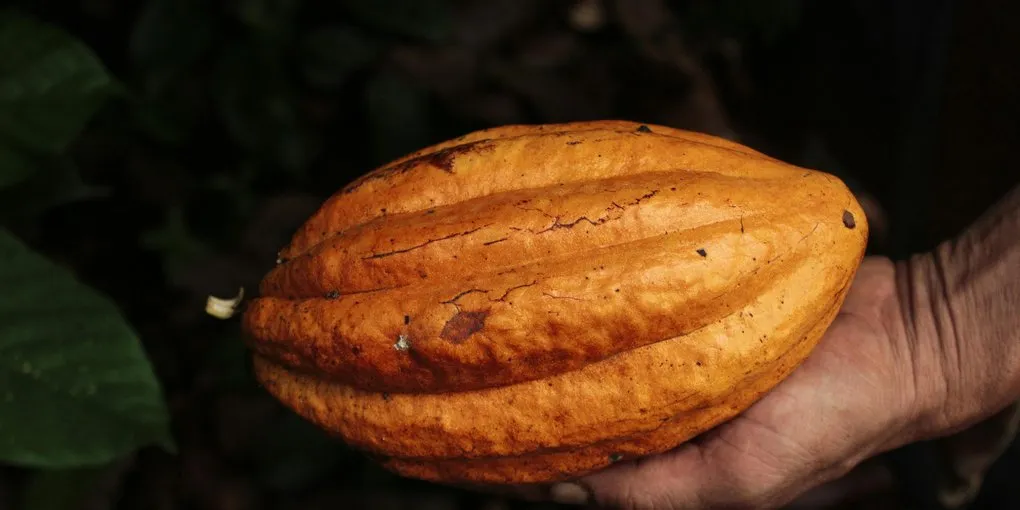
The distinction between pulp and seeds is essential. A cacao fruit offers more than the material we now grind into chocolate. Finding evidence of the plant does not, by itself, tell us which part was consumed, whether a drink was alcoholic, or how it was seasoned.
Nor does a sequence of archaeological dates describe one people handing a finished recipe to the next. Maya societies, Mexica society, and other Mesoamerican communities had distinct histories and interacting traditions.
Grinding and mixing: the tools do not dictate one formula
A metate is a grinding stone used with a handstone, often called a mano. Grinding cacao breaks down the seeds into a fatty paste; adding water then creates a different kind of preparation from a modern solid chocolate bar. Maize can contribute body and food energy, but it should not be assumed to be an ingredient in every cacao drink.
Tools and vessel forms also varied. An account of a particular roast, a surviving cylinder vase, and a contemporary grinding practice should not be joined into a supposedly universal ancient kitchen routine. We cannot infer a standard roasting temperature, a mandatory light roast, or a fixed cacao-to-maize ratio from the objects alone.
Comparative work can be more specific. Soleri and colleagues’ study of maize and cacao beverages describes contemporary tejate preparation in Zapotec communities in Oaxaca. Typical ingredients include cacao, ash-nixtamalized maize, mamey seed, and rosita de cacao flowers. Ingredients are prepared and ground, then combined with water to form a foam-topped drink. The authors also describe variations and the use of gourd bowls.
That account shows why “cacao plus cornmeal” is an inadequate reconstruction. The identity and processing of the maize, the other plants, and the maker’s technique all matter. It also shows why a living Zapotec tradition deserves its own name and context, rather than being presented as a generic “Mayan chocolate” recipe.
What the painted vessels tell us about foam
The Princeton University Art Museum’s account of its vase, dated approximately 670–750 CE, identifies a woman pouring liquid between vessels to create froth. The vase places this preparation within a richly imagined courtly scene. Its imagery is strong evidence for the significance of the action, but not a photograph of an ordinary household.
Epigraphic evidence supplies another kind of detail. James Doyle’s study of a Maya drinking vessel at the Metropolitan Museum of Art explains that inscriptions can identify a vessel’s form, intended contents, and owner. He relates large cylinder vessels to scenes in which cacao is poured into a receptacle below to create foam.
This does not mean every cylinder was a personal drinking cup, every cacao vessel was cylindrical, or taller vessels automatically produced better foam. Nor is foam a reliable archaeological measure of fat content, freshness, or grinding skill. Those are separate technical claims that would need tests on specified formulations.
Foaming was an important preparation step in documented traditions. The evidence supports that statement without turning “always foamed” or “foam mattered more than everything else” into rules for an entire region.
Bitter, sweet, thick, thin: avoid a single flavor profile
The absence of introduced cane sugar does not mean the absence of sweetness. Honey is a sweetener, and cacao pulp is itself different from the bitter seed material. A historical discussion published by Harvard’s ReVista points to Sahagún’s account of Mexica nobles’ cacao preparations with vanilla, ear flower, or honey.
Such records support variety. They do not establish one standard combination of chili, vanilla, allspice, annatto, and maize used in every cup. Likewise, a thick maize drink and a preparation focused on ground cacao need not have had the same texture.
The neat formula “Maya cold, Aztec warm” is especially misleading. It assigns one serving temperature to large populations across different places and centuries. A credible description should identify the particular source and preparation before specifying temperature. Modern hot chocolate should not be used as the opposite against which every Indigenous beverage is defined.
For a contemporary kitchen project, start with a tested recipe whose ingredients and preparation are explicit. Our drinking chocolate guide discusses modern drinks; it is not evidence that an ancient ruler drank that formula. An inspired adaptation should be named as such.
Evidence for Cacao Use and Preparation
Different sources answer different questions
- About 5,300 years ago
Santa Ana–La Florida, Ecuador
Starch, chemical residues, and ancient DNA support early cacao use. They do not supply an exact beverage recipe.
- Before 1000 BCE
Puerto Escondido, Honduras
Pottery residues support early cacao beverages; fermented pulp was proposed as one interpretation.
- About 670–750 CE
Princeton Vase
A painted scene depicts pouring identified by museum specialists as frothing cacao.
- 16th century
Colonial accounts
Nahua and Spanish records describe preparation and social uses, through particular authors, informants, and colonial circumstances.
- Present-day traditions
Continuity and change
Makers maintain distinct regional cacao traditions. Contemporary recipes are not automatically unchanged ancient formulas.
Courtly cacao was not necessarily exclusive cacao
Elaborate vessels make elite consumption unusually visible. They should not make everyone else disappear from the story.
A 2022 study by Ford, Williams, and de Vries examined pottery from residential and civic contexts around El Pilar, in the Belize–Guatemala area. The authors reported cacao evidence across different social settings. Their findings challenge a blanket claim that Late Classic Maya cacao was available only to royalty.
The result does not establish that every household drank it daily, in equal quantities, or in the same way. It does show why access should be investigated rather than assumed from the most ornate surviving objects. It is also evidence from particular Maya contexts, not a basis for declaring identical access rules in Mexica society centuries later.
Cacao could be prestigious without being absent from ordinary life. The questions are who used it, on what occasion, and what evidence survives for that use.
Ritual meaning needs a place and a source
The Florentine Codex is a major source for Nahua life, but calling it simply a Spanish observer’s report obscures its production. Getty’s introduction to the manuscript describes the collaboration of Nahua elders, writers, and artists with the Franciscan Bernardino de Sahagún. Its Nahuatl and Spanish accounts need to be read with that history in mind.
Specific documents are more useful than an all-purpose list of “Maya and Aztec ceremonies.” A University of Texas teaching packet reproduces a translated 1595 account concerning Chol Maya marriage, in which each spouse gives the other five cacao beans. That is a particular reported practice in a colonial source, not proof of a universal wedding rite.
Cacao beans also served in exchange. The same packet reproduces a 1545 Tlaxcala price ruling. Its date matters: it is colonial evidence, not a price survey taken before the conquest. The cacao currency article considers the wider subject; individual prices must remain attached to their original place, date, and wording.
Our ceremonial cacao guide addresses another important distinction: a present-day ceremony is not automatically a reconstruction of an ancient one. Modern language about cacao’s spiritual effects should not be retroactively placed in every historical community’s mouth.
“Chocolate,” cacao, and the limits of familiar names
The etymology of chocolate is debated. Karen Dakin and Søren Wichmann’s 2000 argument involved a Nahuatl form chicolatl and a proposed connection with a beater; it was not the Maya “hot” plus Nahuatl “water” theory sometimes attributed to them. Kaufman and Justeson’s 2007 linguistic study discusses and challenges parts of that proposal.
The popular spelling xocolatl is therefore not a safe universal historical name for the Mexica drink. Nor should the Nahuatl cacahuatl be labeled a Maya word. Different languages and the history of Spanish borrowing matter.
The familiar turned wooden molinillo also should not be assigned an exact inventor and date without evidence. Pouring is documented; the absence of a word from a dictionary does not prove that no earlier beating implement existed. Indeed, the English translation of Florentine Codex Book 9, folio 38r mentions chocolate beaters. That wording alone does not identify them as the modern molinillo.
A tradition to understand, not a single cup to recreate
There is no defensible route from these records to a precise “authentic Maya” home recipe with a modern oven temperature, a half-cup of cornmeal, and a guaranteed foam lifetime. Nor can a modern tasting establish exactly what Moctezuma tasted.
What we can recover is more interesting: grinding and mixing practices, images of skilled preparation, named owners and occasions, and evidence that cacao reached beyond the most conspicuous courts. Living communities continue to make their own cacao foods and drinks, with histories that include continuity and change.
For modern chocolate, single-origin and blended bars offer a separate way to explore ingredients and flavor. The bean-to-bar guide follows contemporary seed processing. Neither category should be projected backward as the organizing system of every ancient cacao tradition.
Frequently Asked Questions
- Did the Maya drink chocolate hot or cold?
- There was no single serving temperature that defines every Maya cacao preparation. Identify the place, period, and source before specifying temperature; the simple Maya-cold/Aztec-warm contrast is misleading.
- What did ancient cacao drinks taste like?
- Preparations varied. Ground cacao could contribute bitterness, maize could add body, and other plants or honey could change flavor and sweetness. No single recovered recipe represents all Maya or Mexica drinks.
- What did the Maya use to froth cacao?
- Painted vessel scenes provide evidence of pouring liquid between containers. That is a documented technique, not proof that every drink required the same vessels or that pouring was the only possible method.
- Was cacao only for royalty?
- Elite vessels make courtly consumption conspicuous, but residue research at El Pilar found cacao in different social settings. That challenges universal elite-only claims without proving equal or daily consumption everywhere.
- Is xocolatl the original name for chocolate?
- That familiar explanation oversimplifies a disputed linguistic history. Scholars debate the derivation of chocolate, and cacao terms differ between languages and sources.
- Can I make an authentic ancient Maya recipe?
- You can follow a documented living tradition or make an explicitly modern adaptation. Archaeological residues and paintings do not supply the quantities and processing instructions needed to authenticate a single ancient home recipe.