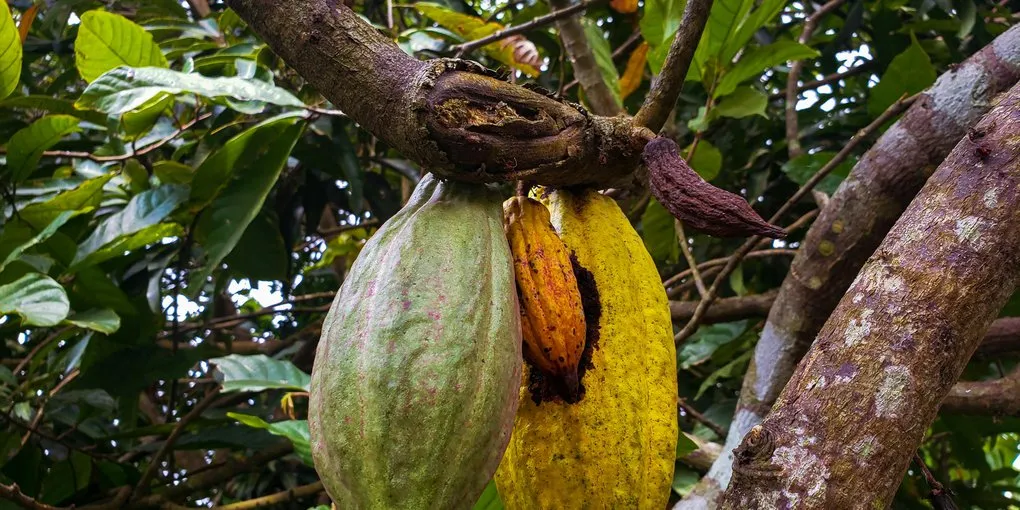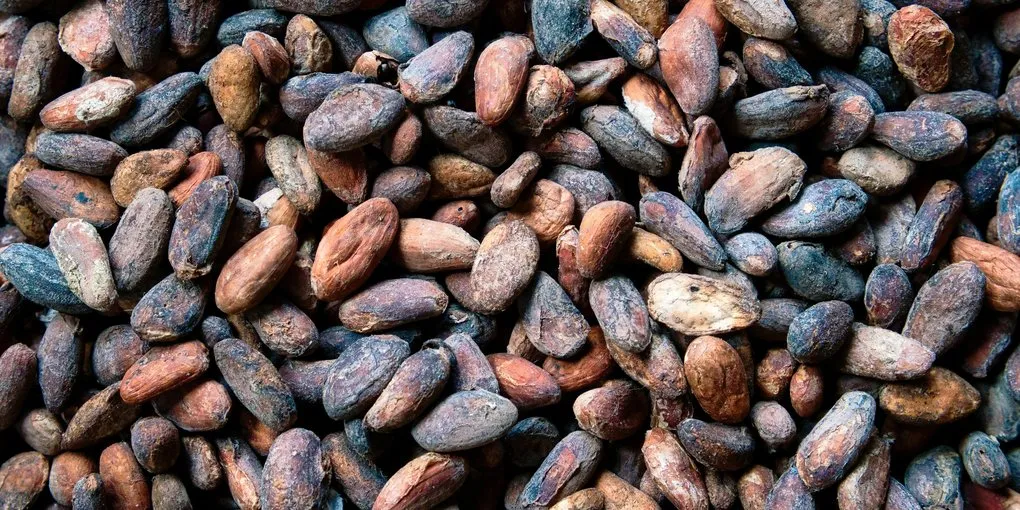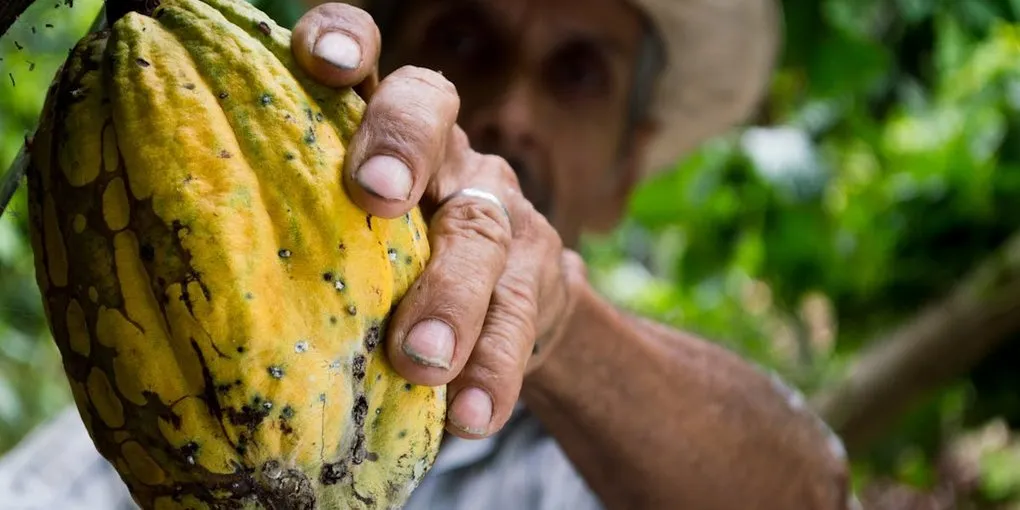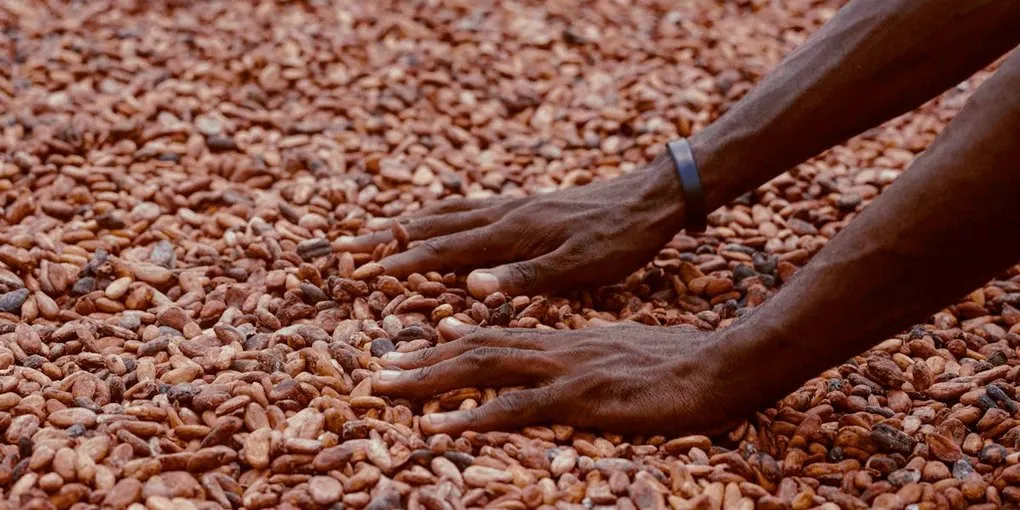
Ghana and Côte d’Ivoire—also called Ivory Coast—matter enormously to chocolate. Understanding their cacao requires more than the familiar image of anonymous beans entering an industrial blend. National output, commercial grade, a particular fermentation lot and the taste of a finished bar answer different questions.
The same care belongs in an origin comparison with Madagascar or Tanzania. A review database can describe the bars it contains. Without representative sampling, it cannot rank the inherent quality of everything grown in a country or establish how common an origin is across the entire craft market.
Production figures need a crop year
A fixed “60% of the world” label conceals variation in harvests and changing estimates. Compare both countries with the global total from the same crop year and statistical release; do not combine a recent national figure with an older global denominator. Bean production, exports and the amount ground into cocoa products are separate measures.
The ICCO’s August 2026 bulletin announcement updates the 2024/25 balance and says it is withholding the 2025/26 balance estimates pending further assessment. This guide does not substitute an undated country percentage for a current country table. For dated market figures, see our cocoa-price guide.
Ghana & Côte d’Ivoire: Read the Lot, Not a Stereotype
Production
Use a named crop year and matching global total; national shares are not fixed.
Genetics
A genetic label is not a tasting score or proof of a whole country’s planting mix.
Ghana Quality Checks
COCOBOD’s Quality Control Company inspects, grades, seals and checks cocoa at several stages.
Côte d’Ivoire
The Conseil du Café-Cacao has marketing, producer-price and quality responsibilities.
Maker Examples
Zotter lists a Ghana single-origin bar; Le Chocolatier Ivoirien describes local bean-to-bar production.
Sourcing Questions
Ask who grew and processed the beans, what farmers received, and what monitoring covers.
Source-based examples checked September 26, 2026. No comparative tasting or independent supply-chain inspection is implied.
jayarrchocolate.comGenetics does not assign a country a flavour ceiling
Amelonado is a useful genetic term; “Forastero” is a much broader historical grouping. Neither is a synonym for defective or flavourless cacao. Our genetics guide explains why the old three-type shorthand loses detail.
Ghana’s breeding material is not one uniform plant population. A 2016 study of 116 clones, evaluated in a field trial from 2010 to 2015, found variation in growth and yield traits among material of different genetic origins. That experiment was neither a national census of farmers’ trees nor a sensory test. It cannot establish the proportion of every genotype grown today, or prove that hybrid planting caused a nationwide loss of flavour.
A more direct counterexample to the idea that Amelonado cannot make interesting single-origin chocolate is Zotter’s 72% Ghana Labooko. Zotter identifies ABOCFA as its source and describes the cacao as Amelonado. Its published notes include chocolate and fruit, including cherry and citrus. These are the maker’s notes for that product, not our tasting results and not a promise about all Ghanaian cacao.
Ghana: What quality control does—and does not—tell you
COCOBOD’s Quality Control Company describes inspections, grading, sealing and warehouse approval, followed by checks when cocoa supplied by licensed buying companies is taken over by Cocoa Marketing Company and before export. “Centralized quality oversight” is more accurate than saying a single organization personally buys every farmer’s beans.
Commercial checks provide useful information about a consignment. They do not establish that every resulting chocolate will taste alike, that a particular roast is optimal, or that every social and environmental risk has been eliminated. Ask separately for the lot’s post-harvest record, sensory assessment and supply-chain documentation.
Kuapa Kokoo and Divine
Divine’s current account identifies the Ghanaian Kuapa Kokoo cooperative as its cocoa supplier and farmer co-owner. Divine says it pays Fairtrade prices and premiums and supports farmer-led programmes. Co-ownership is a specific business relationship; it should not be inflated into a claim that farmers wholly own the company or that a premium alone proves a living income.
Membership totals and income figures also need dates and methods. An income estimate from a different country cannot become the average for Ghana simply because both grow cacao. Farm revenue, household income and net profit after costs are different quantities.
Côte d’Ivoire: More than a volume label
The Conseil du Café-Cacao’s stated responsibilities include market organization, a mechanism connecting guaranteed producer prices with export prices, and improvements in cocoa quality. The existence of a large commodity trade is not evidence that all Ivorian producers disregard quality or that every bean requires heavy roasting and alkalization.
There are also makers transforming cacao into chocolate locally. Le Chocolatier Ivoirien describes its process as bean-to-bar production in Côte d’Ivoire and lists plain and flavoured bars. This is a documented maker example, not an independently verified award, a tasting endorsement, or an audit of its payment claims. Check current product and shipping details before ordering.
Such examples are a better starting point than guessing an entire country’s flavour from its export volume. For a particular bar, read the ingredients and cacao percentage, identify the producer or sourcing partner where disclosed, and taste it on its own terms.
Fermentation, drying and roasting are lot decisions
The original idea that West African cacao develops flavour only during roasting misses the importance of earlier processing. The industry quality guide’s fermentation section identifies factors including cacao type, pulp, batch size, aeration and local conditions. A single heap size and five- or six-day schedule cannot describe every farm or guarantee the same result.
For buyers, useful questions include when the beans were harvested, who fermented and dried them, whether the lot was segregated, and what quality evaluation accompanied it. Our fermentation guide explains the process in more detail. A national origin is not a substitute for those answers.
Likewise, “medium-dark for Ghana” or “dark for Côte d’Ivoire” is not a validated roast prescription. Work from the actual material and equipment; sensory preference and a validated food-safety process are separate requirements. The Origin Map is a way to explore origins and examples, not a test result for the beans in your bag.
Labour and forest evidence: Read the denominator
Child labour
NORC’s 2020 report on its 2018/19 survey estimated about 1.56 million children in child labour in cocoa production, including about 1.48 million exposed to hazardous child labour under the study’s common definition. The estimates concern children aged 5–17 in agricultural households in the cocoa-growing areas of the two countries.
These are historical survey estimates, not a current count or two groups to add together. Nor can a national estimate prove that a particular bar contains child-labour cocoa. It does establish why credible monitoring, remediation and transparent reporting matter when assessing sourcing claims.
Deforestation
A 2023 satellite-mapping study by Kalischek and colleagues linked cocoa cultivation with approximately 37.4% of forest loss in protected areas in Côte d’Ivoire and 13.5% in Ghana over 2000–2020. The protected-area denominator and time window are essential: these are not percentages of all national forest loss since independence.
The study combined remotely sensed mapping with field validation. It is strong evidence of a serious land-use problem, not a farm-by-farm certificate or proof that every shaded plantation is environmentally sound. Ask for the source area and land-use evidence behind a particular sourcing commitment.
Price and certification
A guaranteed producer price, a certification premium and a household living-income calculation answer different questions. For any quoted payment, ask which season it covers, whether it is a farmgate or export price, who receives it, and what costs remain. Avoid assuming either that farmers have no price-support mechanisms or that a mechanism guarantees sufficient income.
Our Fairtrade and direct-trade guide explains why the names of purchasing arrangements are only a starting point. A responsible comparison needs the programme’s coverage, payment basis and evidence of results. For wider context, see how cacao farming works.
How to compare origins fairly
Choose identifiable products, record the maker and lot or harvest where available, and compare similar formulations. Taste before reading the maker’s flavour notes if you want to reduce suggestion. A difference between two bars may reflect ingredients, fermentation, drying, roasting and manufacturing as well as genetics and growing conditions; it does not isolate a single cause.
Apply the same standard when reading about CCN-51, Ecuador’s Nacional cacao, Peru or Venezuela. A prestigious name does not remove the need to evaluate a lot, and a large producing country should not be dismissed before tasting. Our cacao-buying guide covers the practical questions to ask a supplier.
Frequently Asked Questions
- Do Ghana and Côte d’Ivoire always produce 60% of the world’s cacao?
- No fixed percentage applies to every harvest. Calculate the share using both national estimates and the world total from the same crop year and statistical release. Production, bean exports and grindings are different measures.
- Can Ghanaian or Ivorian cacao be used for single-origin chocolate?
- Yes. Zotter lists a 72% Ghana single-origin bar, while Le Chocolatier Ivoirien describes bean-to-bar production in Côte d’Ivoire. These examples do not rank whole countries or replace assessment of individual products.
- Does Amelonado mean low-quality chocolate?
- No. A genetic label does not establish a finished bar’s quality. Evaluate the actual material, post-harvest handling and formulation rather than assuming a country or genetic group has one flavour or quality ceiling.
- What did the NORC child-labour study find?
- Its 2018/19 survey estimated about 1.56 million children in child labour in cocoa production, including about 1.48 million exposed to hazardous child labour, across agricultural households in the two countries’ cocoa-growing areas. These historical estimates are not a current count or a verdict on an individual supply chain.
- Does a certification or origin label settle the ethical questions?
- It provides information to investigate. Ask what the certification covers, how farmers are paid, what traceability and monitoring exist, and how identified problems are remedied. Country of origin alone does not establish an individual product’s social or environmental record.