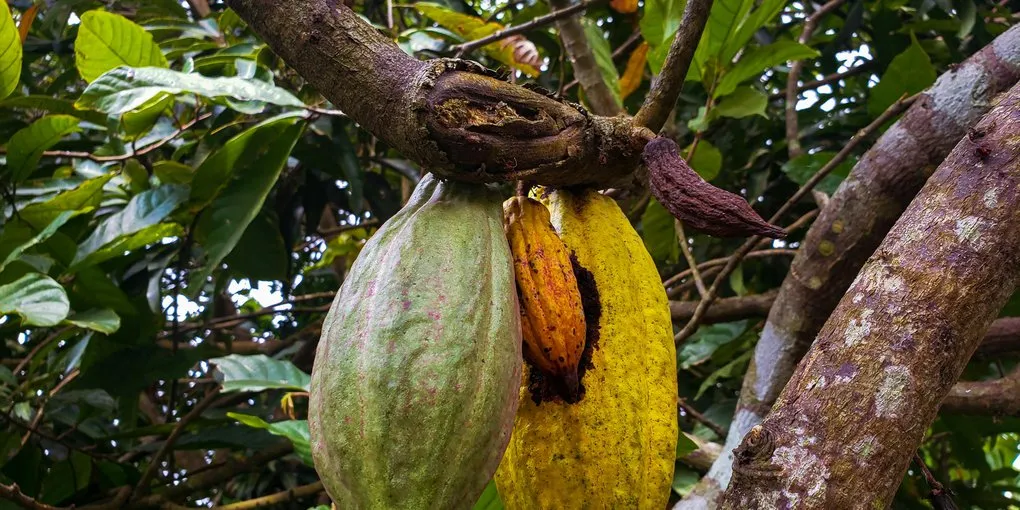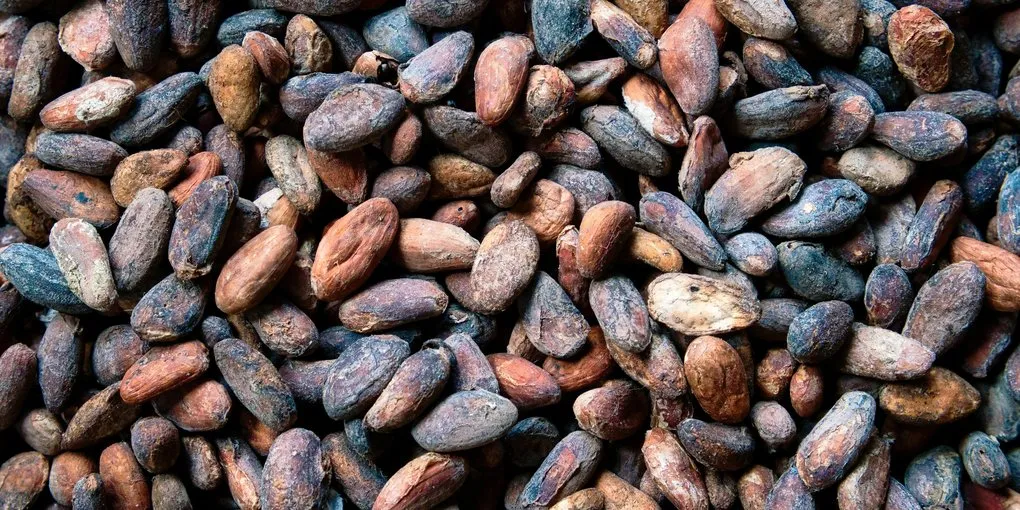
Tanzania offers several ways into craft chocolate. You may encounter honey or melon in a bar, but you can also find berries, tropical fruit, fudge, and a creamy impression. These are tasting descriptions, not ingredients or flavors that every Tanzanian bean must contain.
Kokoa Kamili is an important part of that story. Its work in the Kilombero Valley shows how purchasing arrangements and careful post-harvest processing can support quality. It is one producer within a larger origin, rather than the explanation for every Tanzanian chocolate.
What Tanzanian Chocolate Tastes Like
The most useful tasting notes identify the beans or finished bar they describe:
| Source | What the source describes |
|---|---|
| Kokoa Kamili’s own bean profile | Red and tropical fruit, with woody and chocolate notes |
| Dandelion, Kokoa Kamili 70%, 2025 harvest, batch 1 | Guava, Turkish yogurt, and fudge |
| Askinosie, Mababu | Strawberry and blueberry, with a creamy texture in its chocolate |
These examples come from Kokoa Kamili, Dandelion, and Askinosie. They are the producers’ and makers’ descriptions, not our own blind tasting results. Dandelion’s maker also describes a tropical-fruit aroma that was new to this harvest, a useful reminder that a familiar origin can change.
Treat melon as a possible observation, not a test of authenticity. There is no established basis here for declaring it exclusive to Tanzania, ranking the whole country above other origins, or promising a mild, low-acid bar to every buyer. A tasting database samples particular commercial bars; its scores cannot isolate country, genetics, fermentation, and the maker’s process from one another.
Creamy or yogurt-like notes do not establish that a chocolate contains milk. Check its ingredients and allergen information. For an introduction to milk chocolate, choose beans whose flavor you enjoy alongside your particular milk powder rather than assuming a national flavor guarantees a successful pairing.
What Kokoa Kamili Does
Kokoa Kamili is based in Mbingu in the Kilombero Valley, Morogoro Region, near the Udzungwa Mountains. Its location page places the operation in this valley; it does not describe all Tanzanian cacao as coming from one farm or district.
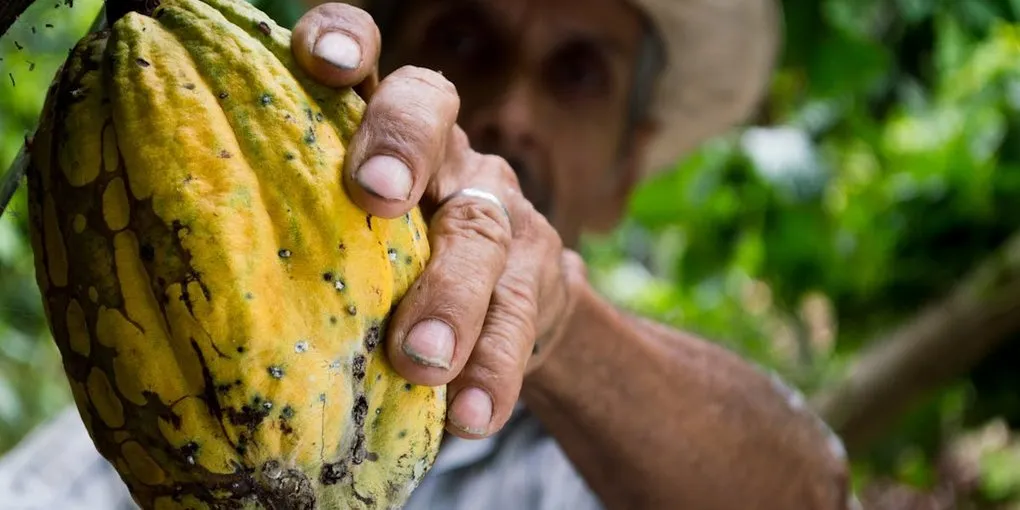
The company buys freshly extracted, pulp-covered beans directly from farmers. Farmers sell the wet beans instead of carrying out fermentation and drying themselves. Kokoa Kamili then manages those stages and prepares the dried beans for sale.
Its published operations account describes a partial overnight drain, a six-day fermentation in tiered boxes, temperature monitoring, and an average five to seven days of sun-drying. It evaluates daily lots and blends accepted beans before export to improve consistency within a shipment. These are its reported procedures, not a universal fermentation recipe.
That arrangement can reduce the processing work farmers perform and make a larger operation’s equipment and quality controls available to their crop. It does not make farmer-managed fermentation inherently poor, eliminate variation, or place every flavor variable under the buyer’s control.
Farmer Payments and Scale
In February 2016, the development organization TechnoServe reported that Kokoa Kamili bought from more than 2,500 farmers and paid 24% above the market rate. This is a dated account from an organization involved in the program, not an independently verified current premium.
Importer Meridian Cacao’s current origin page, accessed September 26, 2026, reports more than 5,000 farmers. The page does not date that count. Use current purchasing records when comparing farmer payments, and distinguish prices for wet beans from prices for dried beans; a kilogram at one stage is not equivalent to a kilogram at the other.
Kokoa Kamili’s claims about paying the country’s highest prices should also be understood as company claims, not a verified ranking of every buyer in today’s market.
Genetics Have a Scope
Kokoa Kamili reports that a sample submitted to USDA’s Agricultural Research Service was predominantly Trinitario, with a small Neo-Nacional contribution. That is evidence about the submitted material, not a genetic census of Tanzania. It also does not establish that a particular honey or melon impression is genetically predetermined.
For another Tanzanian sourcing relationship, Askinosie describes buying from farmers in the Mbeya area since 2010, initially in Tenende and later in Mababu. A supplier name and growing area tell you more than the country label alone.
Fat Content: Ask About the Lot
Do not formulate on the assumption that every Tanzanian nib contains 57–58% fat. Meridian lists 56% butter fat for its Kokoa Kamili offering, but the public profile does not specify the analytical basis or harvest lot. Ask whether a supplied analysis describes whole beans, nibs, or liquor, and whether it is expressed on a dry basis.
Research on a cacao breeding population grown in Brazil found variation in fat content and fatty-acid composition, with genetic and environmental influences. It supports attention to growing material and conditions; it does not establish a rule that distance from the equator predicts the fat percentage of a Tanzanian purchase.
The practical calculation is simple when you have an appropriate nib-fat measurement. In a two-ingredient 70% bar, 700 g of nibs containing an assumed 56% fat would contribute 392 g fat to a 1 kg batch: 39.2% of the finished chocolate. This is an arithmetic example, not a measured result for all Kokoa Kamili beans.
More available cocoa butter generally helps fluidity, but flow also depends on particle size and formulation. Controlled rheology research found interacting effects of fat, particle-size distribution, and lecithin. A country name cannot specify an added cocoa butter dose, and a richer bean does not automatically make chocolate more viscous.
Fluidity and temper are separate questions. Follow the tempering process appropriate to your chocolate and check its setting behavior; Callebaut’s guidance includes a setting test rather than treating fat content as proof of correct temper.
Roasting a Specific Tanzanian Lot
Use a supplier’s profile as a starting point for that lot and equipment. Record batch size, roast time, and where the temperature is measured. An oven setting, bean-surface reading, and probe reading inside a moving bean bed are different measurements.
For example, Chocolate Alchemy’s 2026 Kokoa Kamili roasting notes describe its drum profile finishing at 262°F, with roughly five minutes in the finishing phase. That is a maker’s example, not a Tanzania-wide requirement. It also illustrates why a fixed moderate-roast window and a universal three-to-four-minute finish are too restrictive.
Our cacao-roasting guide explains the stages. Develop a repeatable profile for the beans you have, then compare finished chocolate before changing the roast again. Neither a supposed thermal buffer from high fat nor a pure acid’s boiling point is a sound shortcut for deciding when this batch is done. A flavor-development profile by itself is not evidence that a process has been validated for pathogen control.
Formulation and Conching
A 70% two-ingredient formulation is a useful comparison point because many commercial bars use it. It is not an optimum imposed by Tanzania. Compare nearby percentages if you want to explore sweetness and intensity; there is no demonstrated 75% melon peak or automatic loss of complexity above 80%.
For a milk-chocolate trial, the example proportions of 40% nibs, 35% sugar, 20% milk powder, and 5% cocoa butter total 100%. At 1 kg, that is 400 g, 350 g, 200 g, and 50 g respectively. The cocoa ingredients total 45%, because added cocoa butter counts too. This is a formulation to evaluate with your ingredients and equipment, not a tested national recipe or a guarantee of sufficient fluidity. Milk powder’s fat content also changes the total fat.
Set the refining and conching endpoint by texture and flavor, with records of batch size and temperature. An origin cannot prescribe a 20–26-hour run or a 28-hour cutoff. John Nanci’s discussion of home-scale conching emphasizes the process and equipment rather than an origin-specific clock.
Nor does a melanger cover reliably preserve melon. Nanci’s explanation of melanger covers describes protection from debris, retained heat, and potential condensation, while noting that a loose cover still allows volatiles to escape. Follow your machine’s instructions and prevent condensed water from dripping back into the chocolate; do not impose a two-thirds-covered schedule on every batch.
Pairings and Buying Decisions
Try sea salt, nuts, dried fruit, or spices in small comparisons with a plain sample. These are creative choices, and their success depends on the particular chocolate and dose. Strong citrus is not automatically a mismatch: Askinosie publishes a candied-orange-peel preparation using its 72% Tanzanian chocolate.
For an origin comparison, taste a named Tanzanian bar alongside a Madagascan bar at a similar percentage. Record what you perceive before reading the makers’ notes. You may find shared qualities as well as differences.
When buying beans, ask for the harvest or lot, fermentation and drying details, and the supplier’s sample evaluation. Centralized fermentation is useful process information, but the actual lot still deserves inspection and a trial. Choose the chocolate you want to make from that evidence.
Tanzania Cacao: Origin Profile
Flavor
Fruit, chocolate, and creamy impressions vary by lot and maker; melon is not an exclusive national marker.
Fat Content
Use lot-specific analysis; country alone does not establish a fixed percentage.
Sourcing Model
Kokoa Kamili purchases wet beans and manages fermentation and drying centrally.
Roast
Develop a profile for the particular lot, batch size, and roaster.
Percentage
70% is a comparison point; preferred sweetness and intensity depend on the bar.
Conching
Track texture, flavor, and temperature; no universal Tanzania time or lid schedule.
Pairings
Test milk, salt, fruit, or spices against the particular chocolate.
Frequently Asked Questions
- What does Tanzanian chocolate taste like?
- It varies. Kokoa Kamili describes fruit and chocolate notes; Dandelion's 2025 harvest 70% bar lists guava, Turkish yogurt, and fudge. Askinosie's Mababu chocolate has berry notes. Honey or melon can be tasting impressions, but neither is guaranteed or exclusive to Tanzania.
- What is Kokoa Kamili?
- It is a cacao business based in Mbingu in Tanzania's Kilombero Valley. It buys fresh, unfermented beans directly from farmers and handles fermentation and drying centrally. This supports quality control and reduces farmers' processing work, without guaranteeing identical flavor across harvests.
- Is Tanzanian cacao always higher in fat?
- No fixed fat percentage applies to every Tanzanian lot. Ask for analysis of the beans or nibs you are buying and its measurement basis. Genetics, growing conditions, and processing matter; fat content alone does not guarantee fluidity or correct temper.
- Is Tanzania good for milk chocolate?
- A particular Tanzanian lot can work well, but taste it with your chosen milk powder. A trial with 40% nibs, 35% sugar, 20% milk powder, and 5% cocoa butter contains 45% cocoa ingredients. It is a starting formulation to evaluate, not a tested origin-wide recipe.
- How should I roast Tanzanian cacao beans?
- Use guidance for the named lot and your roaster, then compare finished chocolate. Record batch size, time, and the temperature measurement location. There is no universal Tanzanian end temperature or finishing time, and flavor guidance alone does not validate pathogen control.
- What percentage is best for Tanzanian chocolate?
- There is no single best percentage. Start with a familiar formulation, such as 70%, and compare nearby percentages for sweetness, intensity, and texture. A 75% melon peak and automatic dullness above 80% are not established rules.