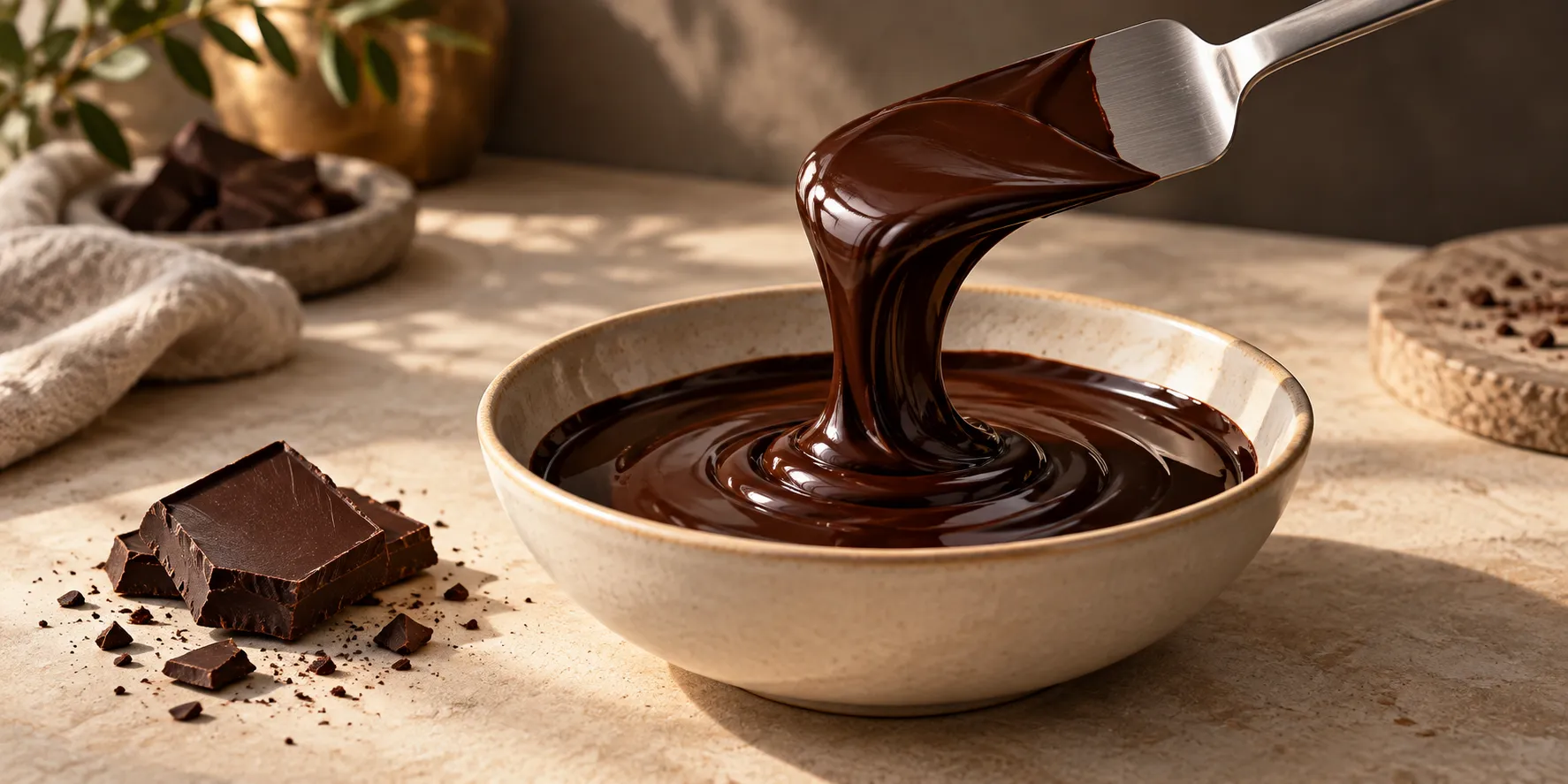
Blonde chocolate brings biscuit, cooked-milk and caramel-like flavors to a chocolate that begins with a pale dairy-and-cocoa-butter base. Valrhona’s Dulcey helped make the style widely recognizable, but the name does not describe one universal formula or factory process.
There are three separate questions worth asking: what gives it that flavor, what the particular product contains, and how it behaves in your recipe. A golden color cannot answer all three.
What makes white chocolate turn blonde?
In heated white chocolate, Maillard browning involves reducing sugars, including lactose, and amino groups in milk proteins. It differs from caramelization, which is sugar breakdown without requiring a protein reactant. Cooks often use “caramelized white chocolate” as a convenient name even when Maillard chemistry is central to the result.
Rodier and Hartel’s 2021 study examined five white-chocolate formulations during extended heating. Composition and temperature affected both browning and thickening; the physical state of lactose mattered. The researchers also found relatively small declines in reducing sugars in their systems. Browning therefore does not establish that a finished chocolate is low in sugar.
For the broader reaction pathways, see our Maillard reaction in chocolate guide. The practical lesson is that two white chocolates can respond differently to the same oven setting. There is no fixed minute at which all batches turn golden or one temperature that separates every successful batch from every burnt one.
Some commercial caramel chocolates are formulated with ingredients already carrying caramel flavor. Callebaut Gold, for example, lists caramelized sugar as an ingredient. “Blonde” does not necessarily mean a manufacturer simply baked a finished white-chocolate bar.
Cocoa butter counts as cocoa content
White chocolate contains cocoa butter, the cocoa bean’s fat, without the brown nonfat cocoa solids supplied by cocoa liquor or cocoa powder. Saying it contains “zero cocoa solids” is misleading when discussing total cocoa content: cocoa butter is included in that total. Our cacao percentage guide explains the distinction, and the white chocolate bean-to-bar guide covers formulation.
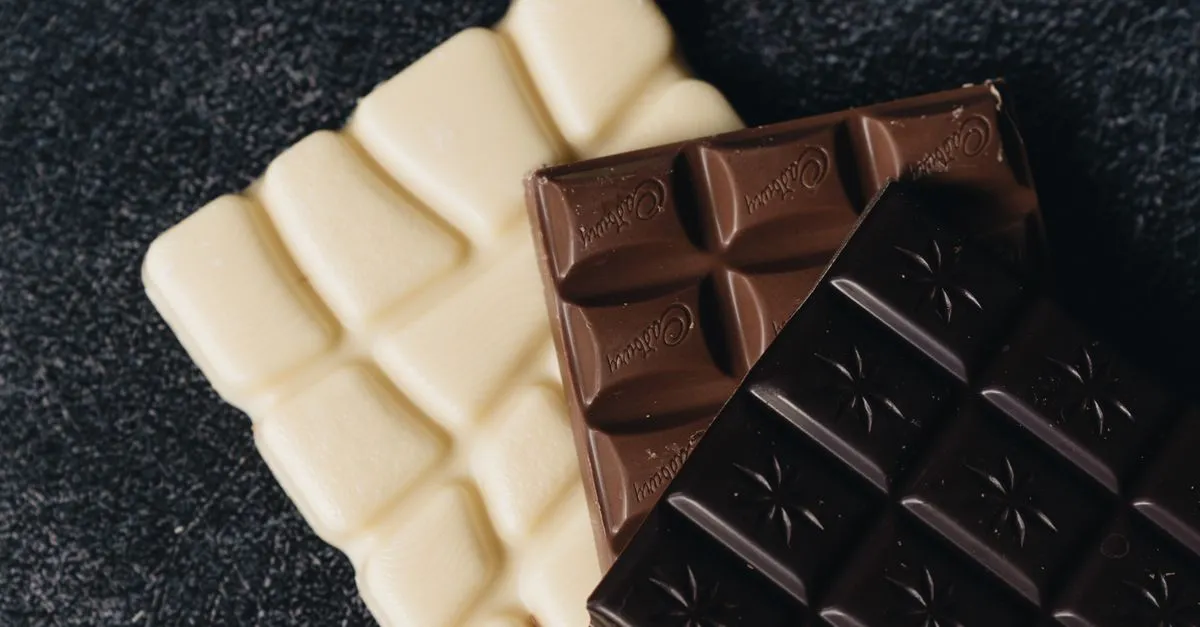
Under the basic EU white-chocolate definition, the minimums are 20% cocoa butter and 14% dry milk solids, including at least 3.5% milk fat. These are composition requirements, not a definition of how sweet or complex white chocolate must taste. The U.S. standard also recognizes white chocolate. See our chocolate regulations guide for the distinction between category rules and marketing names.
White, Blonde and Milk Chocolate
Compare ingredient categories; a cocoa percentage does not measure sweetness or milk content
| Chocolate Type | 01Cocoa contribution | 02Milk and flavor | 03What to check |
|---|---|---|---|
| White chocolate | Cocoa butter; no cocoa liquor or powder | Milk-based, with flavor depending on ingredients | EU base minimums: 20% cocoa butter, 14% dry milk solids, including 3.5% milk fat |
| Current Dulcey 35% | 35% cocoa butter | Manufacturer describes biscuit and cooked-milk notes | 35% is not its sugar or milk percentage |
| Callebaut Gold 30.4% | 30.4% minimum dry cocoa solids, supplied by cocoa butter | Milk ingredients, caramelized sugar and added salt | 28.3% minimum dry milk solids on the cited product listing |
| Milk chocolate | Includes nonfat cocoa solids as well as cocoa butter | Milk ingredients plus cocoa flavor | Check the applicable milk-chocolate standard; no blanket 18% cocoa-butter minimum |
Commercial products and regional specifications can change. Use the ingredient list and technical sheet for the product in your hands; blonde is not a single standardized recipe.
jayarrchocolate.comDulcey’s origin: separate the launch from the accident
Valrhona attributes the inspiration to chef Frédéric Bau, who left white chocolate heating longer than intended during a demonstration in Japan. The company’s consumer account says more than 15 hours, followed by eight years of development. That is the manufacturer’s account, not a reason to leave a home bain-marie unattended for hours or days.
Dulcey launched in 2012. Valrhona’s Bau biography identifies the original product as Dulcey 32%. The current product discussed here is 35%. Older recipes and catalogs can therefore show a different number without necessarily being erroneous.
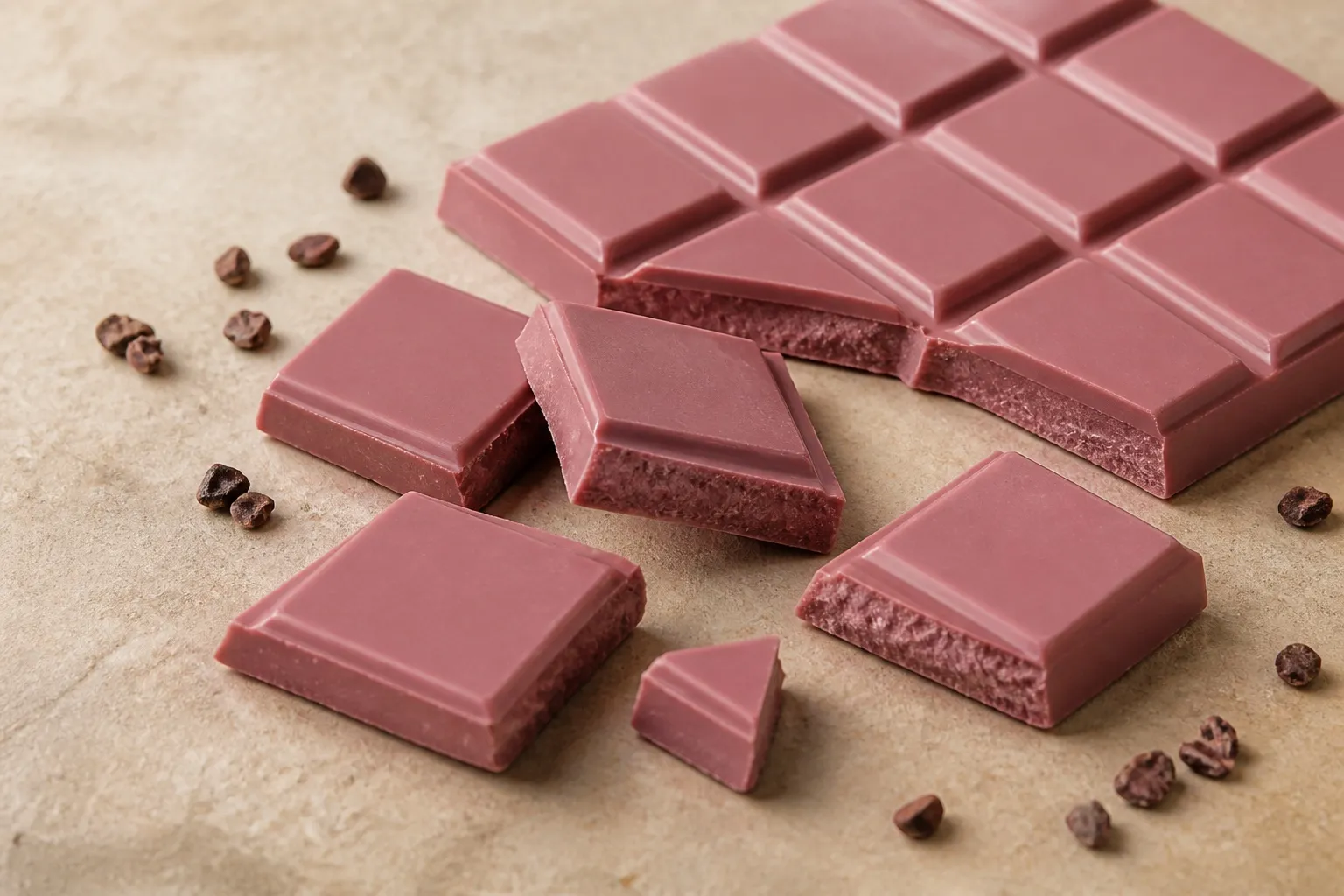
Valrhona promoted it as chocolate’s fourth color. Barry Callebaut later used fourth-type language for ruby. These are positioning claims, not a scientific agreement that chocolate has exactly four or five categories. Ruby also depends on processing: Barry Callebaut’s explanation explicitly says its selected beans are not a new genotype or one botanical variety. “Dulcey is a process; ruby is a bean” is an inaccurate distinction.
Flavor, sweetness and texture
Dulcey’s manufacturer emphasizes biscuit and a lightly salty impression. Gold emphasizes caramel and toffee, while Cacao Barry describes Zéphyr Caramel in terms of milky caramel and salted-butter notes. Those are useful starting points for tasting, not a blind-test ranking or a promise that every taster will find one less sweet than another.
Perceived sweetness is not the same as sugar content. Cooked aromas, salt and the surrounding dessert affect the impression of sweetness. Check nutrition information before making a nutritional comparison, and do not reduce a ganache’s sugar or cream simply because its chocolate is called blonde.
A salty impression also needs product-specific interpretation. Gold lists added salt; the cited Dulcey ingredient list does not list salt separately. That does not establish that a particular combination of milk sodium and Maillard compounds explains every taster’s sensation.
Plain white chocolate is not necessarily flavorless or without complexity. Its dairy ingredients, cocoa butter and flavorings differ between products. Fat composition and crystallization affect bite and melting, as covered in our cocoa butter chemistry guide. Browning is not evidence that free fatty acids have increased enough to soften the snap, nor that a blonde chocolate always has a narrower tempering window. Our chocolate flavor compounds guide explains why flavor should not be reduced to a single molecule or descriptor.
For pairings, try a small amount with apricot, banana, mango, coffee or hazelnut before building a dessert around it. These are suggestions, not necessary combinations. Use a ganache formula designed for the selected chocolate when consistency matters; changing cocoa butter, dairy solids or total fat can change the result.
Browning white chocolate at home
You can make a toasted white chocolate in an oven, but the result need not match Dulcey’s industrial formulation or flow well enough for a thin bonbon shell. David Lebovitz published a first-person method developed after visiting Valrhona’s school. The outline below summarizes that method; it is not a new kitchen-tested JayArr recipe.
A Sourced Home Browning Method
David Lebovitz's oven method; assess the chocolate rather than a rigid color timeline
- 01
Choose chocolate
Weigh 340gUse real white chocolate; about 30% or more cocoa butter generally handles better.
This is a practical selection guideline, not a browning threshold. - 02
Start gently
250°F, approximately 120°CChop if needed and distribute on a rimmed baking sheet. Heat for ten minutes.
Use clean, dry utensils. - 03
Stir and check
Ten-minute intervalsScrape and stir, then continue heating. His method allows roughly another 30–60 minutes.
Batch, chocolate and oven differences affect timing. - 04
Stop at the desired color
Golden brownStop when evenly browned; do not keep cooking just to complete a timer.
A cooled sample can help judge flavor. - 05
Assess texture
Before choosing a useAn immersion blender may help with lumps, but smoothness is not guaranteed.
Scorched flavor cannot be stirred away.
Adapted in summary from the linked method. Home results may be thicker than commercial couverture; do not assume cooling will undo every texture change.
jayarrchocolate.comThickening is a real processing issue, not simply a cosmetic stage that always reverses. In Aydın and colleagues’ experiment, longer treatments at the higher tested temperatures produced doughy textures and poorer sensory results. Their study does not supply a universal home timer, but it contradicts advice to persist through any texture change until a fixed 90-minute endpoint.
Avoid splashing water into chocolate you intend to use as a solid coating. Deliberately adding cream to make ganache is a different operation: it changes the product and its storage needs. Adding oil or cocoa butter also changes the formulation, so do not regard either as an invisible repair if you intend to mold bars.
Candy coatings are not equivalent substitutes for a white-chocolate method. Their fats and other ingredients can give different handling and setting behavior. However, saying they cannot brown is also wrong: Vercet’s white-chocolate browning study included a substitute made with a lauric cocoa-butter replacer and observed nonenzymatic browning. Cocoa butter is not itself the ingredient required for Maillard chemistry.
Tempering and storage
Commercial blonde couvertures can be tempered for bars, shells and decorations. Valrhona’s general tempering table groups white chocolate and Dulcey together, with a 28–29°C working range. Use this as a named manufacturer’s example, not a universal curve: its consumer Dulcey page gives a somewhat broader working range. Follow the current package or technical guidance for your specific product and confirm the result with a small setting test.
Merely cooling heated chocolate to a working temperature does not establish good temper. A browned home batch may also be too thick for the intended application even if its cocoa butter can crystallize. A dessert filling can be a more practical destination than a thin molded shell.
For unopened commercial Dulcey, the professional specification gives a 12-month best-before period from manufacture, with dry storage at 16–18°C (about 61–64°F). That is not twelve new months after purchase or a shelf-life validation for a homemade batch.
Keep plain chocolate sealed, dry, away from odors and at a stable cool temperature. Follow the package date and storage directions. A cream-based ganache or fruit-filled confection needs its own storage guidance; the plain chocolate’s date does not transfer to the filling. There is no demonstrated universal rule that blonde chocolate lasts fewer months because Maillard browning necessarily increases rancidity.
Dulcey, Gold and Zéphyr Caramel
Valrhona Dulcey 35% is the reference product for this article. The current specification states 35% cocoa butter and a biscuit-led profile. Buy the package size and format suited to your recipe; do not assume every retailer’s listing or older 32% recipe describes the current product.
Check price on Amazon →Callebaut Gold (30.4%) has a different formulation. Its manufacturer lists 28.3% minimum dry milk solids and ingredients including caramelized sugar and salt. Choose it for its own flavor and technical specification rather than treating it as an exact Dulcey substitute.
Check price on Amazon →Cacao Barry Zéphyr Caramel (35%) is described by its manufacturer as a white chocolate with caramel-and-milk flavor and salty notes. It lists 35% minimum dry cocoa solids and 30% minimum dry milk solids. Its very high stated fluidity may matter more to your application than a speculative claim that it tastes closest to Dulcey.
Check price on Amazon →All three named products contain milk ingredients. Use the actual label for allergens and cross-contact information; a retailer’s dietary tag is not a substitute for that list. Our milk chocolate from scratch guide discusses the role of dairy ingredients in formulation.
For other distinctive chocolate styles, see Dubai chocolate and black cocoa. They involve different ingredients or processing choices, so color alone does not make them chemical counterparts to blonde chocolate.
Some links above are affiliate links — if you buy through them, we may earn a small commission at no extra cost to you.
Frequently Asked Questions
- Is blonde chocolate the same as caramel chocolate?
- The names overlap but are not a single recipe. Blonde often describes browned white chocolate, while caramel chocolate may use caramelized ingredients or added caramel. Read the ingredient list: Callebaut Gold includes caramelized sugar, so a blanket claim that no caramelized ingredient is added is incorrect.
- What does Dulcey taste like?
- Valrhona describes a biscuit-led flavor with cooked-milk notes and a lightly salty impression. Individual perception varies. Tasting less sweet does not establish lower sugar content, and the article does not claim an independent comparative tasting.
- Can I make blonde chocolate at home?
- Yes. The linked chef's oven method is a useful starting point, but brands and ovens vary. Watch color and texture instead of assuming every batch needs 60–90 minutes. A home batch may remain too thick for fine molding.
- Is white chocolate technically chocolate?
- Yes, white chocolate is a recognized category in EU and U.S. standards. It contains cocoa butter without the brown nonfat cocoa solids of cocoa liquor or powder. Cocoa butter still counts toward total cocoa content; zero cocoa solids is misleading terminology.
- How long does blonde chocolate last?
- Follow the specific package. Valrhona lists twelve months from manufacture for commercial Dulcey stored as directed. That does not validate a home batch or a ganache made from it, and there is no universal blonde-versus-white shelf-life difference.
- What is the difference between Valrhona Dulcey and Callebaut Gold?
- Current Dulcey declares 35% cocoa butter and emphasizes biscuit notes; Gold declares 30.4% minimum dry cocoa solids and emphasizes caramel and toffee. Their ingredient lists and handling specifications differ. Choose for the recipe rather than assuming they are identical.
- How is blonde chocolate different from regular caramelization?
- Maillard browning needs reducing sugars and amino groups, supplied in white chocolate by dairy ingredients. Caramelization is sugar breakdown without requiring protein. Commercial blonde or caramel chocolates can combine browned dairy flavors with caramelized ingredients.
- Is blonde chocolate the fourth color of chocolate?
- Fourth color is Valrhona's marketing description for Dulcey. It is not an official worldwide count of chocolate categories. Ruby is a separate processed product, and its maker says the selected cocoa beans are not a new genotype.