The Bar Behind the Trend
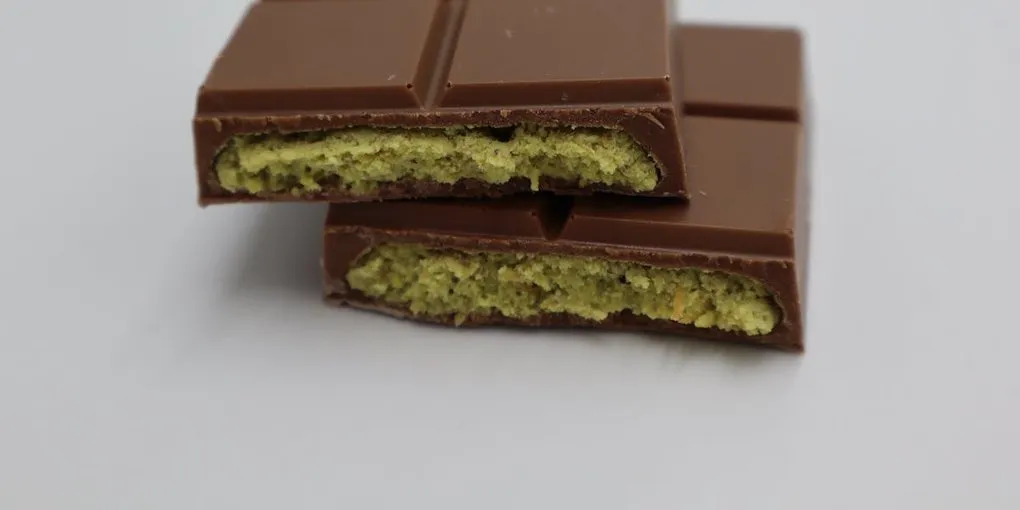
The familiar Dubai-style bar combines a chocolate shell with a crunchy pistachio-and-pastry center. It became associated with FIX Dessert Chocolatier’s Can’t Get Knafeh of It in Dubai, then inspired many other makers. “Dubai-style” on another brand’s wrapper does not mean the bar was made by FIX or produced in Dubai.
There are distinct contributions behind the original. In a November 2024 interview, FIX founder Sarah Hamouda described the pregnancy craving and childhood dessert memories behind her idea. Chef Nouel Catis described his work developing the original recipes in a first-person interview with Tatler. Crediting only one person’s solitary home-kitchen experiments leaves out that development work.
Hamouda identified a viral TikTok video as a turning point. The exposed green filling, chocolate break and audible pastry crunch are easy to feature in short videos; they are plausible parts of the appeal, rather than a measured explanation of every purchase. Exact view totals, resale prices and claims about being the world’s most-searched chocolate need a defined platform, date and source.
The original business should not be described as having opened a walk-in shop before the trend. Falstaff’s contemporaneous November 2024 report described delivery sales and no retail outlet; that historical snapshot is not a statement about today’s sales channels.
What Is Inside?
Filled chocolate is an established category; the bar’s distinction is its particular combination of ingredients and generous filling. As with other inclusions, ingredient composition, moisture and fat compatibility affect the finished result.
Kataifi pastry: Fine strands of pastry toasted until crisp. It is often described as shredded filo, but that is not how the strands are made. Antoniou, a kataifi manufacturer, describes piping a batter through fine openings onto a heated surface. It is not simply a stack of filo sheets cut into threads. Knafeh or kunafa can also refer to finished desserts; buy the pastry ingredient called for in your recipe.
Pistachio filling: Sweetened pistachio cream or spread and 100% pistachio butter are different ingredients. A spread can include sugar, other fats and milk ingredients; read its label. Pure nut butter has different sweetness and consistency, so it is not automatically the superior or interchangeable choice. Green color alone does not establish pistachio content or quality.
Tahini: Ground sesame paste adds a sesame flavor and changes the filling’s consistency. It is common in this style, but amounts vary and some recipes omit it. It is usually mixed into the pastry filling rather than necessarily laid down as a separate layer.
Chocolate shell: Milk chocolate is common; dark or white chocolate gives a different balance. For a firm molded cocoa-butter-chocolate shell, follow a suitable tempering method. The shell surrounds a mixed filling; it does not require alternating strata of pure pistachio cream and pastry.
This is generally a wheat-and-pistachio confection, with sesame when tahini is used and milk when present in the chocolate, butter or spread. Check every ingredient and relevant cross-contact information when allergies matter. A dark shell does not make the whole filling dairy-free.
Assembling a Dubai-Style Chocolate Bar
A mixed pastry filling inside a molded chocolate shell
- 01
Cook the Kataifi
Prepare and toast the strands according to the pastry product and recipe. Let them cool before filling a chocolate shell.
- 02
Mix the Filling
Combine the crisp pastry with the selected pistachio spread and optional tahini. Pure nut butter is a different formulation.
- 03
Prepare the Shell
Temper cocoa-butter chocolate for the specific product and method. Coat the mold base and sides; allow the shell to set.
- 04
Add Cooled Filling
Place the mixture inside the shell without damaging it. Keep the rim clean and leave room for a chocolate back.
- 05
Seal and Cool
Close with chocolate still in working temper, cool appropriately, then unmold when the shell has set and releases.
Mold size, shell thickness, chocolate and cooling conditions affect the result. Crunch retention and safe shelf life are separate questions; neither is fixed at five to seven days.
jayarrchocolate.comHow the Trend Spread
A clear dated example of the wider response is Lindt’s German launch announcement: its limited Dubai chocolate edition launched in selected boutiques on November 9, 2024, beginning in Düsseldorf. That does not support saying Lindt had launched it by mid-2024. Nor should a Toblerone launch be added without a specific verified product and date.
Ingredient costs, filling quantity, packaging, production scale and demand can all affect a bar’s price. They do not establish that every mass-market version uses inferior nuts, or that every expensive handmade bar has better chocolate. Compare the actual weight, ingredient list and pistachio proportion when disclosed. An old resale asking price is not evidence of a completed sale or today’s normal price.
The trend shows one way a filled bar can attract attention through texture and presentation. Whether those buyers go on to explore craft single-origin chocolate is a separate question, not a demonstrated benefit for every specialty producer. You can enjoy the filling and still be interested in cacao varieties or deliberate chocolate tasting.
The Chocolate and Filling Science
Moisture and crunch: A crisp pastry can soften as moisture moves between components or enters from humid storage. The rate depends on the formulation and packaging; pistachio cream is not a proven moisture barrier merely because it contains fat. Barry Callebaut’s water-activity explanation distinguishes available water from total moisture. Its engineered commercial fillings do not validate the shelf life of a homemade mix.
Sugar bloom: Moisture on chocolate can dissolve surface sugar, which leaves a pale deposit when it recrystallizes. Condensation is one route. That is different from saying any internal moisture migration must cause sugar bloom. Guittard’s bloom troubleshooting distinguishes moisture-related bloom from fat-related problems.
Tempering and release: Controlled cocoa butter crystallization helps provide gloss, firmness and contraction. Good temper supports mold release, but mold condition, shell thickness and cooling also matter. No single temperature reading proves temper, and a bar that sticks does not automatically need only more refrigerator time.
Fat migration: Oils from a nut filling can move into a chocolate shell, change its texture and contribute to fat bloom. Callebaut identifies filling-fat migration, poor temper and storage conditions as relevant factors. Do not reduce all bloom to an inevitable Form V-to-VI transition or describe all pistachio oil as categorically incompatible with cocoa butter.
Making a Dubai-Style Bar at Home
The following quantities are a home formulation to test, not FIX’s proprietary recipe or a validated storage formula. Mold capacity and shell thickness determine how many bars you can make; a single unspecified “large mold” may not hold the batch. Have additional suitable molds ready, and do not force all the filling into one cavity.
For a separate manufacturer-developed filling method, Antoniou’s recipe uses its own pastry and spread proportions. It even dry-toasts its pastry without butter, so butter-frying is not a universal requirement. Follow that complete method if you choose it.
Ingredients
- 400g milk or dark chocolate suitable for molding, including any chocolate reserved for seeding
- 150g kataifi pastry, prepared according to its package
- 3 tablespoons unsalted butter or ghee, for this oven-toasted version
- 200g pistachio cream or spread
- 2 tablespoons tahini, optional
- Pinch of salt
- If testing unsweetened pistachio butter instead of spread: up to 2 tablespoons powdered sugar, to taste; the swap changes the filling and may need further formulation work
The chocolate, pastry and spread alone total 750g, before butter, tahini or optional sugar. This is an ingredient total, not a finished yield: cooking loses moisture and coating molds can leave unused chocolate.
Equipment
Use clean, dry food-contact chocolate molds with cavities deep enough for filling, a baking sheet, thermometer, spatula and mixing bowls. Rigid polycarbonate and flexible silicone molds handle and release differently; follow the mold maker’s instructions.
1. Cook the pastry
Thaw or prepare the kataifi according to the package and separate clumped strands. For this oven method, toss with the melted butter or ghee and spread thinly on a suitable parchment-lined tray. Use 350F (about 177C) as a trial oven setting, stirring and watching for even golden color and crispness. Begin checking around eight minutes; 8-12 minutes is not a validated cooking time for every pastry or tray load. Continue as required without scorching. Cool completely and break into manageable pieces.
2. Mix the filling
Combine the selected pistachio spread with salt and optional tahini, then fold in the cooled pastry. Taste before adding sugar to an already sweetened spread. Aim for a mixture you can place into the shell without flowing everywhere or requiring force that could crack it.
Do not automatically thin with an extra spoonful of oil: it changes consistency and the fat balance. Likewise, fresh cream or water creates a materially different filling with different storage needs. If using pure pistachio butter, treat the sugar adjustment as a recipe experiment rather than an equivalent replacement.
3. Temper the chocolate
Follow the chocolate maker’s procedure for the specific product and tempering method, reserving any required seed from the 400g total. Keep water and steam out of the bowl. A universal “melt to 50C, add 25% seed, stir to the working temperature” instruction is unreliable because seed condition, temperature and method matter.
For orientation, Callebaut’s benchmark guide gives working ranges of 31-32C for its 811 dark and 29-30C for its 823 milk. These are named product examples, not rules for every dark or milk chocolate. Use a small smear test alongside the prescribed process; setting speed depends on the chocolate and room conditions. Consult our tempering guide for the workflow.
4. Form the shell
Coat the mold base and sides with chocolate in working temper, tapping gently to release bubbles. Follow the mold’s appropriate coating and draining method. Let the shell set sufficiently to hold filling; very thin areas may need another coat. There is no universal three-to-five-minute refrigerator requirement.
5. Fill and seal
Add the cooled pastry mixture gently, leaving space for a complete back and keeping the shell rim free of filling. The necessary space depends on the mold and chosen shell thickness; 3-4mm is not compulsory for every bar.
Maintain the remaining chocolate in its product’s working range, reheating carefully if needed and checking temper again. 33C is not a universal point at which every chocolate loses temper. Cover the filling, join the chocolate to the clean rim, and level the back.
6. Cool and unmold
Cool according to the chocolate, mold and room conditions. Unmold when the shell is firm and releases properly; avoid forcing a stuck bar. A set exterior after 20-30 minutes does not mean all crystallization has permanently finished. See our molding guide for troubleshooting.
Storage: Follow the Filling
There is no validated five-to-seven-day shelf life for this home formula. Crispness, bloom, rancidity and food safety are different limits. A crunchy bar is not proof that it was safely prepared or stored, and the shelf life of an unopened commercial spread does not transfer to a mixed homemade confection.
Follow the storage directions for your ingredients and finished recipe. If any filling ingredient requires refrigeration, refrigerate the finished bars; do not override that instruction merely to protect chocolate’s appearance. Fresh dairy or other perishable additions need a suitably developed recipe and cold storage. FDA guidance calls for perishables at 40F/4C or below and no more than two hours unrefrigerated, or one hour above 90F/32C.
For chocolate quality, protect bars from odors, moisture and large temperature swings. Callebaut’s 12-18C storage range is for pure chocolate, not a safety rule for every filled bar. If chilling, use protective airtight packaging; minimize condensation when taking out a serving, while keeping perishable-food time limits in mind. Make modest batches for prompt consumption rather than assuming this untested recipe is shelf stable for gifting or shipping.
Looking for ingredients? These searches can help locate kataifi pastry dough and pistachio cream or butter. Check the actual ingredient list, storage directions, shipping needs and product format before ordering. A search result is not a verified match for the formula.
This article contains affiliate links. If you purchase through these links, we earn a small commission at no extra cost to you. This helps support JayArr Chocolate’s independent content.
Frequently Asked Questions
- Who invented the Dubai chocolate bar?
- The trend is associated with FIX Dessert Chocolatier's Can't Get Knafeh of It bar. Founder Sarah Hamouda has described the concept's origins in her cravings and childhood desserts; chef Nouel Catis has described developing the original recipes. Both contributions belong in the account.
- What is kunafa or kataifi pastry?
- Kataifi is a fine strand pastry. Manufacturer Antoniou explains that batter is piped onto a heated surface; it is not literally shredded sheets of filo. Kunafa or knafeh can also name finished desserts, so buy the pastry ingredient your recipe specifies.
- Can I make a Dubai chocolate bar at home?
- Yes: prepare a crisp kataifi-and-pistachio filling, form a chocolate shell, fill, seal and cool it. Follow the specific chocolate's tempering procedure. The quantities on this page are a formulation to test, with mold-dependent yield and no validated shelf life.
- Why are Dubai chocolate bars so expensive?
- Price depends on ingredients, bar weight, filling quantity, production scale, packaging and demand. Compare specific products; handmade or expensive does not automatically mean better, and mass-market does not automatically mean inferior. Historical resale asking prices do not establish current market value.
- How long does a homemade Dubai chocolate bar last?
- There is no universal five-to-seven-day answer. This formula has no validated shelf life. Use ingredient and recipe storage guidance, refrigerate when required by the filling, and distinguish loss of crunch or bloom from food safety. Do not assume a commercial spread's unopened shelf life applies after mixing.