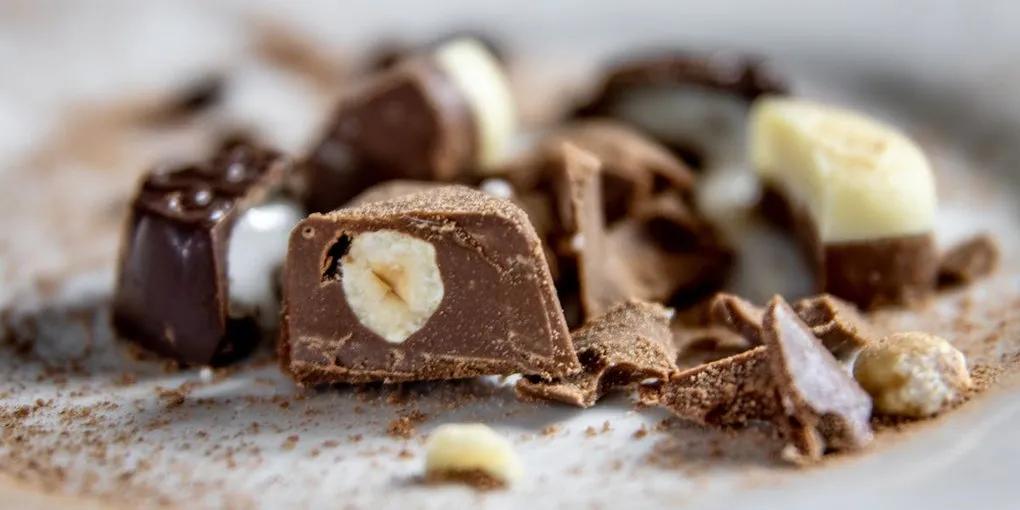
Gianduja is a Turin-born paste of roasted hazelnuts, chocolate, and sugar, refined together until the nut oil and cocoa butter flow as one smooth fat phase. The name is pronounced jahn-DOO-yah. Its origin story is rooted in early-19th-century cocoa scarcity: Napoleon’s Continental System, imposed in 1806, choked cocoa imports into northern Italy, and Piedmontese chocolatiers stretched their dwindling chocolate supply with the one luxury nut they had in abundance — Piedmontese hazelnuts from the Langhe hills. The technique itself was refined decades later. Michele Prochet and Ernesto Alberto Caffarel perfected the recipe of gently roasting and grinding hazelnuts into the chocolate around 1852, and the iconic foil-wrapped gianduiotto was first distributed publicly during Turin’s 1865 carnival, named after Gianduja, the masked Piedmontese character of the Commedia dell’Arte. What started as a wartime substitution became, half a century later, one of Italy’s defining confections.
The modern legal definition tightens this further. To be sold as a Gianduiotto di Torino — the small ingot-shaped bar that is gianduja’s signature form — the paste must contain at least 30% hazelnut by weight under the protected PGI standard. Home makers have more latitude and can run the hazelnut fraction anywhere from 20% to 40%, adjusting for sweetness, firmness, and how much the nut should lead the flavor.
Gianduja is what happens when you refine a high-fat nut paste inside a melanger alongside chocolate and sugar. The result is denser than chocolate, softer than praline, and melts at a lower temperature than a pure couverture bar because hazelnut oil remains liquid at room temperature while cocoa butter does not fully set until around 34°C. That temperature mismatch is the whole personality of the confection.
Gianduja vs. Home Gianduja vs. Nutella
Three hazelnut-and-chocolate products, three completely different animals
| Product | 01Hazelnut Content | 02Other Ingredients | 03Particle Size | 04Texture at 20°C / 68°F | 05Typical Use |
|---|---|---|---|---|---|
| Traditional Gianduiotto (Turin PGI) | 30% minimum (Tonda Gentile delle Langhe) | Cocoa mass, sugar, cocoa butter | Under 25 microns (industrial five-roll mills) | Firm bar, snaps cleanly, melts slowly on tongue | Molded ingot wrapped in gold foil |
| Home Gianduja (Melanger-Refined) | 20-40% (baker's choice; 30% hits traditional mark) | Chocolate or cocoa mass, sugar, optional 5-8% cocoa butter, optional milk powder | Under 25 microns after 12-24 hours in a craft melanger | Firm if 5%+ cocoa butter added; soft spread if not | Bars, praline fillings, ice cream base, spread |
| Nutella-Style Commercial Spread | Approximately 13% | Sugar (top ingredient), palm oil, skim milk powder, cocoa, lecithin, vanillin | Industrial five-roll mill smoothness | Perpetually soft and spreadable (engineered via palm oil) | Bread spread, commercial baked goods |
Hazelnut content is the primary variable that separates these three products
jayarrchocolate.comThe Piedmont Hazelnut and Why It Matters
Authentic gianduja is defined as much by its nut as by its chocolate. The Tonda Gentile delle Langhe (also called Tonda Gentile Trilobata) is the Piedmont IGP-protected cultivar grown in the hills south of Turin, and it has long been considered the benchmark hazelnut for confectionery. It is round, thin-skinned, and lower in sugar than Turkish or Oregon hazelnuts, which means it roasts to a deeper nutty note without caramelizing into overt sweetness. Ferrero sources it heavily for Ferrero Rocher and Nutella, which is the main reason the variety commands a premium.
Turkish hazelnuts — which supply roughly 70% of the world crop — are a reasonable substitute and cost a fraction of the Piedmont IGP price. Oregon hazelnuts are larger, slightly sweeter, and work well when you want the nut to read louder than the chocolate. For home gianduja, any of the three will produce a legitimate result. The variable you actually want to control is freshness — hazelnut oil goes rancid within months of shelling, and stale nuts will ruin a batch no matter how good your chocolate is.
Roast the nuts in a 150°C / 300°F oven for 12 to 15 minutes on a single layer, until the skins crack and the kernels are a medium tan. Overshooting into dark brown territory will push the paste toward bitter, and under-roasting leaves a green, grassy note that clashes with cocoa. Rub the warm nuts in a clean kitchen towel to slough off the papery skins — any skin that stays on will add a faint astringency to the finished paste.
The Traditional Ratio and How to Adjust It
The classic Piedmontese gianduja formula is approximately one-third hazelnut, one-third sugar, and one-third chocolate or cocoa mass, with small adjustments in cocoa butter to control texture. The 30% hazelnut PGI minimum exists because below that threshold the nut fades into a background note rather than defining the confection.
Home bakers should think of the ratio as three decisions stacked on top of each other. First, decide dark or milk: dark gianduja runs a higher cocoa percentage (typically 45-55% cocoa mass), tastes more bitter-forward, and sets firmer. Milk gianduja adds 12-18% milk powder, which brings both sweetness and a softer, more melting mouthfeel — this is closer to what commercial Gianduiotti taste like and is generally more accessible. Second, decide hazelnut load: 30% is the PGI standard, 35-40% is nut-forward, 20-25% is chocolate-forward. Third, decide added cocoa butter: 5-8% extra cocoa butter makes the paste temperable and suitable for molding into bars; omit it and the paste stays softer, more like a spread.
For a starter home recipe, try 30% hazelnut paste, 35% chocolate (60-70% dark), 30% sugar, and 5% cocoa butter. Once that batch is in the melanger you will learn more from tasting it at hour eight, hour sixteen, and hour twenty-four than any formula can tell you. For more on how ingredient ratios shape final texture and flavor, see the chocolate recipe formulation guide.
Refining Gianduja in a Melanger
A melanger is the only craft tool that can actually make gianduja. Standard kitchen appliances — food processors, spice grinders, high-speed blenders — will break the nuts into butter but cannot reduce the sugar crystals and cocoa particles to the 20-30 micron range where humans stop detecting grittiness. Particle reduction below the sensory threshold requires pinning the solids between two hard surfaces, which is exactly what granite rollers on a granite base do. For the full equipment rundown, see the melanger refining guide and the melanger comparison.
Start by making hazelnut butter separately. Grind the peeled roasted hazelnuts in a food processor for four to six minutes, scraping the sides every thirty seconds, until the nuts release their oil and the mixture flows as a thick, glossy paste. This pre-grinding saves hours of melanger time because loading whole nuts directly can stall the machine.
Pre-warm the melanger bowl to around 71°C / 160°F with a heat gun or hair dryer before loading. Add the hazelnut butter first, then the melted chocolate or cocoa mass, then the cocoa butter, and run the rollers for ten minutes to establish a fluid base. Only then add the sugar — adding sugar to a cold or dry bowl is the fastest way to seize a melanger, and adding water is the absolute never-do (it will crystallize the sugar and lock the rollers irreversibly).
Refine for 12 to 24 hours, checking particle size by rubbing a drop between your thumb and a clean glass. By hour eight the paste should feel smooth with only faint grittiness; by hour sixteen it should read as fully smooth; by hour twenty-four the flavor will have mellowed as volatile acids oxidize off — the same phenomenon described in our conching guide, where brighter notes disappear first and warmer molasses, caramel, and tobacco notes emerge. Target particle size is under 25 microns, which sits below the grittiness threshold of about 30 microns.
Conching, Tempering, and Finishing the Bars
The line between refining and conching is blurry in a melanger — the same machine does both. Conching’s peak flavor development occurs at around eight hours with diminishing returns after about thirty. For gianduja, a conching window of four to eight hours after the particle size target is hit is usually sufficient; the nut oil already softens the mouthfeel, and over-conching can flatten the hazelnut character you spent all that money on.
If your recipe includes enough added cocoa butter — roughly 5% or more — the finished paste can be tempered and molded into bars. Follow standard dark chocolate tempering: melt to 50°C / 122°F, cool to 27-28°C / 80-82°F, warm back to a working temperature of 31-32°C / 88-90°F. The full protocol is in the tempering guide. Gianduja tempered with sufficient cocoa butter will form Form V crystals and give a soft snap, glossy surface, and clean release from polycarbonate molds. Traditional Gianduiotti are extruded or hand-formed into their distinctive upside-down-boat shape without molds, but polycarbonate bar molds work just as well for home production. For a deeper look at cocoa butter crystal forms and why Form V matters, see the cocoa butter chemistry guide.
Recipes with 35%+ hazelnut and no added cocoa butter will not temper usefully. The hazelnut oil content simply overwhelms the cocoa butter’s ability to crystallize, and the result stays soft at room temperature. That is fine if your intent is a spread or a filling — it is a problem only if you wanted a bar that snaps. If your tempered gianduja is not setting properly, the troubleshooting guide for chocolate that won’t temper covers the most common causes.
Troubleshooting Common Failures
Gianduja’s failure modes are specific and fixable once you know what they look like.
Grainy or sandy texture means the paste is under-refined. Put it back in the melanger for another four to eight hours and check particle size again by glass-rub test. The grittiness detection threshold sits at around 30 microns, so keep going until the texture reads as fully smooth.
Soft bar that won’t hold shape at room temperature means the hazelnut oil has overwhelmed the cocoa butter fraction. Either add more cocoa butter (another 3-5% by weight) and re-refine for a few hours, or accept the batch as a spread or filling rather than a bar.
Oxidized, cardboard-like, or rancid flavor means the hazelnuts were stale before you started. There is no recovery — rancid nut oil carries through every downstream process. Next time, buy hazelnuts with a known harvest date and store them in the freezer until the day of use.
Visible separation, with a pool of oil sitting on top of the set paste means the paste cooled too slowly after refining, or the hazelnut-to-cocoa-butter ratio was too high for the formula to hold. Re-melt gently to 40°C / 104°F, stir in an additional 2-3% cocoa butter, and pour immediately into molds in a cool room (18°C / 64°F ideal).
Dull, hazy, or bloomed surface on finished bars usually means the bars were stored too warm or cycled through temperature changes. Gianduja is particularly prone to fat bloom because both cocoa butter and hazelnut oil can migrate to the surface. Store bars between 18-20°C / 64-68°F, away from fridges (refrigerator moisture causes sugar bloom and dulls the surface further). Shelf life at proper storage is three to six weeks. For a deeper explanation of fat bloom and sugar bloom mechanics, see our bloom prevention guide.
What to Do With Finished Gianduja
Finished gianduja is not just a bar format. The paste is one of the most versatile building blocks in confectionery, and the same batch can route into several very different end products.
Molded bars and Gianduiotti. Temper with adequate cocoa butter, pour into polycarbonate bar molds, or form by hand into the traditional upturned-boat shape. Wrap in gold foil for the classic Turin presentation. For more on mold technique, see the chocolate molding guide.
Praline and bonbon fillings. Soft gianduja — the no-added-cocoa-butter kind — pipes beautifully into molded shells, and firmer batches can be scooped and rolled into a truffle center exactly like a chocolate ganache truffle.
Enrobed centers. Let the paste set into a firm slab, cut into squares, and hand-dip in tempered couverture.
Ice cream base. Fold 200 g of softened gianduja per liter of vanilla ice cream base before churning. The high fat content gives a dense, low-icy texture.
Hazelnut spread. Run the recipe with 38-42% hazelnut and zero added cocoa butter, and you get a thick, scoopable spread that sits somewhere between Nutella and Piedmontese crema gianduia. Store in jars in the pantry for four to six weeks.
Inclusion and blend element. Stir softened gianduja into tempered dark chocolate at 10-20% before molding for a marbled bar. For more on nut inclusions and how nut fats interact with a tempered shell, see the chocolate inclusions guide.
Frequently Asked Questions
- What is the difference between gianduja and Nutella?
- Gianduja is a refined paste of roasted hazelnuts, chocolate, and sugar — typically 25-35% hazelnut, 30-40% chocolate, 25-35% sugar, sometimes with added cocoa butter. It contains no added oil, no milk powder in its dark form, and no emulsifiers. Nutella contains roughly 13% hazelnut with sugar as the top ingredient, plus palm oil, skim milk powder, cocoa, lecithin, and vanillin. Gianduja is denser, less sweet, more hazelnut-forward, and reads as a confection rather than a breakfast spread.
- Can I make gianduja without a melanger?
- Not if you want the classic smooth texture. A food processor can make hazelnut butter and combine it with melted chocolate, but it cannot reduce sugar crystals below the roughly 30-micron grittiness threshold. You can make a rustic, slightly sandy version that still tastes good — think crema gianduia rather than Gianduiotto — but for smooth, glossy, bar-quality gianduja the granite-on-granite action of a melanger is required.
- How long does homemade gianduja last?
- Three to six weeks at a stable 18-20°C / 64-68°F, stored in an airtight container away from light. Do not refrigerate — temperature cycling between fridge and counter accelerates fat bloom, and ambient moisture causes sugar bloom. If you need longer storage, vacuum-seal and freeze; the texture survives one freeze-thaw cycle cleanly.
- What hazelnuts should I buy if I cannot get Piedmont IGP?
- Turkish hazelnuts are the most widely available substitute and make perfectly legitimate gianduja. Oregon hazelnuts work too and are slightly sweeter. The variable that matters most is freshness — hazelnut oil goes rancid within a few months of shelling. Buy from a supplier with fast turnover, store unused nuts in the freezer, and roast within 48 hours of use.
- Does gianduja need to be tempered?
- Only if you want it to set firm enough to mold into bars. Recipes with roughly 5% or more added cocoa butter can be tempered following the standard dark chocolate protocol (melt to 50°C, cool to 27-28°C, work at 31-32°C). Recipes with high hazelnut load (35%+) and no added cocoa butter will not hold a temper — the hazelnut oil overwhelms the cocoa butter's ability to form Form V crystals. That is fine for fillings or spreads.