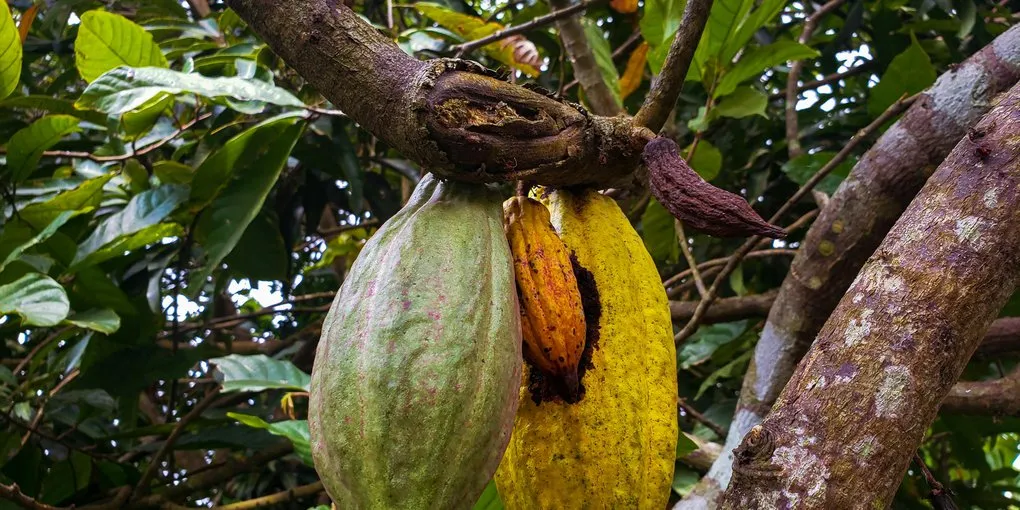
The Dominican Republic is the only cacao-producing country on earth where no major cacao disease is present. No witches’ broom. No frosty pod rot. No black pod. In an industry where 30% of global production is lost to pests and disease every year, that distinction is not trivia — it is a structural advantage that affects every farmer’s livelihood and every bean’s quality potential.
Yet the Dominican Republic rarely appears on the shortlist when craft chocolate enthusiasts discuss great origins. Madagascar gets the berry credit. Ecuador owns the floral conversation. Peru is the “genetic jewel.” The DR quietly produces good cacao at meaningful volume with an infrastructure that actually works, and it does so without the disease pressure that cripples production elsewhere.
The Disease-Free Advantage
The Dominican Republic is the only country where no cacao disease is present. That claim comes from Raising the Bar, and it deserves unpacking because the implications are enormous.
Consider what disease does to other origins. Witches’ broom caused a 70% cacao loss in Brazil between 1985 and 1997 — an event widely regarded as bioterrorism, where six people connected to the Workers’ Party attacked plantations in southern Bahia. Frosty pod rot turned Costa Rica from a net cacao exporter to a net importer in less than a year after it arrived in 1978. Frosty pod can cause up to 90% yield loss in susceptible varieties.
Against that backdrop, the Dominican Republic’s clean bill of health means farmers can focus on quality rather than survival. They do not need to plant disease-resistant varieties that sacrifice flavor for resilience. They do not lose a third of their harvest before it reaches a fermentation box. The economic calculus is fundamentally different when your trees are not under siege.
This does not mean Dominican cacao is automatically superior. Disease-free conditions do not create flavor — genetics, fermentation, roasting, and environment each contribute roughly a quarter of the final taste profile, as USDA-ARS researcher Dr. Lyndel Meinhardt has described. But disease-free conditions remove a massive obstacle between a farmer and the best possible version of their beans.
Flavor Profile
Dandelion Chocolate works with cacao from the Reserva Zorzal in the Dominican Republic. Their tasting notes describe brandied cherry — a rich, dark fruit character with a warm, almost boozy depth. This is not the bright, puckery raspberry of Madagascar or the floral jasmine of Ecuador. Dominican cacao tends toward deeper fruit tones with a rounder acidity.
The Flavors of Cacao database shows Dominican Republic bars scoring respectably across multiple makers, though without the tight flavor clustering that defines Madagascar. Dominican cacao is more variable in character, partly because the country’s genetic base is more diverse and partly because fermentation infrastructure varies by region and cooperative.
That variability is both a challenge and an opportunity for craft chocolate makers. It means you cannot assume a Dominican bean will taste a specific way just because it is Dominican. But it also means there is room for discovery — the right lot from the right farm in the right season can produce something genuinely distinctive.
The Zorzal Cacao Connection
The most prominent Dominican origin in US craft chocolate comes from Reserva Zorzal, a cacao farm that doubles as a bird sanctuary in the Duarte province. The reserve protects habitat for the Bicknell’s thrush, a migratory songbird whose winter range includes the Dominican highlands.
Dandelion Chocolate is among the US makers who have sourced from Zorzal, and their bars consistently show that brandied cherry character. Zorzal represents a model that is increasingly common in specialty cacao — conservation-linked production where environmental stewardship is part of the value proposition, not just a marketing story.
The cacao itself is a mix of genetics typical of Caribbean origins. The Dominican Republic’s cacao history includes Trinitario-type hybrids, which makes sense geographically. Trinitario originated in Trinidad as a hybrid that emerged after the 1727 “blast” — variously attributed to a hurricane or to a Ceratocystis / Phytophthora outbreak — destroyed the island’s Criollo plantings. Forastero stock from Venezuela was introduced around 1757 to rebuild the crop, and spontaneous crosses between the surviving Criollo and the new Forastero produced the Trinitario hybrid over the decades that followed. The Caribbean has been a Trinitario zone ever since.
Economics of Dominican Cacao
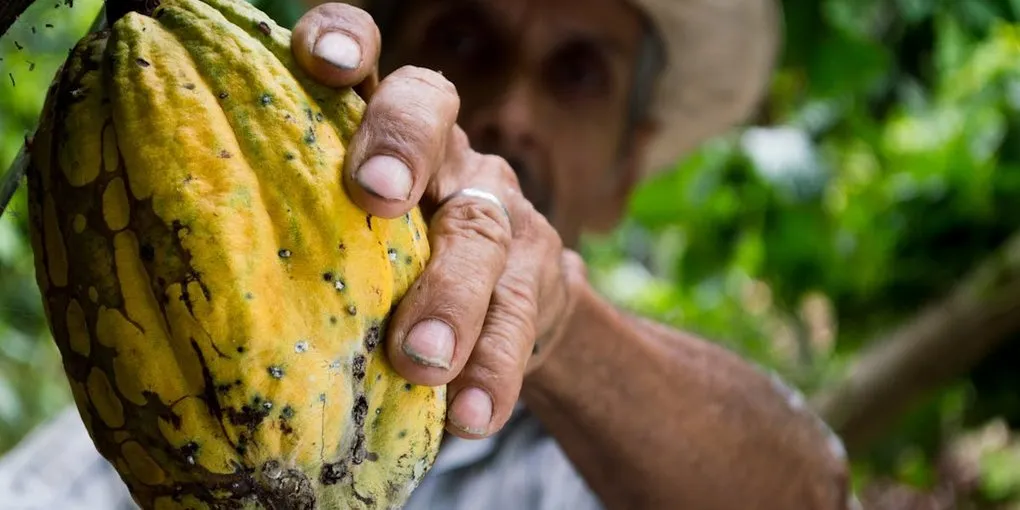
The economic reality for Dominican cacao farmers is sobering but better than many origins. An average fine-flavor farmer nets about $2,500 per year from 3 hectares producing 1,500 kilograms of dried cacao. That is roughly $833 per hectare per year — a livable income by Dominican rural standards but far from prosperity.
Those numbers take on additional weight when you consider the disease-free advantage. In Brazil, where witches’ broom devastated the industry, farmers who lost 70% of their crop were not netting $2,500. In West Africa, where black pod and swollen shoot virus are endemic, the 30% annual disease loss comes directly off the top before a farmer sees any return. Dominican farmers keep what they grow.
The 1,500-kilogram yield from 3 hectares works out to 500 kilograms per hectare. For context, CCN-51 — the high-yield clone that dominates Ecuador — produces over 2,000 kilograms per hectare. Dominican yields are moderate, but they represent actual harvest, not theoretical output reduced by a third from disease.
Production Infrastructure
The Dominican Republic has something many cacao origins lack: functional production infrastructure. The country is the largest cacao producer in the Caribbean and has built systems for fermentation, drying, and export that work at scale.
This matters for craft chocolate makers looking for reliable supply. One of the persistent challenges in specialty cacao is consistency — not just of flavor, but of supply chain logistics. A brilliant origin means nothing if the fermentation is inconsistent, the drying is unreliable, or the shipping logistics are chaotic. The Dominican Republic generally delivers on these operational basics.
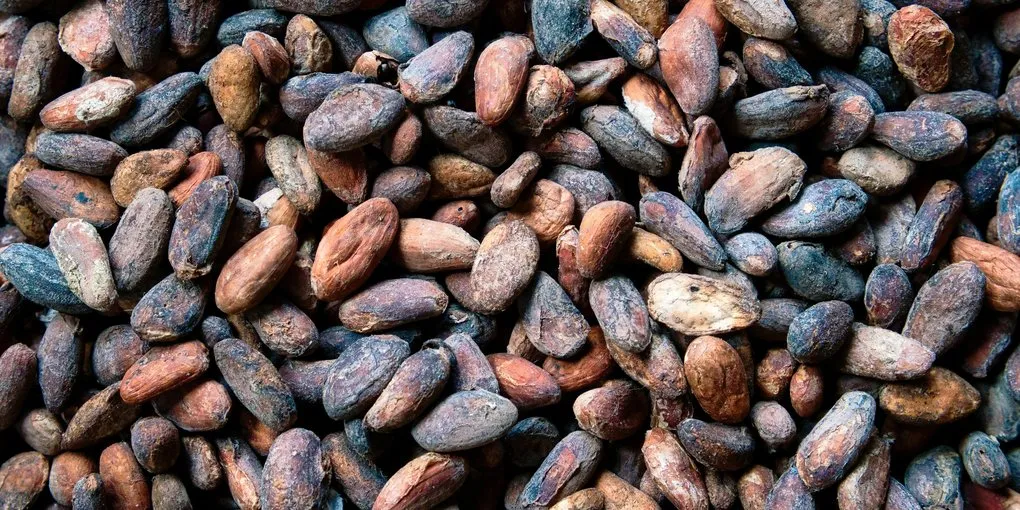
Fermentation in the DR follows the box fermentation approach common in Latin America. Well-run cooperatives use cascading wooden box systems where beans are transferred between boxes every 24 to 48 hours for aeration, with total fermentation running 5 to 7 days. The quality assessment standard is the same everywhere: a cut test where more than 75% brown cross-sections indicates well-fermented beans.
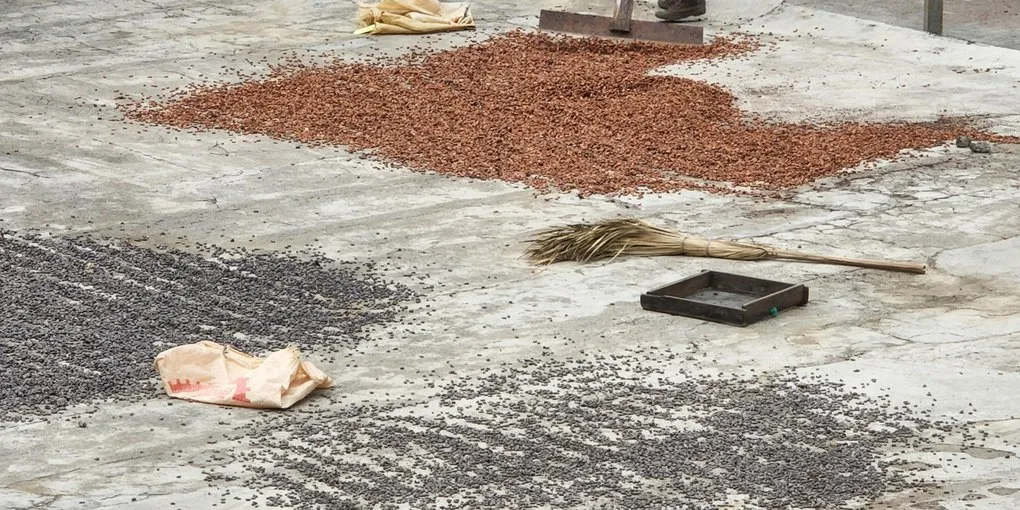
Sun drying on raised beds or concrete patios brings moisture down to the target 6 to 8% needed for safe shipping. The Dominican climate cooperates here — reliable tropical sun with manageable humidity during harvest seasons.
Roasting Dominican Beans
Dominican beans respond well to a moderate-to-full roast profile. The deeper fruit character — that brandied cherry — can handle more development than the volatile bright acids found in Madagascar or some Peruvian origins.
Using John Nanci’s three-phase system detailed in our roasting guide: a standard development phase of 3 to 4 minutes and a finishing end-of-roast temperature in the 254 to 260 degree Fahrenheit range works for most Dominican lots. The acetic acid boiloff point at 244.6 degrees Fahrenheit means you want to reach at least that threshold to drive off excess volatile acids.
For conching, Dominican cacao does well with 20 to 24 hours in a melanger. The deeper fruit notes persist through conching better than the bright, volatile acids of more acidic origins. You have more latitude before the interesting flavors disappear.
Comparing the DR to Other Caribbean Origins
The Dominican Republic shares genetic and geographic context with Trinidad, the birthplace of Trinitario cacao. Both islands sit in the Caribbean basin, both grow primarily Trinitario-type hybrids, and both have cacao histories tied to colonial-era planting. But the similarities end at the farm gate.
Trinidad’s cacao research infrastructure — anchored by the Cocoa Research Centre at the University of the West Indies — has historically been among the strongest in the world. The International Cocoa Genebank in Trinidad houses one of the largest collections of cacao genetic material globally. Trinidad produces cacao with strong institutional support but at very small volume.
The Dominican Republic produces at significantly larger scale with less academic infrastructure but, critically, without the disease pressure that affects virtually every other origin. Trinidadian cacao faces the full suite of tropical cacao diseases. Dominican cacao does not. For a maker choosing between sourcing options, that difference in reliability is meaningful over multi-year buying relationships.
Formulation Suggestions
A standard 70% two-ingredient bar — cocoa beans and cane sugar — lets Dominican cacao speak. At 70%, the brandied cherry note has enough sugar to frame it without sweetness dominating. At 75%, the fruit darkens and the roast notes become more prominent. Both percentages work, and the choice depends on whether you want the fruit forward or the cocoa structure forward.
The 70 to 75% range aligns with the broader pattern visible in the Flavors of Cacao database: this is the percentage sweet spot where quality scores peak across all origins. Above 80%, most origins (Dominican included) trend toward more aggressive bitterness and astringency that is harder to balance.
Dominican beans typically have moderate fat content consistent with Caribbean origins. You should not need added cocoa butter for a workable viscosity in a two-ingredient bar, though a small addition (about 5 grams per kilogram) can improve molding flow without diluting flavor.
Why the DR Deserves More Attention
The Dominican Republic is not the most exciting name in craft chocolate. It does not have Madagascar’s berry signature or Ecuador’s floral mystique. But it has something arguably more valuable: structural soundness. Disease-free growing conditions, functional infrastructure, moderate and consistent yields, and a flavor profile with genuine character.
For makers building a lineup, Dominican cacao offers a reliable, round, fruit-forward bar that fills a different slot than the bright acidity origins. For consumers exploring single-origin chocolate, a good Dominican bar demonstrates that quality chocolate does not require exotic provenance — it requires good cacao, well processed, honestly presented.
The brandied cherry is waiting. More people should try it.
Dominican Republic Cacao: Origin Profile
Signature Flavor
Brandied cherry, deep fruit, round acidity, warm depth
Growing Region
Multiple provinces; Duarte (Reserva Zorzal) is the most prominent fine-flavor source
Disease Status
Only cacao-producing country with no major cacao disease present
Genetics
Primarily Trinitario-type hybrids (Criollo x Forastero)
Farmer Economics
Average fine-flavor farmer nets about $2,500/year from 3 hectares (1,500 kg)
Recommended Roast
Moderate-to-full — EOR 254-260°F (deeper fruit tolerates more development)
Best Percentage
70-75% (brandied cherry shines at 70%; cocoa structure at 75%)
Conching Sweet Spot
20-24 hours (deeper fruit notes persist well through conching)
Frequently Asked Questions
- Is Dominican Republic cacao considered fine flavor?
- Yes, the Dominican Republic produces fine-flavor cacao, which is part of the roughly 5-7% of global production that trades at a premium over bulk commodity prices. The country's Trinitario-type genetics and absence of cacao disease allow farmers to focus on quality rather than disease-resistant varieties that sacrifice flavor.
- What chocolate makers use Dominican Republic cacao?
- Dandelion Chocolate is among the most prominent US craft makers sourcing Dominican beans, particularly from the Reserva Zorzal. Several other bean-to-bar makers in the US and Europe work with Dominican cacao, though it appears less frequently on shelves than origins like Madagascar, Ecuador, or Peru.
- How does Dominican cacao compare to other Caribbean origins like Trinidad?
- Both share Trinitario genetics — the Criollo-Forastero hybrid that emerged in Trinidad after the 1727 'blast' destroyed the island's Criollo plantings; Forastero from Venezuela was introduced around 1757 and crossed spontaneously with the surviving trees over the following decades. Dominican cacao tends toward brandied cherry and deep fruit notes, while Trinidadian cacao often shows higher fat content (57-58% versus typical ranges) and different flavor expressions. The Dominican Republic's unique advantage is its disease-free status, which no other Caribbean origin can claim.
- Can I visit cacao farms in the Dominican Republic?
- The Dominican Republic is one of the more accessible cacao origins for visitors. Reserva Zorzal in Duarte province operates as both a cacao farm and a bird sanctuary, and several cooperatives offer tours. The proximity to major US airports and the country's tourism infrastructure make it significantly easier to visit than origins in Peru, Papua New Guinea, or Madagascar.
- Why is Dominican Republic cacao cheaper than some other fine-flavor origins?
- The Dominican Republic produces more cacao at greater volume than most fine-flavor origins, which keeps prices more moderate. The disease-free conditions also mean less crop loss, so farmers can sell more of what they grow. Venezuelan cacao, by comparison, produces less than 1% of world supply with premiums exceeding $1,000 above market rate. Dominican cacao offers fine-flavor quality without the scarcity premium.