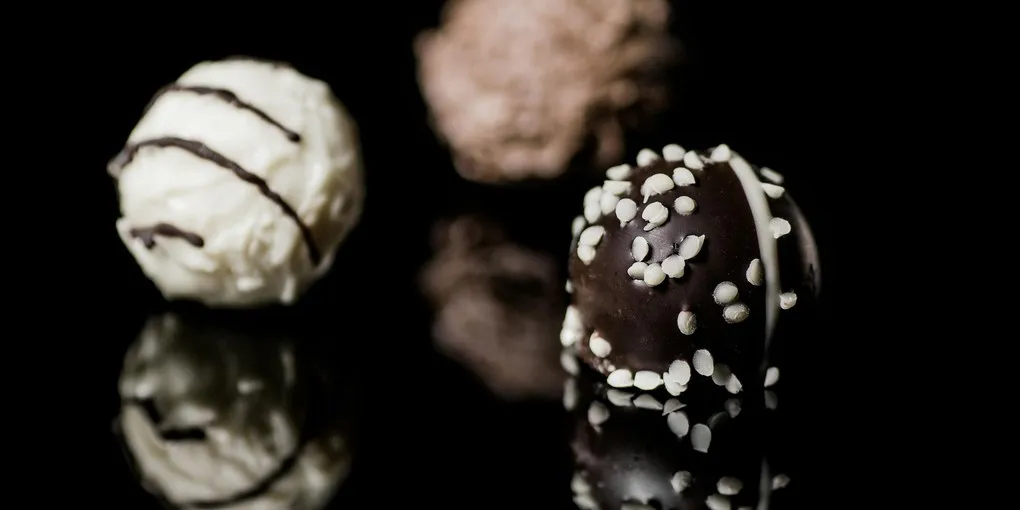
Shell molding makes a hollow chocolate shell inside a cavity, then adds a filling and a chocolate cap. The aim is a shell thin enough to give a pleasant bite but strong enough to survive filling, release and handling. Clean molds, appropriate chocolate fluidity and controlled crystallization all contribute to the result.
This is a technique guide, not a filling recipe or a shelf-life validation. Choose a filling with explicit preparation, setting and storage instructions before beginning; those instructions determine the schedule for the middle of the process.
Shell Molding and Enrobing
In shell molding, the mold shapes the outside and supports the shell while you fill it. In enrobing, a center is formed first and then coated by dipping or passing it through flowing chocolate. A cut ganache or a rolled truffle center can be enrobed without first making a molded shell. Both approaches produce filled chocolates, and neither automatically guarantees a thinner coating than the other.
For mold handling and release fundamentals, see chocolate molding and unmolding. For cocoa-butter crystallization, start with how to temper chocolate and our comparison of seeding and tabling. Use the tempering troubleshooting guide when a test smear is setting unevenly or staying soft.
Equipment and Chocolate
A food-safe chocolate mold. A smooth, rigid polycarbonate mold makes it convenient to fill, invert and scrape a whole tray. Its polished surface can produce high gloss, but cleanliness, temper and cooling still matter. Silicone can also work; finish depends on its actual cavity surface, not simply on the fact that the material flexes. Consider shape, support while draining and ease of scraping when comparing the best chocolate molds.
Enough chocolate to fill and drain the mold. You need more liquid chocolate in circulation than remains in the finished shells. Work over a clean bowl so excess can be reused while it remains uncontaminated. There is no dependable “three times the finished volume” rule: cavity geometry, the number of molds and bowl size change the amount needed.
A food-contact scraper and offset spatula. Choose a scraper wide enough to clear the mold face, with an edge compatible with the mold. Do not substitute a general-purpose construction knife unless its materials and finish are suitable for food contact.
A piping bag, thermometer and clean lint-free cloth. The thermometer checks both the chocolate and the filling. The cloth removes residue without leaving fibers. Keep equipment dry and avoid introducing water into the chocolate.
A controlled work area. A dry room around 18–20°C (64–68°F) is a useful working target for many bonbon methods, not a universal requirement. Condensation occurs when a surface is below the surrounding air’s dew point; a cool room by itself does not inevitably cause sugar bloom. A mold may need gentle warming for a particular method. For example, Callebaut’s shelling tutorial uses a mold around 26–27°C, below the chocolate’s temperature. Use measured conditions rather than heating blindly, especially with a decorated mold.
Chocolate should have enough fluidity to reach details, release trapped air and drain to a useful wall thickness. Callebaut’s three- and four-drop products are examples intended for molding; another maker may describe fluidity differently. A temper reading and a fluidity choice answer different questions.
Working Temperatures Are Product-Specific
These are published examples from Callebaut’s tempering curves, not universal specifications for all chocolate:
| Chocolate example | Suggested working range |
|---|---|
| Callebaut 811 dark | 31–32°C / 88–90°F |
| Callebaut 823 milk | 29–30°C / 84–86°F |
| Callebaut W2 white | 28–29°C / 82–84°F |
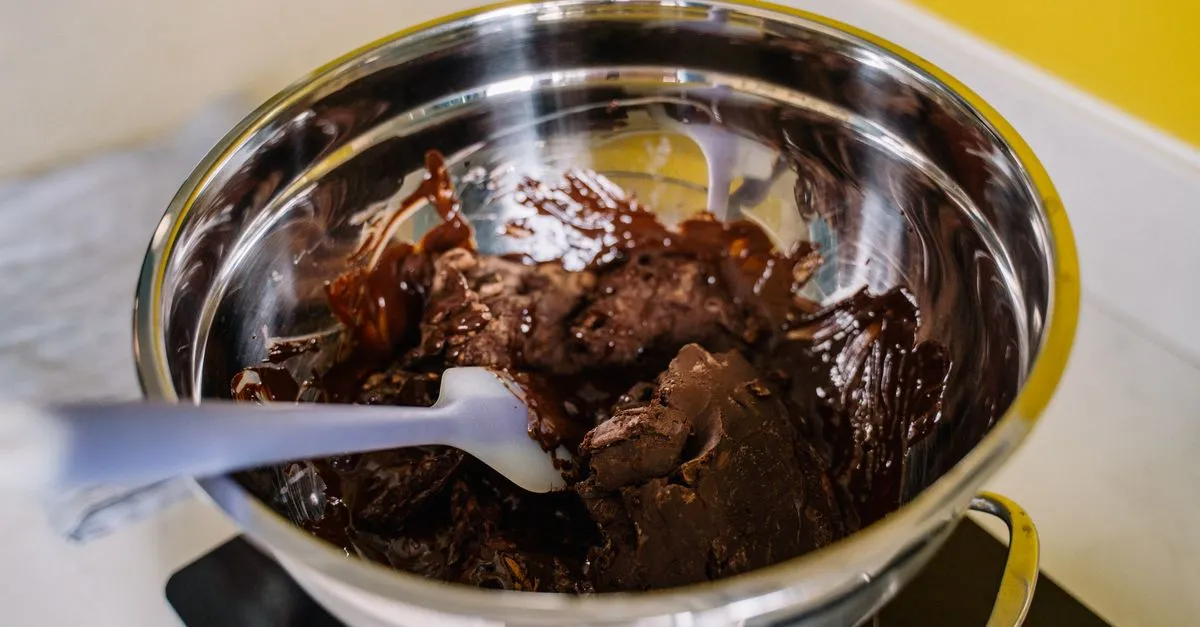
Use your chocolate’s instructions and test a small sample before casting. Stir and monitor during a long session: chocolate can grow too thick from accumulating crystals even while its temperature remains in range.
The Nine-Step Shell Molding Sequence
The Shell Molding Sequence
Nine steps, with filling-specific setting and storage
- 01
1. Prep the mold
Clean, dry and inspect the mold; use a mold temperature suited to the selected method.
- 02
2. Decorate if desired
Apply suitable edible decoration before shelling where the design calls for it. Allow it to set appropriately.
- 03
3. Fill with chocolate
Fill cavities with chocolate prepared and tested according to its maker’s tempering guidance.
- 04
4. Tap and drain
Release air bubbles, invert over a clean bowl, drain to the desired wall thickness and scrape the flat mold face.
- 05
5. Set the shells
Use the cooling sequence suited to the chocolate and mold, allowing walls to firm enough for filling.
- 06
6. Pipe the filling
Use the recipe’s pipeable filling temperature; leave cap clearance and keep the shell rims free of filling.
- 07
7. Rest as directed
Follow the filling recipe’s setting and safe holding instructions, not a universal 30-minute rest.
- 08
8. Cap
Apply tempered chocolate over the ready filling and seal cleanly to the shell rim; remove excess.
- 09
9. Cool and release
Follow the chosen method’s cooling process, then unmold gently. Store finished bonbons according to the filling’s safety requirements.
1. Prepare the Mold
Follow the mold manufacturer’s cleaning instructions. Dry it completely, polish away residue with a clean lint-free cloth, and inspect the cavities under good light. Check that its temperature suits the method you are following. Do not use a mold still wet from washing or one with condensation after cold storage.
2. Decorate if Desired
Apply suitable edible colored cocoa butter using that product’s preparation instructions. The first marks against the cavity become the outside of the finished bonbon, so plan visible details before any opaque backing. Let separate decorative layers set appropriately before adding chocolate.
Transfer sheets require a mold or application method designed to accommodate them; they are not pressed indiscriminately into any shaped cavity. Decoration after unmolding is another option. A plain shell needs no decoration at all.
3. Fill the Cavities
Pour or ladle prepared chocolate into the cavities and make sure the corners are covered. Work promptly enough that one part of the tray does not set while another is still being filled. Keep the bowl in suitable working condition, and scrape excess from the mold’s outside back into the clean working bowl.
4. Tap, Invert and Drain
Tap or vibrate the mold to encourage trapped air to rise. Invert it over the bowl and drain the excess, leaving a film on the cavity walls. Gentle tapping can assist drainage. Scrape the flat face without cutting into the shell rims.
How long you drain is one control on thickness; chocolate fluidity, temperature, crystallization and mold shape also matter. Inspect a test shell before deciding how to change the process. An extra thin coat can be useful for a shell that is too fragile, while an overly thick shell may need a more fluid chocolate or less crystallization in the bowl.
5. Set the Shells
Allow the shells to firm under the cooling conditions suited to your chocolate and mold. They must withstand filling without smearing or collapsing. Follow a tested method’s resting orientation and cooling sequence rather than assuming that a few minutes in any refrigerator will always be enough.
A shell starting to separate visibly from a clear mold can help indicate contraction, but you do not need to force complete release before adding the filling. The piece still has filling, capping and further cooling ahead of it.
6. Pipe the Filling
Use a smooth, pipeable filling that has cooled to the temperature specified in its recipe. Callebaut’s general filling tutorial recommends no warmer than 28°C (82°F); some individual professional recipes use a different temperature. There is no universal switch at 26°C above which every shell melts. Chocolate composition, wall thickness, filling temperature and contact time all affect the result.
Leave enough space for the cap and keep filling off the shell rim. Around 1.5–2 mm of clearance is a useful starting point for many small bonbons, adjusted for the mold and desired base. A fixed percentage of cavity depth is less useful because cavities vary in depth and shape.
7. Let the Filling Set as Directed
The filling should be ready for the capping method you plan to use. Some centers remain soft or fluid; others need substantial crystallization before they can be sealed. Follow the selected recipe’s time and temperature instead of treating 30 minutes as a universal readiness test.
A professional recipe’s overnight rest applies to that formulation and process. Do not borrow it for a fresh perishable filling without an established safe holding procedure. For a beginner batch, select a filling whose handling and storage directions you can follow with your equipment.
8. Cap the Bonbons
Check that the rims are clear and the filling level leaves space for chocolate. Apply enough tempered chocolate to close the openings, spread it, release trapped air as appropriate, and scrape clean. The cap needs contact with the shell rim all the way around; filling smeared on that rim can interrupt the seal.
Inspect the bases after unmolding. Overfilled cavities, pinholes, damaged walls and incomplete seals can all leak. Warm filling is only one possible contributor.
9. Cool and Release
Allow the complete bonbons to crystallize and contract using the selected method’s cooling conditions. Professional recipes differ: Callebaut’s general sealing tutorial describes 14–16°C cooling for at least two hours, while its Green Apple Caramel recipe uses a final 20-minute stage at 10–12°C. Neither is a universal schedule for all molds and fillings.
A domestic refrigerator is colder than those confectionery cooling settings. It needs careful use to avoid overly rapid setting and surface condensation, but it is not prohibited—particularly when the filling requires refrigerated storage. Cool the product safely and manage the chocolate’s finish around that requirement.
Invert over a clean lined tray and tap as appropriate for the mold. If pieces remain stuck, assess whether they need further cooling and check the likely causes below. Repeated hard impacts or indefinitely colder temperatures are not a reliable remedy.
Troubleshooting
Bubbles or holes. Check the chocolate’s fluidity, the mold details and your tapping or vibration. Very thick chocolate can retain bubbles even when tapped. Too many crystals is overcrystallization, not under-tempering; Callebaut explains that it can develop during a working session. Correct it carefully using your chocolate’s procedure and retest.
Shells too thin or too thick. Adjust one variable at a time: chocolate selection, crystal load, mold temperature, drainage or number of coats. Thickness by itself does not make chocolate chalky. Judge a test piece’s strength, bite and filling space instead of treating one millimeter measurement as correct for every mold.
Leaking bases. Inspect for filling on the rim, insufficient cap clearance, air holes and cracks. A clean continuous seal matters more than an extra pass of the scraper at a prescribed angle.
Dullness or sticking. Review temper, mold cleanliness, decorated-layer preparation, shell strength and the cooling sequence. Callebaut’s troubleshooting guide lists multiple causes, including very thin shells and incomplete cooling. A failed release alone does not prove that the batch is out of temper.
White or grey surface changes. Fat bloom involves changes in the fat structure or migration; sugar bloom results when moisture dissolves surface sugar and it later recrystallizes. Neither can be assigned a universal hours-to-days timeline from appearance alone. See fat bloom and sugar bloom prevention. Do not use the appearance of the shell as a test of the filling’s microbiological safety.
If a filled batch fails, do not melt the entire chocolate-and-filling mixture back into your clean tempering bowl. Any recovery has to account for the filling’s ingredients, allergens and safe handling; a composite mixture is no longer plain shell chocolate.
Storage Depends on the Filling
Choose storage from the filling’s validated recipe or supplier instructions. A glossy chocolate coating does not establish room-temperature safety or a month-long shelf life. Water activity, acidity, ingredients, processing, hygiene and packaging all affect the result. Fruit does not automatically mean a shorter safe life, and extra fat does not automatically make a filling shelf-stable.
In Kansas State’s study of frostings and fillings, a tested cream ganache had pH 5.5 and water activity 0.88 and was placed in the category requiring temperature control absent further assessment. Other recipes differed. Those measurements demonstrate why a generic ganache storage promise is unreliable; they do not validate an untested bonbon recipe.
For a homemade fresh perishable filling without validated ambient-storage instructions, keep it refrigerated rather than assuming a cool pantry is safe. The FDA advises 40°F / 4°C or below for refrigeration and no more than two hours at room temperature for foods requiring chilling, reduced to one hour above 90°F / 32°C. Include decorating, serving and transport time in that handling plan. Follow the recipe’s refrigerated use-by guidance and make a small batch if storage life is uncertain.
For products established as suitable for cool ambient storage, use the specified conditions and duration. Do not extrapolate a pure chocolate bar’s storage life to its cream, fruit or nut filling.
Protect the Finish When Chilling
Pack finished pieces in a clean, sealed moisture-barrier container. When taking a portion out for serving, let it acclimatize while still packaged so humid room air does not condense directly on the cold shells. Keep that tempering period within the filling’s safe handling allowance; leave the remaining portions refrigerated.
Callebaut’s storage guidance describes condensation control during temperature changes. Packaging limits moisture contact; it does not hold the product at a safe temperature during a warm journey. Perishable gifts need cold transport and clear storage instructions for the recipient. Commercial shelf life requires assessment of the actual product and process, not a timer borrowed from this technique guide.
Working with Several Molds
Prepare and decorate the molds first, then cast and drain them in a manageable sequence. Record chocolate temperature, filling preparation time and cooling conditions, and keep track of which trays are ready for the next step. Three 24-cavity molds make 72 pieces, but the work and waiting time depend on the design, filling and equipment. Scale up after one mold gives a repeatable result.
Frequently Asked Questions
- How thick should a bonbon shell be?
- Thick enough to release and hold the filling, but thin enough for the bite you want. Mold shape, chocolate fluidity and filling all matter. Inspect a test shell and adjust drainage or coatings; one exact thickness does not suit every bonbon.
- Can I use silicone molds instead of polycarbonate?
- Yes, if the mold is food-safe and suitable for chocolate. Rigid molds are often easier to invert and scrape for uniform shells. Gloss depends on the actual cavity surface, chocolate preparation and cooling; flexible material alone does not force a matte finish.
- Why is my bonbon shell turning white?
- Moisture can cause sugar bloom, while fat crystallization or migration can cause fat bloom. Review temper, cooling, packaging and the filling rather than assuming a single cause. Shell appearance does not establish food safety.
- How long do finished bonbons last?
- There is no generic shelf life for all fillings. Use a validated recipe or supplier’s instructions for the actual filling and storage conditions. Refrigerate homemade fresh perishable fillings without established ambient-storage guidance; a chocolate shell does not make them shelf-stable.
- Do I have to decorate the mold before filling it?
- No. A plain shell is fine. Designs cast into the shell are usually placed inside the mold first; the first layer becomes the outside. Some decorations can instead be applied to finished chocolates, and transfer sheets need a suitable method or mold.
- What temperature should the filling be when I pipe it?
- Use the filling recipe’s specified temperature and a pipeable consistency that does not damage the shell. Callebaut’s general tutorial recommends no warmer than 28°C, while individual formulations may differ. There is no universal melting cutoff at 26°C.
- Why are my bonbons stuck in the mold?
- Possible causes include poor crystallization, incomplete cooling, a dirty or damaged mold, fragile shells or a decoration problem. Diagnose the batch before chilling further. Do not melt a failed filled batch into clean shell chocolate.
- Can bonbons go in the refrigerator?
- Yes, and perishable fillings may require it. Distinguish controlled confectionery cooling from food-safety storage. Protect the finish with suitable sealed packaging and manage condensation without extending the filling’s safe time out of refrigeration.