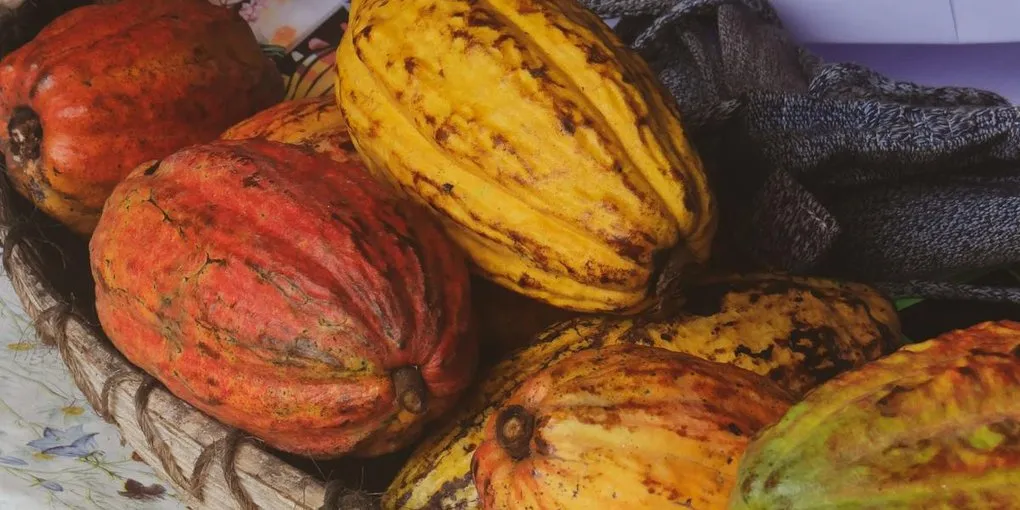
CCN-51 is a cacao variety that produces 3 to 5 times the yield of native cacao trees. It now occupies nearly 60% of Ecuador’s cacao fields. It is not a genetically modified organism. And most specialty chocolate professionals describe its flavor as weak, thin, astringent, and bitter. That combination of extraordinary productivity and mediocre taste has made CCN-51 the most polarizing plant in chocolate.
The debate around CCN-51 is not abstract. It touches the economics of 6.5 million cacao farmers, the survival of heirloom genetics, the meaning of “fine flavor,” and whether yield or quality should drive the future of cacao agriculture. There is no neutral position.
The Origin Story
CCN-51 was created by Homero U. Castro, an Ecuadorian agronomist, in the 1960s. The name stands for “Coleccion Castro Naranjal” — Castro’s collection from Naranjal, Ecuador — and “51” because it was literally his fifty-first crossbreed attempt.
Castro was solving a real problem. Native Ecuadorian cacao trees, particularly the prized Nacional variety, are gorgeous flavor producers but terrible business plants. They yield modestly, grow slowly, and are vulnerable to disease. Ecuador’s farmers needed something that could survive the local disease pressure — frosty pod rot, witches’ broom, black pod — while producing enough cacao to make farming economically viable.
CCN-51 is a three-way hybrid with Trinitario and Nacional parentage. Castro used traditional cross-pollination — no genetic engineering, no laboratory gene insertion, no transgenic techniques. He pollinated flowers by hand, grew out the resulting seedlings, evaluated them, and repeated the process. The fifty-first attempt produced a tree with the combination of traits he was looking for: high yield, disease resistance, and vigorous growth.
This distinction matters because CCN-51 is frequently mischaracterized as a GMO. It is not. It is a conventional hybrid, no different in principle from the way Trinitario cacao itself originated — spontaneous crosses between Criollo and Forastero in Trinidad around 1727. The method is the same. The intent is just more deliberate.
The Yield Advantage
CCN-51 produces over 2,000 kilograms of dried cacao per hectare. Native Ecuadorian trees — including the revered Nacional — produce a fraction of that. The 3-to-5 times yield multiplier is not marketing. It is a documented agricultural reality.
For a farmer making decisions about what to plant on their 2 to 5 hectares of land, this is not a philosophical question. It is a livelihood calculation. If your family depends on cacao income and CCN-51 produces three to five times more sellable product than the traditional tree your grandfather planted, the economics point in one direction.
This yield advantage explains why CCN-51 now occupies nearly 60% of Ecuador’s cacao fields. The adoption was not imposed by some corporate mandate. Farmers chose it, season after season, because it paid better. When people criticize CCN-51’s dominance, they are often criticizing decisions made by millions of small-scale farmers acting in their own economic interest.
The Flavor Problem
CCN-51’s flavor profile has been described by the C-spot database as “weak basal cocoa with thin fruit overlay; astringent and acidic pulp; quite bitter beans and generally sub-par quality.” That is a professional tasting assessment, not an opinion from someone who prefers expensive chocolate.
The flavor issues are partly structural. CCN-51 has more pulp than other cacao varieties, which means the beans sit in more acidic, sugary juice during fermentation. This excess pulp requires draining before fermentation can proceed properly — an extra step that many farms skip or perform inconsistently. When you ferment CCN-51 without draining, the excess acetic acid production creates harsh, vinegary off-notes that persist through roasting and conching.
Fermentation time compounds the problem. CCN-51 requires up to 7 days to properly ferment, compared to 2 to 3 days for Ecuador’s traditional flavor beans. Seven-day fermentation demands more infrastructure, more labor, and more patience. Many cooperatives processing CCN-51 at bulk scale do not invest that time, resulting in under-fermented beans that taste flat and astringent.
Dr. Lyndel Meinhardt of USDA-ARS has described the flavor of any chocolate as roughly a series of fourths: a fourth from genetics, a fourth from environment, a fourth from fermentation, and a fourth from roasting. CCN-51’s genetics may contribute only 25% of the problem — but when the other three quarters are also compromised by rushed processing, the result is a compounding failure.
The Genetic Tradeoff
The 2008 Motamayor study that identified 10 distinct genetic clusters of cacao placed Nacional in its own unique cluster — the only one found on the Pacific watershed of South America. Nacional’s genetic distinctiveness is what gives it the floral “Arriba” aroma that has defined Ecuadorian cacao for centuries: bourbon, jasmine, violet notes that no other origin consistently produces.
CCN-51’s Trinitario-Nacional parentage means it carries some Nacional genetics, but the hybridization diluted the very traits that make Nacional special. The cross introduced Forastero-type characteristics: higher polyphenol content, more anthocyanins (the bitter purple pigments), thicker bean walls, and a flavor profile that skews toward generic “cocoa” rather than distinctive origin character.
This is the core tension. Nacional is genetically unique, flavor-distinctive, and economically marginal. CCN-51 is genetically generic, flavor-indistinct, and economically dominant. The 60% field share that CCN-51 now commands in Ecuador represents a direct displacement of Nacional and other traditional varieties.
The Heirloom Cacao Preservation Fund, launched at the Fine Chocolate Industry Association in 2012, was created specifically to address this kind of genetic erosion. Their first designations in 2014 included Bolivian and Ecuadorian varieties — explicit recognition that heirloom genetics were being lost to high-yield replacements.
Pure Nacional: The Counterpoint
The story of Pure Nacional provides the starkest contrast to CCN-51. Nacional was thought extinct — completely replaced by hybrids and high-yield clones — until Dan Pearson and Brian Horsley discovered it growing on the Fortunato Farm in Peru’s Maranon Canyon. USDA-ARS confirmed the genetics in 2009.
Pure Nacional beans are white, which means they contain fewer bitter anthocyanins. This gives them a more mellow, less acidic chocolate character. White beans ferment in just 2 to 3 days, compared to 5 to 6 days for dark beans and up to 7 days for CCN-51. The flavor is gentle, nuanced, and completely unlike anything CCN-51 produces.
The fact that Pure Nacional was found in Peru rather than Ecuador underscores how far Ecuador’s genetic base has shifted. The country that gave the world Nacional now grows mostly CCN-51.
Can CCN-51 Make Good Chocolate?
This is where the conversation gets more nuanced than most coverage allows. CCN-51 does not have to produce bad chocolate — it just usually does because it is processed like a bulk commodity rather than a specialty product.
The fermentation issue is significant. When CCN-51 beans are properly drained of excess pulp and given the full 7-day fermentation they need, the resulting chocolate improves substantially. Proper fermentation drives the biochemical cascade that creates Maillard reaction precursors — the free amino acids and reducing sugars that produce actual chocolate flavor during roasting.
Some craft makers have taken on the challenge of making the best possible CCN-51 chocolate, treating it as a technical problem rather than a lost cause. The results are better than the C-spot descriptor suggests, though they still do not approach the complexity of well-processed Nacional or other fine-flavor varieties.
Roasting CCN-51 requires higher end-of-roast temperatures — reaching at least 260 degrees Fahrenheit to drive off the excess acetic acid (which boils at 244.6 degrees Fahrenheit). The thicker bean walls and higher polyphenol content mean you need more thermal energy to develop flavor compounds and reduce astringency. Using Nanci’s three-phase system, a longer development phase (4 to 5 minutes) and a higher EOR target helps, but you are working harder for less interesting results.
The Industry Divide
The craft chocolate world is largely unified against CCN-51. Makers who source single-origin, fine-flavor cacao see CCN-51 as the enemy of everything they stand for: genetic diversity, flavor complexity, farmer empowerment through quality premiums.
The commodity chocolate industry sees it differently. When you need consistent, high-volume cocoa for manufacturing — cocoa powder for beverages, cocoa butter for confections, chocolate coatings for industrial use — CCN-51 delivers. The flavor issues matter less when the cacao is being Dutch-processed, alkalinized, and blended into products where origin character was never the point.
The 80 to 90% of global cacao production classified as Forastero — the bulk, commodity category — has never been about flavor. It has been about volume and price. CCN-51 is just the latest and most efficient expression of that priority.
What Matters Going Forward
CCN-51 is not going away. It produces too much cacao too reliably for too many farmers to be abandoned. The question is not whether CCN-51 should exist — it should, because millions of farming families depend on it — but whether it should be the only thing that exists.
The preservation of heirloom genetics alongside high-yield clones is the central challenge. Ecuador could have both a CCN-51 commodity sector and a Nacional fine-flavor sector. The economics require that fine-flavor farmers receive the premiums their product deserves — premiums that create a financial incentive to maintain genetic diversity rather than defaulting to the highest-yielding tree.
For consumers, the takeaway is straightforward. If a chocolate bar does not specify its cacao variety, and it comes from Ecuador, there is a reasonable chance it contains CCN-51. If you want the floral Arriba character that made Ecuadorian chocolate famous, look for bars that explicitly state Nacional or Arriba genetics from identified farms or cooperatives. Learning to read craft chocolate labels is the first step.
The fifty-first crossbreed solved the problem Homero Castro set out to solve. The question now is what problems it created.
Frequently Asked Questions
- Is CCN-51 the same as GMO cacao?
- No. CCN-51 is a conventional hybrid created through traditional hand-pollination by agronomist Homero Castro in the 1960s. No genetic engineering, gene insertion, or transgenic techniques were involved. It is a three-way cross of Trinitario and Nacional parentage — the same kind of selective breeding that has been practiced in agriculture for thousands of years.
- Why do farmers grow CCN-51 if it tastes bad?
- CCN-51 produces over 2,000 kg of dried cacao per hectare — 3 to 5 times the yield of native trees. For smallholder farmers on 2-5 hectares, that yield difference is the difference between poverty and survival. Nearly 60% of Ecuador's cacao fields are now CCN-51 because farmers chose it for economic reasons, not because anyone forced them.
- Does any craft chocolate maker use CCN-51 intentionally?
- A small number of craft makers have experimented with CCN-51 as a technical challenge — trying to produce the best possible bar from beans that most makers avoid. Results improve significantly when the beans are properly drained of excess pulp and given the full 7-day fermentation they require. However, CCN-51 remains rare in the craft market because the ceiling is lower than fine-flavor varieties even with perfect processing.
- How can I tell if a chocolate bar contains CCN-51?
- Most craft chocolate makers who source fine-flavor cacao will specify the variety (Nacional, Criollo, Trinitario) on the label. If an Ecuadorian chocolate bar does not specify variety, there is a reasonable chance it contains CCN-51 given that the variety occupies nearly 60% of Ecuador's cacao fields. Look for bars that explicitly state Nacional or Arriba genetics.
- What would happen if CCN-51 disappeared tomorrow?
- Global cacao production would face a significant shortfall. CCN-51 produces the majority of Ecuador's cacao — the country is one of the world's top producers. The millions of farming families who depend on CCN-51's high yield would face immediate income loss. The realistic path is not elimination but coexistence: a CCN-51 commodity sector alongside a preserved fine-flavor sector with adequate premiums to incentivize genetic diversity.