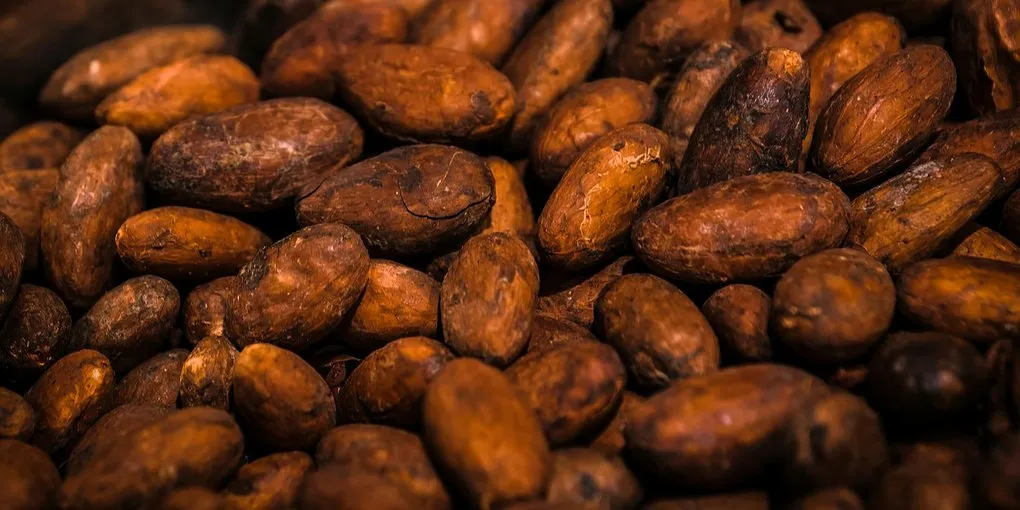
Unfermented cacao beans do not taste like chocolate. They taste flat, astringent, and bitter — regardless of genetics, regardless of how well you roast them. Fermentation is the process that creates the chemical precursors which roasting later converts into the hundreds of volatile compounds we recognize as chocolate flavor. Without proper fermentation, roasting has nothing to work with.
This is the most important thing to understand about cacao fermentation: it does not create chocolate flavor directly. It creates the raw materials — free amino acids and reducing sugars — that the Maillard reaction assembles into flavor during roasting. Fermentation is the setup. Roasting is the execution.
The Raw Material
A freshly opened cacao pod contains 20 to 50 seeds embedded in a white, mucilaginous pulp. The pulp is rich in sugars (glucose, fructose, sucrose) and has a pH of approximately 3.5 — acidic enough to inhibit most bacteria but hospitable to yeasts.
The seeds themselves (what we call beans) consist of a fibrous outer husk, the nib (cotyledon), and a small radicle (embryonic taproot). At this stage, the nib is alive — an intact living tissue with cellular compartments that keep proteins, polyphenols, and enzymes physically separated. This compartmentalization is critical. The chemical events of fermentation require these compartments to break down, and that only happens when the bean dies.
Phase 1: Yeast (Days 1 to 2)
Fermentation begins the moment beans are piled or boxed. Conditions are anaerobic — the dense mass of pulp-covered beans excludes oxygen.
The dominant organisms are yeasts: Saccharomyces cerevisiae (the same species that ferments beer and bread), along with Candida castelli, C. guilliermondii, Kluyveromyces marxianus, Pichia farinosa, and Schizosaccharomyces pombe.
These yeasts metabolize the pulp sugars, producing ethanol, carbon dioxide, and heat. The enzyme invertase hydrolyzes sucrose into glucose and fructose, making more substrate available.
Temperature rises from ambient (approximately 25 to 27 degrees Celsius) to 35 to 40 degrees Celsius during this phase. The heat buildup is significant — it is the first step in the thermal escalation that will eventually kill the bean.
The ethanol produced during this phase is not wasted. It becomes the substrate for the acetic acid bacteria that dominate Phase 3.
Phase 2: Lactic Acid Bacteria (Days 1 to 3, Overlapping)
As the yeast fermentation progresses and conditions begin to shift, lactic acid bacteria (LAB) establish themselves. The dominant species include Lactobacillus fermentum, L. plantarum, Leuconostoc mesenteroides, and Lactococcus lactis.
LAB convert sugars and some ethanol products into lactic acid. This phase overlaps with the yeast phase rather than replacing it — both communities are active simultaneously during days 1 to 3, with LAB gradually becoming more dominant as yeast activity declines.
Lactic acid contributes to the overall acidification of the pulp mass and will later influence the acid profile of the finished chocolate. The lactic-to-acetic acid ratio in fermented beans affects flavor perception: lactic acid produces a smoother, less sharp acidity than acetic acid.
Phase 3: Acetic Acid Bacteria (Days 2 to 6)
This is the phase that determines chocolate quality.
As the bean mass is turned and oxygen penetrates the pile, conditions shift from anaerobic to aerobic. Acetic acid bacteria (AAB) — Acetobacter aceti, A. pasteurianus, A. rancens, A. xylinum, and Gluconobacter oxydans — oxidize the ethanol produced by yeasts into acetic acid.
This reaction is highly exothermic. Temperature peaks at 45 to 50 degrees Celsius, with some reports of temperatures reaching 52 degrees Celsius. The heat and acidity together trigger the critical event of cacao fermentation: bean death.
Bean Death: The Turning Point
When acetic acid penetrates the cotyledon cells and internal temperatures exceed 45 degrees Celsius, the bean embryo dies. Cell membranes rupture. The compartments that kept proteins, polyphenols, and enzymes physically separated break down.
This is not a gradual decline. It is a catastrophic structural failure at the cellular level, and it initiates two chemical cascades that define everything downstream.
Protein Hydrolysis
With cell death, aspartic endoproteases (enzymes that function optimally at pH 3.5 to 4.0 — exactly the pH of the fermenting cotyledon) encounter their substrate: the vicilin-class 7S storage proteins that the bean had stored as its nutritional reserve.
These proteases cleave the storage proteins into free amino acids: leucine, alanine, phenylalanine, valine, isoleucine, and glycine. These are not arbitrary breakdown products. They are specifically the amino acids that participate most actively in Maillard reactions during roasting.
The connection is direct and quantifiable:
- Leucine becomes 3-methylbutanal during Strecker degradation in roasting — the compound with the highest R-squared (0.843) for predicting chocolate character
- Alanine becomes acetaldehyde, which is essential for pyrazine formation
- Phenylalanine becomes phenylacetaldehyde, which creates flowery and honey notes
- Isoleucine becomes 2-methylbutanal, another key chocolate-character compound
Without fermentation, these amino acids remain locked in intact proteins. Without the free amino acids, roasting cannot produce the Strecker aldehydes and pyrazines that define chocolate flavor. This is why unfermented beans taste flat regardless of roast profile — the Maillard reaction lacks its essential inputs.
Polyphenol Oxidation
Simultaneously, polyphenol oxidase (PPO) encounters the catechins and other polyphenolic compounds that were sequestered in separate cellular compartments. PPO oxidizes catechins to quinones, which polymerize into brown pigments.
This is the visible transformation of fermentation: cotyledons change from purple (high anthocyanin) to brown. The cut test — slicing beans longitudinally to assess fermentation level — measures this directly. At least 75% brown cross-sections indicates adequate fermentation. Purple or slate-colored interiors indicate under-fermentation.
The oxidation reduces astringency and bitterness by 80 to 90% from peak polyphenol levels. This is why properly fermented chocolate is less bitter and more pleasant than under-fermented chocolate — the astringent tannins have been chemically transformed.
pH Changes
During fermentation, the cotyledon pH drops from approximately 6.5 to 4.0 to 4.5. This acidification is driven by acetic and lactic acid penetrating the bean. The final pH matters for flavor: too low (too acidic) and the chocolate will taste sour; within range and the acids provide brightness and complexity.
Methods and Duration
| Method | Typical Scale | Duration | Notes |
|---|---|---|---|
| Heap | 25 to 2,000 kg | 5 to 6 days | West African standard; less uniform; covered with banana leaves |
| Box | 200 to 2,000 kg | 5 to 7 days (Forastero) | Latin American standard; beans transferred between boxes for aeration |
| Tray | Research and specialty | Faster | Maximum aeration; used by some quality-focused operations |
Criollo beans ferment in 2 to 4 days because they already have lower polyphenol content — less oxidation work is needed. White beans (pure Criollo) ferment in just 2 to 3 days, while dark beans need 5 to 6 days.
The critical mass for good fermentation is at least 300 kilograms of wet beans. Below this threshold, the mass does not generate enough heat to sustain the temperature escalation needed for proper bean death and enzyme activation. Heaps should be a minimum of 4 to 6 cubic feet.
Turning frequency — typically every 24 to 48 hours — controls oxygen exposure. More turning increases aerobic conditions, accelerating the acetic acid phase. Less turning keeps conditions more anaerobic, extending the yeast and lactic acid phases.
Kokoa Kamili in Tanzania demonstrates what happens when fermentation is done professionally: they buy wet beans and ferment centrally, achieving consistency that individual farmer fermentation cannot match.
Fermentation Quality Assessment
The Cut Test
Cut 10 to 20 beans longitudinally and examine the cross-sections:
- 75%+ brown: Well-fermented. Complex, pleasant aroma. Beans break readily.
- Purple or slate: Under-fermented. Sour, bitter, astringent. Light brassy color. Shriveled.
- Black, putrid, or moldy: Over-fermented. Hammy off-flavors from Bacillus proteolytic spoilage.
Fermentation Index
A more objective measurement: the absorbance ratio at 460nm to 530nm wavelengths. A fermentation index greater than 1.0 indicates adequate fermentation. This requires lab equipment but removes the subjectivity of visual assessment.
Variety Matters: Criollo vs. Forastero Fermentation
The genetic background of the beans changes fermentation dynamics significantly.
Criollo beans have lower polyphenol and anthocyanin content from the start. They require less oxidation to reduce bitterness, which means shorter fermentation times — 2 to 4 days compared to 5 to 7 for Forastero. White beans (a recessive Criollo trait seen in Venezuelan Porcelana and some Peruvian varieties) ferment in as little as 2 to 3 days.
Forastero beans have high polyphenol content and thick, heavily pigmented cotyledons. They require extended fermentation — 5 to 7 days in boxes — to achieve adequate browning and bitterness reduction. The fine-flavor distinction is partly a fermentation story: Forastero-dominant bulk cacao “develops most of its flavor during roasting,” while fine-flavor Criollo-type cacao “starts developing its flavors” during fermentation itself.
CCN-51 — the high-yield hybrid that dominates Ecuador’s fields — requires up to 7 days of fermentation compared to 2 to 3 days for Ecuador’s fine-flavor beans. It also has more pulp than other varieties, requiring a draining step before fermentation begins. Even with extended fermentation, CCN-51 rarely approaches the cup quality of Nacional.
This varietal dependence means that fermentation protocols cannot be standardized across all cacao. A fermentary handling mixed varieties must adjust turn schedules, duration, and mass size for each genetic type — one reason why centralized fermentation operations like Kokoa Kamili can achieve consistency that individual farmers processing mixed lots cannot.
The Role of the Maker
As a bean-to-bar chocolate maker, you do not ferment your own beans. Fermentation happened at origin, weeks or months before the beans reach your door. Your role is to evaluate the quality of that fermentation (via the cut test) and to design your roasting and conching protocols to complement what fermentation provided.
Understanding fermentation science makes you a better evaluator and a better roaster. When you know that protein hydrolysis created free leucine that will become 3-methylbutanal (the strongest chocolate-character predictor) during roasting, you understand why under-fermented beans cannot be rescued by roast profile alone. When you know that polyphenol oxidation reduced bitterness by 80 to 90% during fermentation, you understand why properly fermented beans need less aggressive conching.
The cut test is your window into this invisible chemistry. Brown cotyledons mean the protein hydrolysis and polyphenol oxidation cascades ran to completion. Purple cotyledons mean they did not. That color tells you more about the flavor potential of your beans than any other single observation.
What Happens After Fermentation
Fermentation transitions directly to drying. Target moisture is 6 to 8% for shipping quality — above 8% risks mold growth; below 5% damages the bean.
Drying is a continuation of fermentation in a meaningful sense: acids inside the beans continue to transform flavor until they evaporate. The drying rate controls this. Faster drying traps more acid and creates more acidic, fruitier chocolate. Slower drying allows more acid to evaporate, producing mellower chocolate.
This is why sun drying (1 to 2 weeks, slow and gentle) generally produces higher quality than mechanical drying (forced hot air, fast). The slow evaporation of volatile acids during sun drying is a final opportunity to tune the bean’s acid profile before it reaches the roaster.
The Flavor Formula
Dr. Lyndel Meinhardt of the USDA Agricultural Research Service summarizes the relative contributions: “a fourth of your flavor could be associated with the environment, a fourth with the fermentation, a fourth with the roasting process, and a fourth with the genetics.”
Fermentation occupies one-fourth of the flavor equation — equal to genetics, equal to roasting, equal to terroir. A beginning maker cannot control fermentation (that happened at origin), but understanding what fermentation accomplished inside the bean changes how you approach every step that follows.
Frequently Asked Questions
- Why is fermentation necessary for chocolate?
- Fermentation creates the chemical precursors — free amino acids and reducing sugars — that roasting later converts into chocolate flavor through the Maillard reaction. Without fermentation, these amino acids remain locked in intact storage proteins, and roasting produces flat, astringent, non-chocolate flavor regardless of technique.
- What are the three phases of cacao fermentation?
- Phase 1 (Days 1–2): Yeasts ferment pulp sugars into ethanol, CO2, and heat. Phase 2 (Days 1–3): Lactic acid bacteria convert sugars and ethanol products to lactic acid. Phase 3 (Days 2–6): Acetic acid bacteria oxidize ethanol to acetic acid, generating intense heat (45–50°C) that kills the bean and triggers protein hydrolysis.
- What is bean death and why does it matter?
- Bean death occurs when acetic acid and heat (above 45°C) penetrate cotyledon cells, killing the embryo. Cell membranes rupture, mixing previously compartmentalized proteins, polyphenols, and enzymes. This triggers protein hydrolysis (creating Maillard precursors like leucine and alanine) and polyphenol oxidation (reducing bitterness by up to 80–90%).
- How can I tell if my cacao beans are well-fermented?
- The cut test: slice 10–20 beans longitudinally. At least 75% should show brown cross-sections. Purple or slate-colored interiors indicate under-fermentation. Over-fermented beans appear black or putrid with hammy off-flavors. Well-fermented beans have a complex, pleasant aroma and break readily.
- How long does cacao fermentation take?
- Duration depends on variety and method. Criollo: 2–4 days. White beans (pure Criollo): 2–3 days. Forastero in boxes: 5–7 days. Heap fermentation: 5–6 days. Beans are turned every 24–48 hours to control oxygen exposure. Minimum mass for good fermentation is 300 kg of wet beans.
- What amino acids does fermentation produce?
- Aspartic endoproteases cleave storage proteins into leucine (→ 3-methylbutanal, the strongest predictor of chocolate character), alanine (→ acetaldehyde for pyrazine formation), phenylalanine (→ phenylacetaldehyde for floral/honey notes), isoleucine (→ 2-methylbutanal for chocolate character), valine, and glycine. These are the essential Maillard reaction inputs.
- What is the difference between heap and box fermentation?
- Heap fermentation (West African standard, 25–2,000 kg, 5–6 days) uses banana leaves to cover bean piles. It is less uniform. Box fermentation (Latin American standard, 200–2,000 kg, 5–7 days) transfers beans between wooden boxes for controlled aeration. Boxes generally produce more uniform fermentation. Both methods rely on the same microbial succession.
- How does drying affect cacao flavor?
- Drying is a continuation of fermentation — acids inside beans continue to transform flavor until they evaporate. Faster drying traps more acid, creating more acidic and fruity chocolate. Slower drying allows more acid to evaporate, producing mellower chocolate. Sun drying (1–2 weeks) generally produces higher quality than mechanical drying. Target moisture: 6–8%.