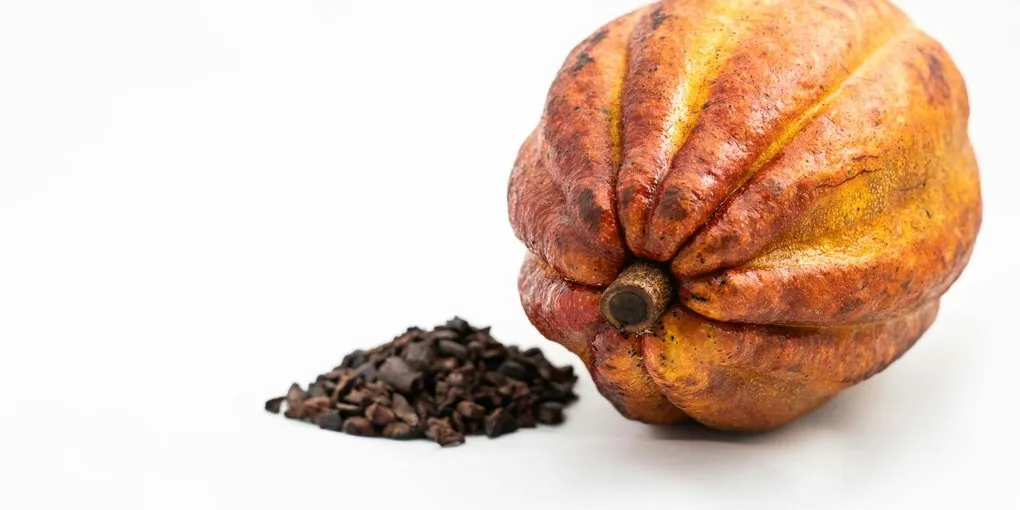
Venezuela is the origin that craft chocolate romanticizes most and understands least. Chuao has produced some of the world’s finest cacao for four hundred years. Porcelana is the rarest expression of pure Criollo genetics. And yet Venezuelan chocolate scores are wildly inconsistent in tasting databases, premiums can exceed a thousand dollars above market price per ton, and the country produces less than 1% of global cacao supply.
This is an origin defined by extremes: extreme quality potential, extreme variability, extreme scarcity, and extreme price.
The Criollo Foundation
Venezuela is the historical heartland of Criollo cacao — the fine-flavor variety that was the original cacao cultivated in Mesoamerica and the first to reach Europe. Criollo is characterized by thin-shelled, light-colored beans with low tannin and polyphenol content, which translates to chocolate that is less bitter, less astringent, and more aromatically complex than Forastero-dominant origins.
The trade-off is fragility. Criollo has low disease resistance, low yield, and takes longer to reach fruiting age. These economics explain why Criollo and Criollo-dominant Trinitario account for a small fraction of world production — fine-flavor cacao overall is only 5 to 7% of global supply, and Venezuela’s share is a fraction of that fraction.
The Trinitario hybrid originated in Venezuela around 1727. A hurricane in Trinidad destroyed the existing Criollo plantations, which were replanted with Venezuelan Forastero. Spontaneous crosses between surviving Criollo and the new Forastero produced Trinitario, which now accounts for roughly 10% of world production. Trinitario’s intermediate characteristics — better disease resistance than Criollo, better flavor than Forastero — made it commercially viable in a way pure Criollo never was.
Chuao
Chuao is the most famous cacao-producing village in the world. Located on Venezuela’s Caribbean coast, accessible only by boat, Chuao has been producing cacao since the early 1600s. The village’s reputation is built on centuries of unbroken cultivation and a terroir that has been consistently praised by chocolate makers across eras.
The reality in tasting data is more nuanced. The Flavors of Cacao database shows Chuao bars with high variability — some exceptional, some unremarkable. This vintage dependence is characteristic of Venezuelan origins. Weather, fermentation management, and post-harvest handling vary year to year, and because volumes are so small, a single problematic lot can skew an entire vintage.
Chuao at its best produces chocolate with layered complexity: dark fruit, tobacco, nuts, and a lingering warmth. At its average, it produces chocolate that is competent but not noticeably superior to well-sourced cacao from other Criollo-Trinitario regions. The name carries a premium that the beans do not always justify.
Porcelana
Porcelana is pure Criollo cacao, named for the porcelain-white color of its unfermented beans. White beans are a recessive genetic trait — they contain fewer bitter anthocyanin pigments than the purple-pigmented beans of Forastero and most Trinitario. The result is cacao that ferments faster, produces less bitterness, and yields chocolate with a remarkably creamy texture.
In the Flavors of Cacao database, the defining trait of Porcelana is texture, not a specific flavor note. Reviewers consistently describe the mouthfeel as creamy, smooth, and buttery — a Criollo genetic signature that appears throughout Venezuelan origins but reaches its purest expression in Porcelana. Flavor notes include nutty, strawberry, and mild fruit.
Porcelana is produced in minuscule quantities. Trees are low-yielding and disease-susceptible. The premium is extraordinary, and supply is essentially nonexistent at craft scale unless you have a direct relationship with a producer or a specialty importer.
Ocumare
Where Chuao is famous and variable, Ocumare is less celebrated but more consistent. Located in the Aragua state, the Ocumare region produces Trinitario-dominant cacao with a reliable profile: nutty, spicy, strawberry, with moderate complexity and excellent batch-to-batch consistency.
For a craft maker seeking dependable Venezuelan character without the price or supply uncertainty of Chuao or Porcelana, Ocumare is the practical choice. The beans respond predictably to standard processing and produce chocolate that clearly reads as Venezuelan — that creamy, fatty mouthfeel that is the genetic calling card of the region.
The Texture Signature
Across all Venezuelan origins, the most consistent thread is not a specific flavor note but a textural quality. Criollo and Criollo-Trinitario beans from Venezuela produce chocolate with a distinctly creamy, fatty mouthfeel. This is partly genetic — Criollo beans tend to have favorable triglyceride compositions — and partly a function of the lower polyphenol content, which reduces the astringent, drying sensation that high-polyphenol beans create.
This texture differentiates Venezuelan chocolate from most other origins at any percentage. A 70% Venezuela bar and a 70% Madagascar bar may have the same cacao percentage, but they feel completely different in the mouth. Madagascar is crisp and bright; Venezuela is round and creamy.
Economics
Venezuela produces less than 1% of world cacao production. Premiums for fine Venezuelan cacao can exceed one thousand dollars per ton above the commodity market price. At a smallholder level, the economics of fine-flavor cacao in the developing world are stark — an average fine-flavor farmer nets approximately 2,500 dollars per year from 3 hectares producing 1,500 kilograms.
The scarcity is partly agricultural (low yield, disease pressure) and partly political (Venezuela’s economic instability has disrupted supply chains, damaged infrastructure, and driven experienced farmers away from cacao). For craft makers, this means Venezuelan beans are expensive, supply is unreliable, and verifying provenance is essential.
Roasting Venezuelan Beans
Venezuelan Criollo and Criollo-Trinitario beans are lighter in color, lower in polyphenols, and more delicate than Forastero-dominant origins. They require a gentler roast.
Target an EOR in the 248 to 256 degree Fahrenheit range — the lower end of the craft roasting window. Development phase should be moderate, around 3 to 4 minutes. Criollo beans have less bitter anthocyanin to transform through Maillard reactions, so the aggressive roasts that work for robust Forastero beans will strip Venezuelan cacao of its delicate aromatics.
The aroma cue is particularly important here. Venezuelan beans shift from pleasant to acrid more quickly than high-polyphenol origins because there is less chemical buffer. When in doubt, pull early.
Light-colored (white or pale) beans like Porcelana ferment faster — 2 to 3 days versus 5 to 6 for dark-bean varieties. This shorter fermentation means less acetic acid development, which means the beans are already milder before roasting. You do not need aggressive heat to drive off acid that is not there.
Conching Venezuelan Cacao
Venezuelan beans benefit from moderate conching — 20 to 26 hours in the craft range. The low polyphenol content means there is less astringency to conch out compared to Forastero-dominant origins, and the risk of over-conching is higher.
Over-conching Venezuelan cacao produces flat, one-dimensional chocolate. The warm, nutty, subtly complex notes that define the origin are all volatile to some degree — extended conching strips them progressively, and because Venezuelan cacao does not have the aggressive fruit acids or roasted backbone of other origins, there is less to fall back on once the nuance is gone.
Lid-on conching is recommended for the majority of the cycle. Venezuelan beans produce relatively little volatile acetic acid (especially the lighter-roasted Criollo beans), so there is less motivation to drive off acid via lid-off conching. The goal is texture refinement and homogenization rather than flavor transformation.
Adding sugar early — at 1 to 2 hours — helps capture the delicate aromatic state of the ground nibs before extended conching begins to modify it. The sugar “freezes” the current flavor state, locking in the creamy, nutty character that you want to preserve.
Sourcing Challenges
Working with Venezuelan cacao requires navigating realities that do not apply to more accessible origins.
Supply is genuinely unreliable. Economic instability has disrupted agricultural infrastructure, and many experienced cacao farmers have left the industry. Lots that were available last year may not exist this year. Relationships with importers who have direct connections to Venezuelan cooperatives or estates are essential — you cannot simply browse a catalog and order.
Verification matters more with Venezuela than with any other origin because the premiums are so high. The premium for Chuao or Porcelana beans can be several times the price of comparable fine-flavor beans from other countries. At those prices, provenance fraud is a real concern. Buy from suppliers who can document the chain of custody from farm to your doorstep.
Despite these challenges, Venezuelan cacao remains in craft chocolate’s vocabulary because nothing else tastes quite like it. The creamy Criollo texture, the gentle warmth, the nutty subtlety — these are qualities that other origins approximate but do not replicate.
Formulation
Venezuelan cacao’s creamy texture shines at 70%, which is the percentage where the balance between origin character and sugar sweetness typically peaks. At 75%, the nuttiness becomes more prominent and the creamy mouthfeel slightly thins. At 80% and above, the chocolate can become flat — the low polyphenol content that makes Venezuela elegant at moderate percentages means there is less flavor complexity to sustain interest when sugar drops.
The two-ingredient format works, but Venezuelan beans arguably benefit more from added cocoa butter than most origins. Adding 3 to 5% cocoa butter amplifies the creamy mouthfeel that is already the origin’s strongest asset. The result is a bar that feels luxurious in a way that two-ingredient bars from other origins do not.
For milk chocolate, Venezuelan cacao is a natural pairing. The inherent creaminess of Criollo genetics complements dairy, and the nutty, mild flavor profile integrates with milk rather than fighting it.
What to Expect
Venezuelan chocolate does not announce itself the way Madagascar’s berries or Ecuador’s florals do. Its greatness is quieter — a creamy texture that coats the palate, a warmth that builds slowly, a nuttiness that lingers. First-time makers working with Venezuelan beans sometimes feel underwhelmed at first taste because they expect fireworks. The sophistication is in the subtlety.
For a beginning bean-to-bar maker, Venezuelan beans are not the ideal starting point. They are expensive, supply is inconsistent, and the subtle flavor rewards require an experienced palate to appreciate fully. Start with Madagascar or Tanzania to calibrate your process, then graduate to Venezuelan cacao when you can afford to give it the attention it deserves.
Frequently Asked Questions
- What is Porcelana cacao?
- Porcelana is pure Criollo cacao named for the porcelain-white color of its unfermented beans. White beans are a recessive genetic trait with fewer bitter anthocyanin pigments. The result is chocolate with remarkably creamy texture, nutty and strawberry notes, and very mild bitterness. It is produced in minuscule quantities at extreme premiums.
- Why is Chuao chocolate so famous?
- Chuao is the most famous cacao-producing village in the world, located on Venezuela's Caribbean coast. It has been producing cacao since the early 1600s — four hundred years of unbroken cultivation. However, tasting data shows high vintage variability. Chuao at its best is layered and complex, but average lots may not justify the premium.
- What makes Venezuelan chocolate taste different from other origins?
- The most consistent distinguishing trait is a creamy, fatty mouthfeel rather than a specific flavor note. This textural quality comes from Criollo and Criollo-Trinitario genetics, which produce beans with lower polyphenol content and favorable triglyceride composition. Venezuelan chocolate feels round and smooth where other origins feel crisp or tangy.
- How should I roast Venezuelan cacao?
- Use a gentle roast — EOR of 248–256 degrees Fahrenheit, which is the lower end of the craft roasting window. Criollo beans are lighter in color and lower in polyphenols, so aggressive roasts strip their delicate aromatics. The aroma shift from pleasant to acrid happens faster than with high-polyphenol origins. When in doubt, pull early.
- Why is Venezuelan cacao so expensive?
- Venezuela produces less than 1% of world cacao at premiums exceeding $1,000 per ton above market price. Scarcity is driven by low Criollo yields, disease susceptibility, and political/economic instability that has disrupted supply chains. For craft makers, beans are expensive and supply is unreliable.
- What is the best percentage for Venezuelan chocolate?
- 70% is the sweet spot. The creamy mouthfeel and nutty character peak at this percentage. At 75%, nuttiness increases but creaminess thins. Above 80%, the chocolate can go flat because the low polyphenol content that makes Venezuela elegant at moderate percentages means less complexity when sugar drops.
- Is Venezuelan cacao good for beginners?
- Not recommended as a first origin. Venezuelan beans are expensive, supply is inconsistent, and the subtle flavor rewards require an experienced palate. Start with Madagascar or Tanzania to calibrate your process, then work with Venezuelan cacao when you can give it the attention it deserves.