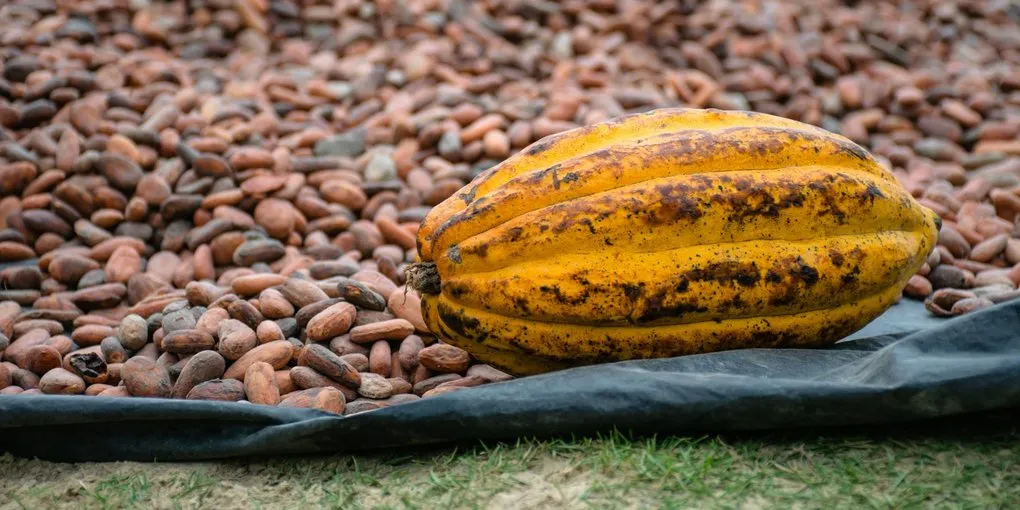
No single country produces a wider range of cacao flavors than Peru. Within its borders you can find grape and tangerine from Piura, orange and citrus from the Maranon Canyon, fig and anise from the Amazonian lowlands. Each region tastes like a different origin entirely. Brad Kintzer of TCHO calls Peru “a genetic jewel,” and the description is precise — Peru’s cacao diversity is a product of its extraordinary genetic variation, concentrated in one of the most biodiverse landscapes on the planet.
The Regions
Piura
Piura, in Peru’s arid northwest, produces cacao with a flavor profile unlike anything else in craft chocolate: grape and tangerine. These notes are not subtle suggestions. They are dominant, unmistakable, and consistent across multiple makers working with Piura beans.
The grape note in particular is distinctive — it reads as concord grape or wine grape, not raisin. Combined with the tangerine citrus, it creates a fruity character that is broader and more complex than Madagascar’s focused berry or Ecuador’s layered florals.
Piura’s cacao includes Nacional and Criollo genetics, with some white-bean populations that produce uniquely mild, less acidic chocolate.
Maranon Canyon
The Maranon Canyon in Peru’s Upper Amazon is where Pure Nacional cacao was rediscovered. Dan Pearson and Brian Horsley found cacao trees on the Fortunato Farm that tested as genetically pure Nacional — a variety that was thought to be extinct, having been displaced by hybrids across Ecuador.
The USDA Agricultural Research Service confirmed the identification in 2009. This was not just a botanical curiosity — it was a commercial revelation. Pure Nacional from the Maranon Canyon produces chocolate with orange and citrus notes, moderate complexity, and a clean finish.
The Maranon cluster is one of the ten genetic populations identified by Motamayor et al. in 2008, originating in the Peruvian Upper Amazon near the Maranon river drainage. That Pure Nacional trees survived in this remote canyon while being displaced everywhere else speaks to the geographic isolation of the site.
Amazonian Lowlands
The eastern slopes and lowlands produce cacao with dramatically different character: fig, anise, and herbal-spicy notes. These beans come from some of the most genetically diverse cacao populations on earth — the Amazon basin is the center of origin for the species, and wild and semi-wild trees here carry genetics found nowhere else.
The Contamana and Iquitos genetic clusters both originate in the Peruvian Upper Amazon. Access is difficult, volumes are small, and flavor profiles are exotic by any standard.
White-Bean Fermentation
Several Peruvian cacao populations produce white beans — the same recessive trait found in Venezuelan Porcelana. White beans have fewer bitter anthocyanin pigments and lower overall polyphenol content, which means they ferment differently.
White beans ferment in 2 to 3 days. Dark beans from the same region need 5 to 6 days. This is a significant difference at the fermentation level — a shorter fermentation means less acetic acid development, less protein hydrolysis, and a different set of Maillard precursors available for roasting.
The practical result: white-bean Peruvian chocolate tends to be milder, less acidic, and more delicate than dark-bean Peruvian chocolate. It rewards gentle roasting and moderate conching. Pushing white beans through aggressive processing destroys their subtlety without building the compensating depth that dark beans develop.
Peru’s Fermentation Journey
Peru has very little history of organized cacao fermentation. For decades, farmers historically picked cacao alongside coffee and left it for middlemen to handle. Fermentation was haphazard or nonexistent — beans were often sun-dried without controlled fermentation, producing flat, astringent chocolate regardless of the genetic quality of the trees.
The transformation came when craft chocolate makers and specialty importers began working directly with Peruvian cooperatives to establish fermentation infrastructure. This is a story that repeats across emerging origins: the genetics were always there, but the post-harvest processing needed to unlock the genetic potential was missing.
Today, Peru has functioning fermentaries in the major growing regions, and the quality curve has improved dramatically. But variability remains higher than in origins with longer fermentation traditions. Lot-to-lot consistency is not yet at the level of Madagascar, where the fermentation infrastructure has been stable for a century.
Roasting Peruvian Beans
Because Peruvian cacao spans such a wide genetic range, there is no single roasting prescription for the origin. Each regional variety responds differently.
Piura (grape/tangerine): Moderate roast, EOR 250 to 258 degrees Fahrenheit. The fruit notes are volatile and survive moderate heat but are destroyed by aggressive roasting. A faster development phase (2.5 to 3.5 minutes) emphasizes the fruit and chocolate notes.
Maranon (orange/citrus, white beans): Light roast, EOR 248 to 254 degrees Fahrenheit. White beans are already mild — they do not need the high temperatures that help drive off excess acidity from heavily fermented dark beans. A slower finishing phase (5 to 6 minutes at 5 to 6 degrees Fahrenheit per minute) builds complexity without scorching.
Amazonian (fig/anise): Moderate to medium roast, EOR 252 to 260 degrees Fahrenheit. These beans tend to have more robust character that can handle slightly more heat. The herbal and spice notes are more thermally stable than fruit or floral aromatics.
For all Peruvian beans, the Dandelion search-space method is strongly recommended. Roast three test batches at different times, make chocolate from each, and blind-taste. Peru’s regional diversity means that roast profiles that work perfectly for Piura may be wrong for Maranon.
Formulation
The 70% two-ingredient format is the standard starting point for any new Peruvian lot. At 70%, you get enough sugar to balance acidity while preserving the origin’s fruit or herbal character.
For Piura’s grape-tangerine profile, 72 to 75% can be exceptionally good — the fruit is assertive enough to carry the lower sugar content. For Maranon’s milder white-bean character, 68 to 70% may work better, providing enough sweetness to frame the delicate orange and citrus notes.
Amazonian beans with fig and anise character sometimes benefit from slightly higher sugar content (65 to 68%) because the herbal-spicy notes can read as bitter or medicinal at high cacao percentages without sufficient sweetening.
Adding cocoa butter (3 to 5%) is useful for Peruvian beans that are naturally lower in fat content. Some Peruvian varieties, particularly those from higher altitudes, can produce drier, crisper chocolate that benefits from additional fat for mouthfeel.
Conching
Conching recommendations vary by bean type:
Piura: 18 to 24 hours with lid on for most of the cycle. The grape and tangerine notes are volatile — extended conching or lid-off conching will diminish them. Pull early if the fruit character is strong at 18 hours.
Maranon (white beans): 20 to 24 hours. White beans produce less volatile acid, so there is less to drive off during conching. The focus is on texture refinement rather than acid removal.
Amazonian: 24 to 30 hours with lid off for the second half. The herbal and spice notes benefit from the oxidation that lid-off conching provides — it mellows sharp edges and integrates the anise notes into the chocolate base.
Genetics: Peru as the Center of Origin
Peru’s flavor diversity is not accidental. The Amazon basin is the center of origin for Theobroma cacao, and Peru sits at the intersection of multiple genetic clusters identified by the 2008 Motamayor study. The Contamana cluster, the Iquitos cluster, and the Maranon cluster all trace to the Peruvian Upper Amazon. No other country hosts this many distinct genetic populations.
The Motamayor study analyzed 1,241 accessions using 106 microsatellite markers and found an overall Fst of 0.46 — significant population differentiation. Peru’s contribution to that diversity is disproportionate. The country is to cacao genetics what Ethiopia is to coffee genetics: the place where the species evolved its greatest natural variation.
This genetic foundation explains why Peru’s regions taste so different from each other. The trees in Piura carry different genetics than the trees in the Maranon Canyon, which carry different genetics than the wild trees of the Amazonian lowlands. Each population developed in relative isolation for thousands of years, producing distinct chemical profiles that express as distinct flavor when properly fermented and roasted.
The Pure Nacional rediscovery in the Maranon Canyon underscores this point. Nacional was thought to exist only as the Pacific-watershed cluster described by Motamayor, found exclusively in Ecuador. The discovery that pure Nacional trees survived in a remote Peruvian canyon — confirmed by USDA-ARS microsatellite analysis in 2009 — expanded our understanding of Nacional’s range and demonstrated that Peru’s genetic surprises are not finished.
Sourcing Peruvian Beans
Peru is more accessible than Venezuela but less straightforward than Madagascar. The diversity that makes Peru fascinating as an origin also makes sourcing more complex — you need to specify not just “Peru” but which region, which genetic population, and which cooperative or fermentary.
Suppliers who work with Peruvian cacao typically identify the region and often the cooperative. Piura beans are the most widely available at craft scale, followed by Maranon. Amazonian beans are the rarest and most expensive because the volumes are smallest and the supply chains least developed.
Quality varies more between lots than it does with established origins. Peru’s fermentation infrastructure, while dramatically improved, is still developing. The cut test is essential for every new lot — cut 10 to 20 beans longitudinally and verify that at least 75% show brown cross-sections. Under-fermented Peruvian beans are not uncommon, and no roasting technique can compensate for incomplete fermentation.
Why Peru Matters
Peru demonstrates a principle that applies across all cacao origins: genetics set the ceiling, but fermentation and post-harvest processing determine whether you reach it. For decades, Peruvian cacao was genetically extraordinary and commercially mediocre because the fermentation infrastructure did not exist to express what the trees contained.
The country’s rapid improvement since the early 2000s — from zero fermentation infrastructure to “genetic jewel” status — is one of the most important developments in craft chocolate. It proves that quality cacao is not a fixed resource limited to traditional origins. It can be developed anywhere the genetics and the commitment exist.
For beginning makers, Peru is an excellent second or third origin to explore after you have calibrated your process with a more predictable origin. The regional diversity means you can experience dramatically different flavor profiles while developing origin-specific roasting skills — a master class in how genetics and terroir interact with your processing decisions.
Frequently Asked Questions
- What does Peruvian chocolate taste like?
- It depends on the region. Piura produces grape and tangerine. Maranon produces orange and citrus. Amazonian lowland beans yield fig and anise. No other country produces this range of flavors. The diversity comes from Peru's extraordinary genetic variation — the Amazon basin is the center of origin for cacao, and wild populations carry unique genetics.
- What is Pure Nacional cacao from Peru?
- Pure Nacional is a genetic variety thought extinct until Dan Pearson and Brian Horsley discovered surviving trees on the Fortunato Farm in Peru's Maranon Canyon. The USDA confirmed the identification in 2009. These trees produce chocolate with orange and citrus notes. The Maranon cluster is one of 10 genetic populations identified by the 2008 Motamayor study.
- Why do white cacao beans ferment faster?
- White beans have fewer bitter anthocyanin pigments and lower polyphenol content, so they require less fermentation time to reduce bitterness — 2–3 days versus 5–6 days for dark beans. This shorter fermentation produces less acetic acid and a different set of Maillard precursors, resulting in milder, more delicate chocolate.
- How should I roast Peruvian cacao beans?
- It depends on the region. Piura (grape/tangerine): moderate roast, EOR 250–258°F. Maranon white beans: light roast, EOR 248–254°F. Amazonian beans: moderate-medium, EOR 252–260°F. The Dandelion search-space method (three test batches, blind taste) is strongly recommended because Peru's diversity means one roast profile does not fit all.
- Is Peruvian cacao good for beginners?
- Peru is an excellent second or third origin after you have calibrated your process with a more predictable origin like Madagascar. Its regional diversity provides a master class in how genetics and terroir interact with processing decisions. Each region requires different roast and conching parameters.
- Why was Peru not known for cacao quality until recently?
- Peru had very little fermentation infrastructure for decades. Farmers historically picked cacao with coffee and left it for middlemen. Without controlled fermentation, even genetically excellent beans produce flat, astringent chocolate. The transformation came when craft makers and importers worked directly with cooperatives to establish fermentaries.
- What percentage works best for Peruvian chocolate?
- 70% is the standard starting point. Piura's assertive grape-tangerine character can carry 72–75%. Maranon's milder white beans work well at 68–70%. Amazonian herbal-spice profiles sometimes benefit from more sugar at 65–68% to prevent the spice notes from reading as bitter.