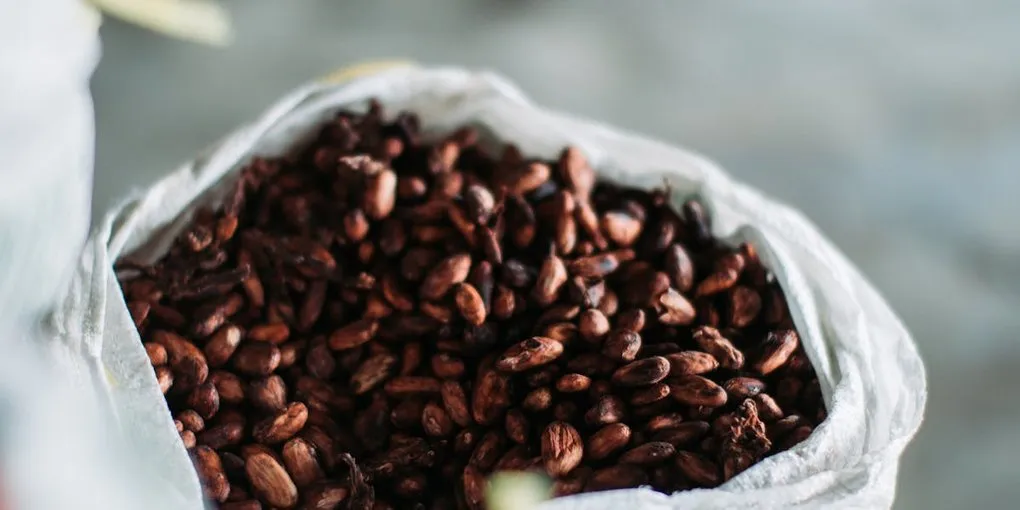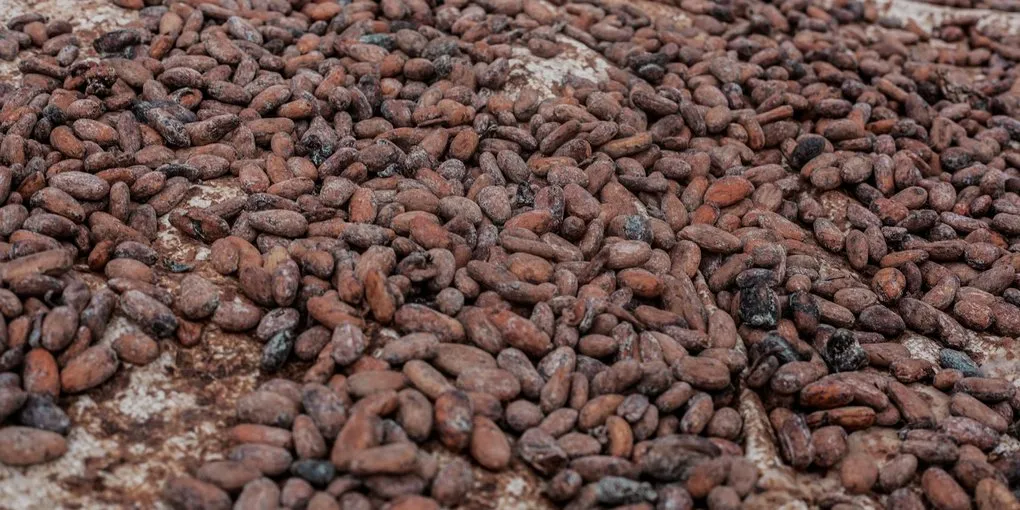
Choose roasting equipment around the batch you actually want to make, the measurements you need, and an operating method appropriate to that equipment. A rotating drum is attractive for repeated experiments; an oven lets you begin without buying another appliance. Neither choice automatically gives you better chocolate or a validated food-safety process.
This guide compares documented features and methods. It does not report a side-by-side product test, and the old $300–$400 Behmor estimate should not be treated as a current price.
The Behmor 2000AB Plus: Useful Features, an Important Qualification
Behmor’s product information describes a coffee roaster with a rotating mesh drum, five programmed profiles, manual control, a lighted interior, and smoke suppression. Its advertised capacity is up to one pound of coffee. Smoke suppression does not mean that ventilation or cleaning can be ignored.
Chocolate Alchemy’s product listing describes a 2–2.5 pound cacao application. That is the supplier’s adaptation, not a manufacturer-rated cacao capacity.
There is a consequential conflict to resolve before following that adaptation. The manufacturer’s published V21 manual, safeguards page 3 specifies a one-pound maximum, requires the drum and chaff tray in place, and restricts use to its intended application. Chocolate Alchemy’s cacao guide describes a larger load and omitting the tray. Get model-specific manufacturer confirmation before using the larger cacao load or omitting required parts. We have not verified an approval that reconciles those instructions; this guide does not authorize those departures.
The same manual says to stay with the operating roaster, provide the specified ventilation and clearance, and avoid unapproved modifications. Obtain the current manual through Behmor support and check it against the exact unit being purchased. Its safeguards take precedence over a generic online roast recipe.
Use Behmor’s model information and the supplier documentation above to identify the exact appliance before comparing offers.
Compare the delivered price, electrical version, included accessories, return policy, and support. A listing for a probe service is not a price for the complete roaster.
What the Controls and Temperature Display Actually Mean
“Use P1” is incomplete advice. In the automatic program, P1 identifies a programmed profile. In manual mode, P1 means zero power to the elements; P2 through P5 select increasing power levels. Behmor’s control-panel explanation makes this distinction. A button sequence needs both the operating mode and the model’s instructions.
That manufacturer page also identifies the A and B readings as exhaust-channel and chamber-wall measurements. They are not bean temperatures. Do not label a displayed 256°F as a bean endpoint, or assume a universal offset converts one measurement into the other.
Chocolate Alchemy offers a thermocouple modification service, but this involves physical changes and its own listing says the modification voids the Behmor warranty. A stock unit and a modified unit therefore differ in both measurement capability and support. This is a purchasing consideration, not a recommendation to drill or alter the appliance.
Our Behmor roasting guide provides further context. Before applying any third-party sequence, reconcile it with the current manufacturer instructions, especially the load, required parts, operating mode, and cooling procedure. An aroma description is not a substitute for equipment safeguards.
Can a Home Oven Work?
Yes. John Nanci’s November 2025 oven-roasting lesson explicitly teaches an oven method, so describing him as categorically rejecting ovens is out of date. His approach uses a shallow layer, stirring, temperature observations, and a change in oven setting during the roast. It is more deliberate than leaving every bean lot at one setting for exactly 30 minutes.
An oven is worth considering when you are learning or making occasional batches. Allow for the work of spreading, stirring, observing, cooling, and cleaning up. If those tasks become the limitation, a suitable drum roaster may be worth investigating. We have not measured a flavor advantage, a universal oven temperature error, or a guaranteed improvement from buying a drum machine.
Whichever method you choose, label your temperature records accurately: oven setpoint, air measurement, surface reading, or probe measurement. Comparing unlike readings can make two apparently identical profiles very different.
Read Roast Profiles Without Confusing Rates and Times
Nanci’s profile-notation explanation defines 10/8/6 @ 256°F as three temperature-rise rates in °F per minute, followed by an endpoint temperature. The phase boundaries in that notation are 212°F and 232°F. The three numbers are not phase durations.
For example, a 20°F rise at an average 8°F per minute takes 20 ÷ 8 = 2.5 minutes. His separate clock-time notation records elapsed time from the start, so consecutive timestamps must be subtracted to obtain a phase duration. Record which notation you are using.
Those phase names are a practical bookkeeping system. They do not establish universal chemical on/off switches, and an example endpoint is not a prescription for every bean, probe, load, or appliance.
What Roasting Changes—and What It Cannot Tell You
Flavor starts before the roaster. Cocoa fermentation changes sugars and proteins as well as producing microbial metabolites. Reducing sugars come in part from sucrose hydrolysis, not from polyphenol oxidation; Camu and colleagues’ fermentation study distinguishes those pathways. Amino acids and peptides from protein breakdown contribute to the precursors available during subsequent heating.
Roast time and temperature change aroma formation and loss. In Huang’s original cocoa-roasting research, chapter 4, changing temperature altered the timing and concentrations of several volatile groups. That experiment does not make one compound a universal predictor of chocolate quality, or establish that every longer roast must taste nuttier. Treat flavor descriptions as observations to test with your particular beans.
Food safety needs its own evidence. Yan and colleagues measured Salmonella inactivation under specified experimental roasting conditions. Their result is not validation of every home oven or Behmor cycle. Bean color, a pleasant smell, an audible pop, or reaching a supplier’s flavor endpoint does not demonstrate a required pathogen reduction. If selecting a roasting process for food you will distribute, obtain applicable process-validation advice rather than treating this buying guide as a kill-step schedule.
Develop a Profile Through Comparable Batches
Start with a documented method compatible with your equipment and bean lot. Keep a log of the load, bean lot, starting conditions, measurement location, settings, elapsed time, cooling method, and results. Change one controllable variable at a time so you can interpret the comparison.
Prepare the comparison samples with the same chocolate formula and downstream processing. Taste them without the profile names visible and write down what you prefer. Repeat a promising result before treating it as your working method. There is no established requirement here to make exactly 9–16 trial batches, and a preference test does not produce an objectively perfect roast.
A cut test can help reveal defects, but an arbitrary 75% brown threshold is not a complete flavor assessment. Industry quality guidance calls for evaluating processed samples and recognizes differences in bean pigmentation. If the chocolate disappoints, investigate the beans, fermentation and drying, storage, roast, formulation, and later processing rather than assigning almost every problem to one stage.
Cooling and Cracking
Use the roaster’s specified cooling procedure and handle hot equipment as its manual directs. For an oven workflow, plan a suitable cooling arrangement before starting. Keep each trial’s cooling procedure consistent enough that the next comparison is meaningful.
Nanci’s Behmor cacao guide includes a six-hour rest before cracking. Treat that as his workflow recommendation, not a universal law that all newly roasted beans are both too brittle and too tightly attached to their shells. This guide has no comparative trial establishing an ideal rest for every bean and cracker. Evaluate separation and losses with your own equipment after safe cooling.
For the wider process, see the bean-to-bar beginners guide and cacao-roasting guide. The linked interactive roast window illustrates profile concepts; its animation is not a measurement of your bean’s interior or a food-safety prediction.
Choose Equipment Around a Supported Workflow
- 01
Define the batch
Bean lot and quantityWork out the amount you want to process before choosing an appliance.
- 02
Check compatibility
Exact model and manualResolve conflicts over approved application, load, parts, and modifications before use.
- 03
Understand the readings
Setpoint, air, surface, or probeIdentify what the instrument measures before comparing profiles.
- 04
Compare results
Consistent recordsKeep downstream processing comparable and repeat promising flavor results.
Frequently Asked Questions
- What is the best home cocoa bean roaster?
- This source-based guide does not establish a universal winner. Consider an oven for initial experiments, and investigate a drum roaster when repeated batches justify it. Resolve the Behmor manufacturer-versus-supplier cacao instructions before choosing that machine for this purpose.
- Can I roast cacao beans in a regular oven?
- Yes. Chocolate Alchemy now teaches an oven method with stirring and temperature observations. An oven setting and a fixed time alone do not establish equivalent results for every lot or prove pathogen control.
- What does 10/8/6 mean in a cacao roast profile?
- In Nanci's slope notation these are degrees Fahrenheit per minute for three stages, not minutes spent in each stage. An endpoint follows the @ symbol.
- Does the Behmor display bean temperature?
- Its A and B thermistor readings are exhaust-channel and chamber-wall measurements. They should not be represented as bean temperatures.
- What temperature should cacao beans be roasted to?
- A flavor endpoint must belong to a defined method, bean lot, load, and measurement setup. No universal target is established here, and a flavor endpoint does not validate a pathogen kill step.
- Must roasted beans rest exactly six hours before cracking?
- Six hours is a recommendation in Nanci's workflow, not an established universal minimum. After safe cooling, assess separation and losses with the beans and cracker you actually use.