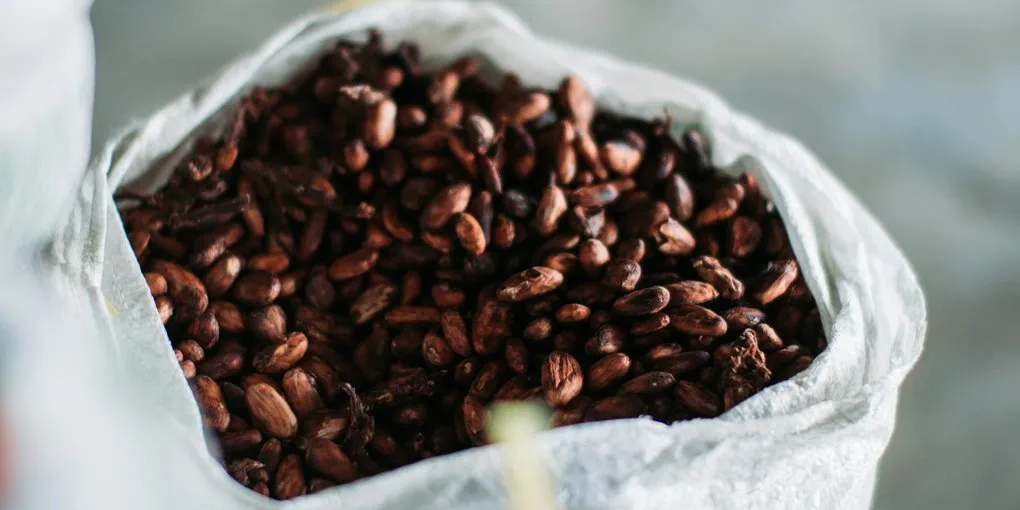
Cracking breaks roasted cacao beans into pieces so the husk separates from the nib. Winnowing uses airflow to separate lighter husk from heavier nibs. Together, these two steps produce clean nibs ready for the melanger. Wait at least 6 hours after roasting before cracking — fresh-roasted beans do not crack cleanly. The FDA limit for husk in finished chocolate is 1.75% by weight.
Why This Step Matters
The husk is the outer shell of the cacao bean — approximately 10 to 15% of the bean’s weight. It has no flavor value in chocolate. At low concentrations (under 2%), it is indistinguishable by taste. At higher concentrations, it introduces papery, slightly bitter notes that mask origin flavors and reduce overall quality.
A cut test on a husk-heavy batch will show papery texture rather than the clean, smooth paste that nibs produce. This is why proper winnowing — not just approximate winnowing — matters for quality.
The husk also has a role in food safety: the FDA limit of 1.75% husk by weight in finished nibs or chocolate is a regulatory requirement, not just a quality guideline. If you are selling chocolate commercially, you need to meet this standard.
Timing: The Six-Hour Wait
One instruction that is often skipped because it is easy to overlook: wait at least 6 hours after roasting before cracking, with overnight being the preferred rest period.
Fresh-roasted beans are brittle in a specific way that makes cracking produce more dust and powder than clean nib pieces. The husk is also more tightly bonded immediately after roasting. After 6 hours of rest, the beans reach a consistency that cracks cleanly into 3 to 6 roughly equal pieces per bean with the husk loosening and separating.
This rest also allows continued post-roast flavor development in the retained volatiles. Rushing to crack costs you both cracking quality and flavor.
Step 1: Cracking
Champion juicer method (recommended): Insert the blank screen (not the juice screen) into the Champion. Run roasted beans through at a steady pace — approximately 1 lb per minute. The output is cracked pieces of various sizes mixed with loose husk.
At the correct gap setting, each bean should be broken into 3 to 6 roughly equal pieces. Minimal dust. Some husk will already be loose and separated. If you see mostly powder and dust, the gap is too tight or you are feeding too slowly. If large chunks (half-beans or whole beans) are coming out, either increase feed pressure or check the gap.
Hair dryer cracking (emergency substitute): Put roasted beans in a zip-lock bag. Place the bag between two cutting boards or other flat hard surfaces. Apply firm, rolling pressure. This produces highly variable piece sizes and is only suitable for very small test batches under half a pound.
After cracking: You have a mixture of nib pieces, whole nibs, broken nibs, and loose husk. This material goes directly to winnowing.
Step 2: Winnowing
Winnowing uses the weight difference between nibs and husk to separate them. Nibs are dense; husk is lightweight and catches air. The right airflow velocity carries husk away while nibs fall.
Fan method (recommended for 0.5 to 5 lb batches): Set a standing fan to medium speed. Position a large collection bowl below the fan’s output stream. Hold a second bowl above the collection bowl, about 2 to 3 feet higher, angled toward the fan. Pour the cracked material slowly from the upper bowl through the fan stream into the lower collection bowl.
Lighter husk gets blown to the side and out of the stream. Heavier nibs fall into the lower bowl. Adjust the pour rate and height: faster pouring overwhelms the separation; a steadier, slower pour produces cleaner separation.
Hairdryer method: Same principle as the fan but with a hairdryer held in one hand directed horizontally across the falling material. Less consistent than a fan. Dandelion Chocolate’s Ten-Minute Rule applies: do not spend more than 10 minutes hand-winnowing per batch.
DIY PVC winnower: For regular production, a 2-foot food-safe PVC pipe with a Dayton 1TDP3 blower creates a consistent vertical air column. Nibs fall through; husk is carried upward to a cyclone separator. See our DIY winnower plans for complete construction.
How Many Passes?
One pass through a fan or PVC winnower typically leaves 3 to 7% husk by weight. This is above the FDA limit of 1.75% for commercial products and above the 2% threshold where Nanci’s tasting data shows indistinguishability ends.
Two passes bring most batches under 2%. For commercial products, a second pass at slightly higher airflow should push husk to 1% to 1.5% range.
To verify: weigh your nibs after winnowing. Spread a small sample on a white surface and examine under bright light. Individual husk pieces are thin, papery, and semi-transparent compared to the dense, opaque nib pieces. If you can see many husk pieces, another pass is needed.
After Winnowing: Pre-Refining Option
Winnowed nibs can go directly into the melanger, or through a second Champion juicer pass for pre-refining. Pre-refining breaks nibs into a rough paste before loading the melanger, reducing the melanger’s initial breakdown work and potentially shortening total refining time.
If you pre-refine with the Champion: the output is a warm, chunky cocoa paste. Load this directly into the melanger while warm. The heat helps the paste flow and begin refining faster.
If you skip pre-refining: load winnowed nibs directly into the warm melanger. The melanger will take slightly longer to establish a homogeneous mass, but the end result is the same.
Husk as Byproduct
The husk collected during winnowing is not waste. Cacao husk produces a pleasant, mildly chocolatey tea. Steep 1 to 2 tablespoons in hot water for 5 to 10 minutes. The husk contains low levels of theobromine and trace caffeine, producing a gentle stimulation.
Dry collected husk before storage — wet husk develops mold quickly. A brief spread in a low oven (200°F for 15 minutes) dries it adequately.
For full winnowing equipment details including commercial options, see our best winnower guide. For the next step in the process, see our melanger refining guide. For the complete beginner process, see our bean-to-bar guide.
Frequently Asked Questions
- How do I winnow cacao beans at home?
- The simplest method uses a standing fan and two bowls. Set the fan to medium. Pour cracked cacao slowly from an upper bowl through the fan's horizontal air stream into a lower bowl. Lighter husk blows aside; heavier nibs fall into the collection bowl. Two passes typically bring husk below 2%. For batches over 5 lbs, a DIY PVC winnower with a Dayton 1TDP3 blower provides more consistent results.
- Why do I need to wait before cracking roasted beans?
- Fresh-roasted beans crack poorly — they produce more powder than clean pieces because the shell is too tightly bonded and the bean is in a brittle state. After resting at least 6 hours (overnight preferred), beans reach a consistency that breaks cleanly into 3–6 pieces per bean with the husk loosening naturally. Rushing costs both cracking quality and post-roast flavor development.
- What is the FDA husk limit for chocolate?
- The FDA limit is 1.75% husk by weight in finished nibs or chocolate. Blind tasting data from Chocolate Alchemy shows husk is indistinguishable at 0–2%, marginally detectable at 5%, and produces obvious defects at 10% and above. One winnowing pass typically leaves 3–7% husk; two passes should reach the 1–2% range.
- What is Dandelion Chocolate's Ten-Minute Rule for winnowing?
- Never spend more than 10 minutes hand-winnowing per batch. Beyond 10 minutes of hairdryer or manual bowl winnowing, you are getting diminishing returns on husk removal relative to the time and effort invested. Set a time limit, accept the result at that point, and move on. Multiple shorter passes are more efficient than one long continuous session.
- Do I need to pre-refine after winnowing before using the melanger?
- Pre-refining is optional but beneficial. Running winnowed nibs through a Champion juicer with the blank screen produces a rough cocoa paste that starts the melanger much closer to a homogeneous state. This reduces the initial breakdown work and can shorten total melanger time by several hours. Skipping pre-refining and loading whole nibs directly works but takes longer.
- Can I use cacao husk for anything?
- Yes. Cacao husk makes a mildly chocolatey tea with gentle theobromine content. Steep 1–2 tablespoons in hot water for 5–10 minutes. Dry the husk before storage to prevent mold. It can also be used as garden mulch (the theobromine is a deterrent to some garden pests) or composted.